











Table of Contents
- 1 How to Build an SEO Plan From Scratch (With a Real Sample You Can Copy)
- 1.1 1. Define business objectives and measurable SEO goals
- 1.2 2. Phase 1 Audit: site health and competitive landscape
- 1.3 3. Phase 2 Keyword research and mapping
- 1.4 4. Phase 3 Content plan, editorial calendar, and the SEO plan sample
- 1.5 5. Phase 4 Content briefs, templates, and production workflow
- 1.6 6. Phase 5 On-page optimization and technical priorities
- 1.7 7. Measurement, reporting cadence, and iteration
How to Build an SEO Plan From Scratch (With a Real Sample You Can Copy)
Most teams know keywords and backlinks but lack a repeatable plan that ties SEO work to business outcomes. This post gives a step-by-step, measurable process to build an SEO plan from scratch and includes a ready-to-copy seo plan sample you can import and adapt. Follow the audit-to-content-to-measurement workflow and you will leave with a prioritized roadmap, a filled-in spreadsheet, and practical rules to run your first 90-day sprint.
1. Define business objectives and measurable SEO goals
Start by tying SEO outcomes to a single business metric. If SEO work cannot be translated into more revenue, leads, signups, or retained users, it will be deprioritized. Set one primary KPI and one secondary KPI with explicit timeframes (example: primary = organic trial signups +25% in 6 months, secondary = organic sessions +30% in 6 months).
Baselines and the minimum data you must capture now
Capture these baselines immediately so you can measure impact rather than noise: organic sessions, top 50 ranking keywords, conversion rate for organic traffic, revenue (or lead value) per organic visitor, and pages currently bringing the most organic conversions. Pull these from Google Analytics / GA4 and Google Search Console, and export a quick top-pages report to lock the starting point.
- Traffic baseline: current organic sessions (90-day average)
- Ranking baseline: list of top 50 keywords and their positions from Search Console
- Conversion baseline: conversion rate and conversions attributed to organic
- Value baseline: average revenue or lead value per organic conversion
- Velocity baseline: current content production rate (posts per month)
Practical insight: map goals to search intent and funnel stage.** An objective to grow awareness (organic sessions) requires different keyword targets and content cadence than an objective to increase demo requests (transactional, product-focused pages). Confusing the two wastes budget.
Trade-off to acknowledge: aggressive rank or traffic targets demand one of three things: more content, a stronger backlink plan, or significant technical fixes. Small teams with limited link-building ability should prioritize optimizing and expanding existing high-potential pages rather than trying to win entirely new, high-competition keywords.
Concrete example: set a measurable goal tied to the sample plan. For an ecommerce category: increase organic sessions for category pages by 20% in 6 months and reach top 10 for five target keywords including seo plan sample. Baseline: category pages average 5,000 monthly organic sessions, conversion rate 2%, average order value $80. Target translates to ~1,000 extra sessions and ~0.4 incremental conversions per day — use that to calculate required content and link effort.
Measurement requirement: before you begin, validate attribution and instrumentation. Create or verify GA4 events and conversions, link Search Console to Analytics, and add a simple monthly ranking export. If tracking is flaky, you will not know which tactics moved the needle.
Reality check: do not set rank-only goals without conversion targets. Rankings move, but so do search volumes and intent. The goal that matters is business outcome per organic visitor. Expect early ranking shifts within 4–12 weeks but meaningful conversion lift usually takes 3–6 months depending on competition and cadence.

Next consideration: if baseline audits reveal technical blockers (indexation, severe page speed issues), pause large content investments until those are fixed.
2. Phase 1 Audit: site health and competitive landscape
Start here: fix technical gates first. If pages are not indexed, or core web vitals fail on mobile, content work will deliver little. A phase 1 audit is about triage: identify blockers that prevent existing pages from ranking and the handful of competitor signals you must match to win visibility for your target themes such as seo plan sample.
Site health checklist – quick wins and gating issues
- Indexation and coverage: check Google Search Console Coverage for nonindexed high-value pages and soft 404s. Prioritize fixes where traffic or conversions exist.
- Crawl errors and redirects: export a Screaming Frog crawl to find 4xx, 5xx and redirect chains. Redirects are cheap to misconfigure and costly to leave broken.
- XML sitemap and robots.txt: ensure sitemaps include canonical URLs and robots.txt is not blocking sections you expect to rank.
- Core Web Vitals: measure LCP, CLS and FID on representative templates using PageSpeed Insights and real user metrics. Large LCP improvements are high impact for mobile-first indexing.
- Canonicalization and duplicate content: flag parameterized URLs, printer pages, or CMS duplications that dilute indexation.
- Structured data and meta tags: missing meta descriptions and broken structured data can reduce click through rate and clarity of intent.
- Server performance and TTFB: slow TTFB kills crawl budget on larger sites and worsens Core Web Vitals.
Practical tradeoff: deep technical fixes take developer time. In most cases fix indexation, canonicalization, and one Core Web Vitals issue first. Deprioritize exhaustive schema work until content and indexation are stable.
Competitive teardown – what to measure and where to spend time
- Top pages and formats: capture the top 10 pages for your core themes and note whether they are pillar guides, how tos, tools, or listicles. Content format matters as much as keywords.
- Backlink profile overview: measure referring domains and the top anchor pages. For most small teams, a targeted backlink audit of competitors top 5 pages gives more signal than a full domain report.
- Content depth and internal linking: count headings, word ranges, and cluster linking patterns. Competitors who win often have clear pillar pages linked from multiple cluster posts.
- Traffic and intent signals: use Ahrefs or Semrush estimates and confirm intent by searching the keyword yourself. High volume but weak commercial intent is frequently overrated.
- Freshness and topical breadth: note update cadence and topical clusters. Sites that own a theme show repeated coverage and internal crosslinking.
Concrete example: I audited three competitors for the term seo plan sample. Two had long pillar pages plus 8 cluster posts linked to the pillar. The winners combined topical depth and internal links, not just backlinks. That told me to prioritize a pillar plus 3 cluster posts in the sample SEO plan rather than chasing high difficulty single keywords.
| Issue | Estimated impact | Estimated effort |
|---|---|---|
| Nonindexed high-potential pages | High | Low |
| Multiple redirect chains | Medium | Medium |
| Poor mobile LCP on templates | High | High |

Final judgment: run a shallow audit that produces an actionable scorecard first, not a full deep dive. For most small to mid-size sites fixing indexation problems and matching competitor content format yields faster gains than endless keyword list expansion. Next step – convert the scorecard into prioritized tasks in your SEO plan sample and assign owners.
3. Phase 2 Keyword research and mapping
Keyword mapping decides the page you build, not the page deciding the keyword. Effective mapping turns raw keyword lists into a clear set of actions: update an existing page, create a pillar, or add a short cluster post. Do this badly and you will scatter effort across low impact pages or create internal competition that slows ranking momentum.
Three quick rules to prioritize keywords
- Start with intent and conversion value. Volume means nothing if the users are not on a path to convert. Label each keyword as informational, commercial, transactional, or navigational and score conversion value against your business KPIs.
- Use difficulty in context. Treat keyword difficulty as a domain dependent input. For sites with low authority, prefer low and medium KD where existing pages can be improved rather than trying to outrank established resources.
- Map to a page type, then to an owner. Every target keyword needs a landing page type – pillar, cluster, product, or category – plus a named owner and a deadline. Mapping without execution accountability is planning theater.
Practical limitation: keyword tools give inconsistent volume estimates and difficulty scores. Use them for relative comparisons within a market, not absolute forecasts. Cross check volumes with Google Search Console impression trends and expect variance of 20 to 60 percent.
| Keyword | Intent | Volume | KD | Target URL | Page Type | Priority | Est. monthly sessions |
|---|---|---|---|---|---|---|---|
| seo plan sample | Informational | 600 | 20 | /how-to-build-seo-plan | Pillar | High | 280 |
| seo plan example | Informational | 300 | 18 | /examples/seo-plan-template | Cluster | Medium | 120 |
Concrete example: For the keyword seo plan sample classify it as informational with high conversion value because it feeds trial signups via a downloadable template. Target a pillar page at /how-to-build-seo-plan, add three cluster articles, and set an initial internal linking plan from the blog. That combination is more likely to produce measurable gains in 3 months than publishing an isolated how to post.
- Fields to include in your master sheet: keyword, intent, volume, KD, current ranking, target URL, page type, owner, publish date, priority score, estimated hours, notes on competitor gaps.
- Mapping checks to run before you publish: search intent agreement across top 10, content format gap versus competitors, existing page cannibalization risk, required link building estimate, and analytics goal to measure.
Avoid creating competing pages for the same intent. If two keywords map to the same intent, consolidate into one stronger page with clear internal links rather than two weaker pages.
If you want a compact playbook for converting mapped keywords into a content calendar use the content cluster approach described by Brian Dean. See Backlinko on content clusters and align with technical gating items from the Google Search Central SEO Starter Guide.

Next consideration: convert the highest priority mapped keywords into content briefs with owners and deadlines. Without that step your keyword map remains a reference document instead of a traffic driving roadmap.
4. Phase 3 Content plan, editorial calendar, and the SEO plan sample
Execution matters more than ideas. The content plan and editorial calendar turn keyword research into repeatable work: named owners, publish dates, expected traffic, and a single priority score per row that the team can act on. Without those fields the sheet is just a list. The seo plan sample here assumes every entry must connect to a business KPI and an owner who is accountable for delivery and measurement.
What the seo plan sample contains and why each column matters
Columns to include. The downloadable seo plan sample uses these columns because they eliminate guesswork: ID, Theme, Target keyword, Intent, Target URL, Status, Owner, Publish date, Word count target, Internal links, Priority score, Expected traffic, KPI alignment, Estimated hours, Notes. Each column converts a planning decision into a measurable field for reporting.
| ID | Theme | Target keyword | Target URL | Status | Publish date | Priority score |
|---|---|---|---|---|---|---|
| P-001 | SEO Planning | seo plan sample | /guides/seo-plan-sample | Draft | 2026-11-10 | 8.7 |
| C-101 | Keyword Audits | keyword auditing | /blog/keyword-audit | Ready | 2026-11-24 | 6.2 |
| CAT-04 | Product Pages | product category optimization | /products/category-optimization | Needs Update | 2026-12-05 | 7.1 |
How priority is calculated. Use a simple Opportunity Score to force trade-offs. Example formula used in the sample: Opportunity Score = (Traffic Potential Conversion Value Intent Match) / Effort. Practical numbers: Traffic Potential 2,000 monthly clicks, Conversion Value 0.02 (2 percent conversion), Intent Match 0.9, Estimated Effort 12 hours. That gives Opportunity Score = (2000 0.02 0.9) / 12 = 3.0. Use the numeric score to rank rows and to set a publish cadence.
- Cadence rule: Keep a predictable velocity – e.g., two cluster posts per pillar per month – or you will not build topical authority.
- Update window: Revisit published items at 90 days for refresh or consolidation depending on ranking performance.
- Internal linking rule: Each new cluster article must link to the pillar and to two other live related posts before publishing.
- Trade-off to accept: Faster output reduces average word depth. If resources are limited, prioritize conversion-focused pages and pillar pages over long exploratory posts.
Concrete example: A B2B SaaS marketing team used the seo plan sample to prioritize one pillar page plus three clusters. The pillar targeted seo plan sample, the clusters covered keyword auditing, content brief templates, and an implementation checklist. The team assigned one owner and a two-week SLA per draft, and tracked rank movement and conversions weekly in Ranklytics.
Use the sheet as an operational source of truth – update status, publish dates, and actual hours every week so prioritization stays realistic.
Judgment call. Many teams treat the editorial calendar as optional. That is a mistake. A calendar with realistic SLAs forces trade-offs about depth vs speed and reveals capacity bottlenecks early. If you have to cut something, cut low-intent, high-effort pieces first.
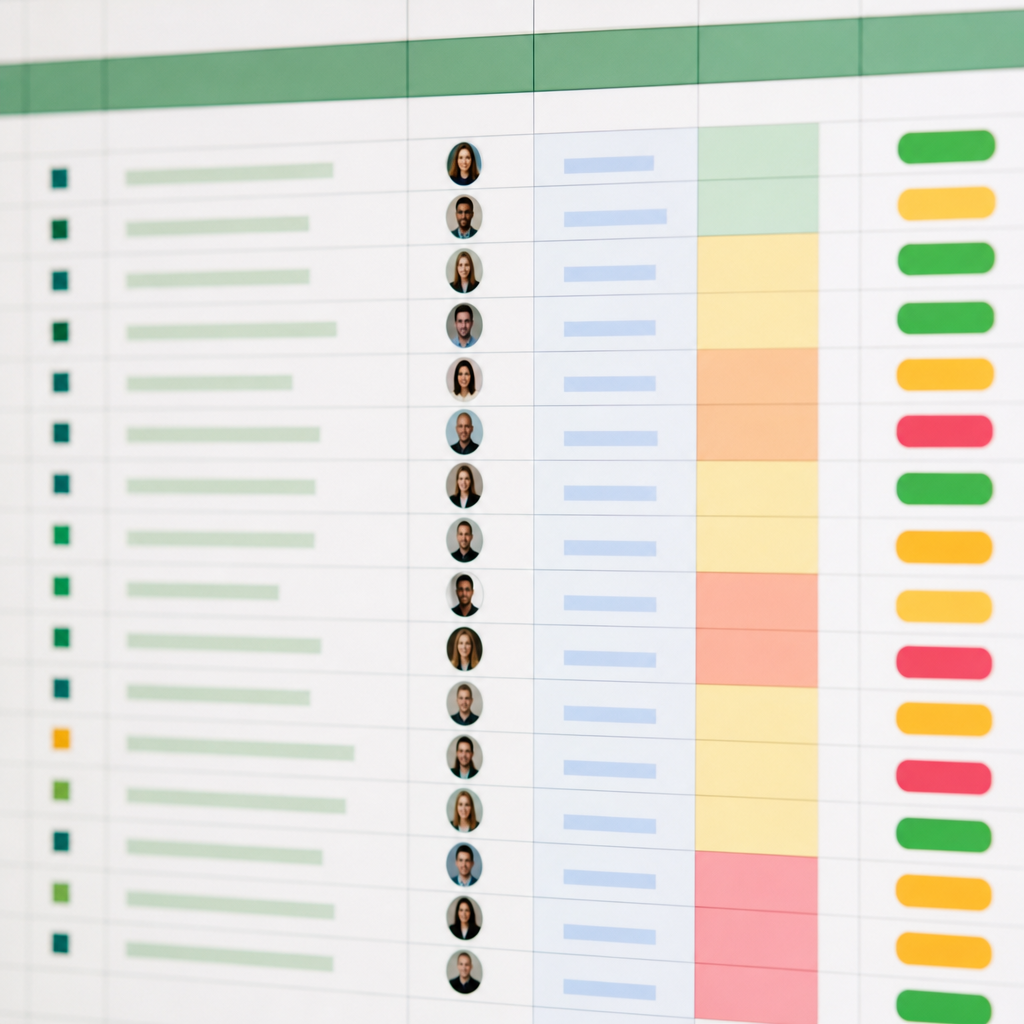
Next consideration. Once you have the plan populated, link each row to a content brief and a measurable KPI in your monthly report template so you can see which pieces drive organic conversions, not just clicks. For brief templates and audit tie-ins see How to Do an SEO Audit and for content cluster guidance see Backlinko.
5. Phase 4 Content briefs, templates, and production workflow
Key point: A short, decisive content brief plus a fixed production workflow is the single biggest lever to move a plan from spreadsheet to rankings. Long, vague briefs do not help publishers; clear scope, must have elements, and a defined SLA do.
Content brief template (fields and sample values)
| Field | Example value |
|---|---|
| Target keyword | seo plan sample |
| Search intent | Informational – how to guide |
| Primary page type | Pillar guide |
| Suggested title | How to Build an SEO Plan From Scratch |
| Word count target | 2,500 – 3,000 |
| Must include H2s | Goals and KPIs; Audit checklist; Keyword mapping; Content calendar; Measurement |
| Top competitor URLs to beat | Backlinko guide, Ahrefs strategy |
| Semantic terms to include | seo strategy template, content calendar example, on-page seo checklist |
| Internal link suggestions | /how-to-do-an-seo-audit, /what-to-look-for-seo-audit-tool-buyers-guide |
| Primary CTA | Download editable SEO plan sample (Google Sheets) |
| Owner | Content lead |
| Estimated hours | 16 |
| Publish SLA | 10 business days from brief approval |
| Quality gates | SEO QA, Editorial review, SME fact check |
Practical insight: Keep the brief split into two sections: must haves and nice to haves. Must haves are non negotiable SEO and conversion elements that the writer must deliver. Nice to haves are optional enhancements to use if time permits. This prevents scope creep and speeds up handoffs.
Production workflow and responsibilities
- Intake and prioritization: Product owner or content lead picks items from the SEO plan sample sheet and assigns priority and owner.
- Brief generation: Use the brief template to create a single page brief. Tools like Ranklytics can generate a first draft brief; then an editor trims and finalizes. See The Pros and Cons of AI in Content Writing.
- Drafting: For standard how to or list content use a human-reviewed AI draft to save time. For technical, legal, or sensitive content use a human-first draft only.
- Review rounds: Round 1 SEO QA checks intent match, keyword presence, metadata, and internal links. Round 2 Editorial checks flow, clarity, and factual accuracy. Round 3 SME if needed for accuracy.
- Prepublish checklist: Accessibility attributes, images optimized, structured data notes if relevant, canonical and noindex checks, and publish time scheduled.
- Monitor and iterate: Track rankings and traffic for the target keyword for 8 to 12 weeks and apply a content refresh if the page is not gaining traction.
Tradeoff to accept: AI drafting speeds output but increases the chance of hallucinated facts and generic copy. Use AI for structure and first pass, but require a human editor and SME signoff for claims, examples, or any proprietary process. That combination preserves speed without sacrificing accuracy.
Concrete example: For the pillar page targeting seo plan sample, the brief set a 2,500 word target, five required H2s, three internal links from existing cluster posts, and an estimated 16 hours of work. The team used Ranklytics to create the brief, generated an AI draft, then assigned two review rounds. The article was published inside the 10 business day SLA and tracked as an experiment for 12 weeks.
Measurement and follow up: Attach expected KPIs to every brief in the SEO plan sample sheet: target ranking for seo plan sample, expected organic sessions per month, and conversion goal. If the page does not hit the KPI window after 12 weeks, schedule a content iteration rather than repeating the same workflow.
Next consideration: After you stabilize briefs and the production cadence, link each published page back to the SEO plan sample so progress is visible in one place and the team can reassign priority based on real performance.
6. Phase 5 On-page optimization and technical priorities
Start with the gating issues. On-page tweaks and technical fixes must be sequenced: fix anything that prevents a page from being indexed or rendered correctly, then apply content and UX optimizations that increase relevance and conversions. Treat this phase as a short sprint of high-impact changes linked directly to rows in your seo plan sample.
What to prioritize (practical rules)
- Indexability first: ensure pages intended for ranking are indexable and canonicalized to the preferred URL. Use Google Search Central for verification and tracking.
- Mobile rendering over desktop-only fixes: if a page fails on mobile it will cap visibility — fix viewport, fonts, and tap targets before chasing micro-optimizations.
- CTR and intent alignment next: rewrite title and meta to match the query intent (include seo plan sample where appropriate) and add schema only when it improves SERP features that matter to your goal.
- Internal links that transfer relevance: add 2–4 contextual links from high-traffic cluster pages to pillar pages to accelerate topical authority; avoid shallow sitewide footer links.
- Performance where it blocks engagement: focus on LCP and TTFB reductions for target landing pages rather than blanket site optimizations—measure before you invest.
Trade-off to accept. Aggressively optimizing images, JavaScript, and third-party scripts delivers speed but often costs design fidelity or feature parity. Choose the minimal set of changes that reduce LCP by the target amount for the page in your seo plan example rather than optimizing the whole site at once.
Concrete checklist tied to the SEO plan sample
- Meta and title rewrite: include main keyword seo plan sample, keep title ~50–60 chars, meta description tailored to intent.
- H1 and heading hierarchy: ensure H1 matches page topic; use H2/H3 to mirror user questions found during keyword mapping.
- Internal linking: add 3 contextual links from related cluster posts and one link from the main pillar to a conversion page.
- Image and media audit: convert hero to WebP, lazy-load offscreen images, keep alt text descriptive and keyword-aware.
- Canonical and parameter handling: set canonical to clean URL, exclude low-value faceted pages from index with rel=canonical or robots directives.
- Technical quick wins: fix mobile viewport meta, compress HTML/CSS, remove render-blocking scripts on target pages, and submit updated sitemap.
| Task | Why it matters | Expected impact | Time estimate |
|---|---|---|---|
| Rewrite title/meta for pillar page (seo plan sample) | Increases relevance and CTR for target query | Higher CTR; faster rank movement for intent-aligned queries | 3 hours |
| Add 3 contextual internal links | Transfers topical authority from related posts | Improved crawl frequency and ranking for pillar | 2 hours |
| Convert hero image to WebP + lazy-load | Reduces LCP and page weight | Better Core Web Vitals and user engagement | 4 hours |
| Fix mobile viewport and font sizing | Ensures readable mobile experience | Removes mobile rendering penalty | 1–2 hours |
| Apply canonicalization for parameter pages | Prevents duplicate content dilution | Concentrates ranking signals on preferred URL | 1–3 hours |
Concrete example: In one site audit, a pillar page targeting an operational keyword comparable to seo plan sample was near page two. The team rewrote the title and meta to match search intent, added three contextual links from cluster articles, and swapped the hero image to WebP. Within 8–12 weeks the page moved into the top 10 and organic sessions for that topic increased measurably, enabling the team to justify the time spent on on-page and technical work.
Common misunderstanding. Many teams treat structured data and schema as a magic bullet. In practice, schema helps when it unlocks a SERP feature you can track; otherwise schema work is low priority compared with indexability, links, and CTR optimizations.
Next consideration: after these prioritized fixes, measure the actual change for four weeks and re-score remaining items in your seo roadmap sample—technical debt that looks small often compounds, so schedule a quarterly technical cleanup rather than letting it accumulate.
7. Measurement, reporting cadence, and iteration
Start with business outcomes, not rank positions. Track rankings as signals, but structure your cadence around actions that change business metrics — organic sessions, assisted conversions, and revenue per visitor — so reporting actually drives decisions.
Cadence that fits real teams
Weekly: quick health checks and rank syncs. Use this to catch crawl/indexing problems, major SERP drops, and to update status on live experiments. Don’t make weekly rank movement the trigger for new content or technical work unless the change is large and tied to a deploy or crawl issue.
Monthly: performance review and tactical decisions. Compare organic sessions, conversions, page-level traffic, and published content velocity against targets. This is when you reassign owners, shift priorities in the SEO plan sample, and schedule experiments for the next sprint.
Quarterly: strategic re-prioritization. Re-run keyword gap analysis, re-score Opportunity for the top 50 rows in your plan, and adjust the roadmap. Reserve deep technical audits and architecture changes for quarterly planning unless a critical blocker appears.
- Why this split works: Weekly catches urgent failures, monthly tracks impact of content sprints, and quarterly protects against overreaction to short-term ranking noise.
- Limitation: More frequent reporting increases noise and tactical churn. Lots of rank fluctuations are normal for 4–12 weeks after publishing; treat early movement as information, not proof.
- Trade-off: If you have high production velocity, shorten the feedback loop for content (weekly rank checks + fortnightly content performance snapshot). If resources are limited, focus monthly on pages that produce conversions.
| Cadence | Primary metrics | Purpose | Owner | Action threshold |
|---|---|---|---|---|
| Weekly | Ranking positions for tracked keywords, crawl errors, indexing count | Detect regressions and deployment side-effects | SEO lead | Drop of 5+ positions for a high-priority keyword or new crawl errors |
| Monthly | Organic sessions, organic conversions, page-level traffic, new indexed pages | Evaluate content sprints and tactical ROI | Content manager + SEO analyst | 20% traffic change or conversion change vs prior month |
| Quarterly | Topical visibility, Opportunity Score changes, technical audit score | Re-prioritize roadmap and major projects | Head of marketing | New competitor ranking for core theme or >15% change in Opportunity rank |
| Ad-hoc | Algorithm signal, significant CTR changes | Run rapid audit and a rollback/experiment plan | SEO lead + engineering | Sitewide traffic drop >15% sustained for 7 days |
Concrete example: For the pillar page targeting seo plan sample, run a weekly rank sync to confirm it indexes and lands in the expected intent cluster. Measure page-level organic sessions monthly and track conversions tied to that page each month. If sessions rise but conversions do not, prioritize a CRO test on the page rather than another content rewrite.
Iteration process you can adopt today. Treat each change as an experiment: state a hypothesis, pick the metric you will use to judge success, set a realistic test window (usually 6–12 weeks for content), and record the result in the plan. Maintain a short changelog column in your SEO plan sample so every update links to the hypothesis and outcome.
Practical judgment: Most teams waste time chasing small rank movements. Focus your scarce attention on pages that affect conversions or sit within a topic cluster you intend to scale. Use automated reports to flag exceptions, then apply human judgment to decide experiments.
Automate what can be automated. Use a rank tracker to sync keywords into your SEO plan sample and a dashboard to surface winning pages; combine that with your analytics data to avoid false positives. For an operational guide to running audits that feed into reporting, see How to Do an SEO Audit: A Beginner-Friendly Guide to Boost Your Traffic. For signal interpretation and content cluster thinking, read the Backlinko primer on topical authority at Backlinko.
Next action: Add three columns to your SEO plan sample: last checked date, experiment hypothesis, and outcome. Start with the top five priority rows and commit to the cadence for 90 days before re-scoring Opportunity.

Written by
ranklytics