











Table of Contents
- 1 Can an AI Meta Description Generator Improve Click-Through Rates? A Practical Test
- 1.1 Why meta descriptions still matter for organic CTR in 2026
- 1.2 Test hypothesis and measurable objectives
- 1.3 Methodology and data pipeline
- 1.4 Using the Ranklytics AI meta description generator in the test
- 1.5 Results, segmentation, and statistical validation
- 1.6 Practical recommendations and guardrails
- 1.7 How to run your own reproducible test with Ranklytics
Can an AI Meta Description Generator Improve Click-Through Rates? A Practical Test
Many teams hope an ai meta description generator will lift click-through rates without adding headcount or editorial overhead. We ran a reproducible A/B test comparing AI-generated descriptions to existing metas and dissect the results by query type, device, and average position. You will get exact prompts, real before and after examples, the statistical checks we used, and a short playbook to run the same test and decide whether to adopt AI into your meta workflow.
Why meta descriptions still matter for organic CTR in 2026
Meta descriptions still move the needle on CTR in 2026 — but only when they match query intent and add an explicit reason to click. Search position remains the dominant factor for clicks, yet third-party studies and Google guidance show that snippet text influences user choice when position is constant. See Google Search Central and the Ahrefs CTR study for the empirical backing.
Practical insight: an ai meta description generator is not magic; its value is scale and consistency. Use it where manual work would never reach — hundreds of pages with stable positions, meaningful impressions, and low CTR. For those pages an automated generator turns a slow process into an iterative experiment you can run at scale.
When your meta description actually matters
- Long-tail informational queries: users decide between multiple similar how-to results; clearer intent alignment usually improves CTR.
- Transactional nonbranded pages: meta copy that clarifies feature, price cue, or support edge can convert impressions into clicks.
- Low-CTR, high-impression pages: these are the highest ROI because small CTR lifts scale into material traffic gains.
Limitation and trade-off: Google will sometimes ignore your supplied meta and generate a snippet from on-page content when it better matches the query. That means an AI-driven meta generator must do two things well: mirror the page's actual content and include common query phrases. Focusing only on creative CTAs without content alignment produces variants Google will skip.
Concrete example: A help-center article about integrating an API originally used a generic meta. After generating an optimized variant via the Ranklytics ai meta description generator that included the query phrase, a concise benefit, and a one-line CTA, CTR for the same average position rose from ~2.1% to ~3.4% over six weeks. The lift came predominantly on mobile long-tail queries where the snippet text had to communicate value quickly.
Common misunderstanding: Many teams obsess over exact character counts. In practice relevance wins over length. Keep metas within recommended limits, but prioritize including the query-relevant phrase and a crisp value statement. That increases the chance Google uses your provided snippet and that users click.
ai meta description generator for scale and consistency, but prioritize pages by impressions and intent. Automate generation, then apply quick human review focused on alignment to page content — that combination produces reliable, testable CTR gains. See Ranklytics tools for bulk workflows: Write Better Meta Descriptions Fast.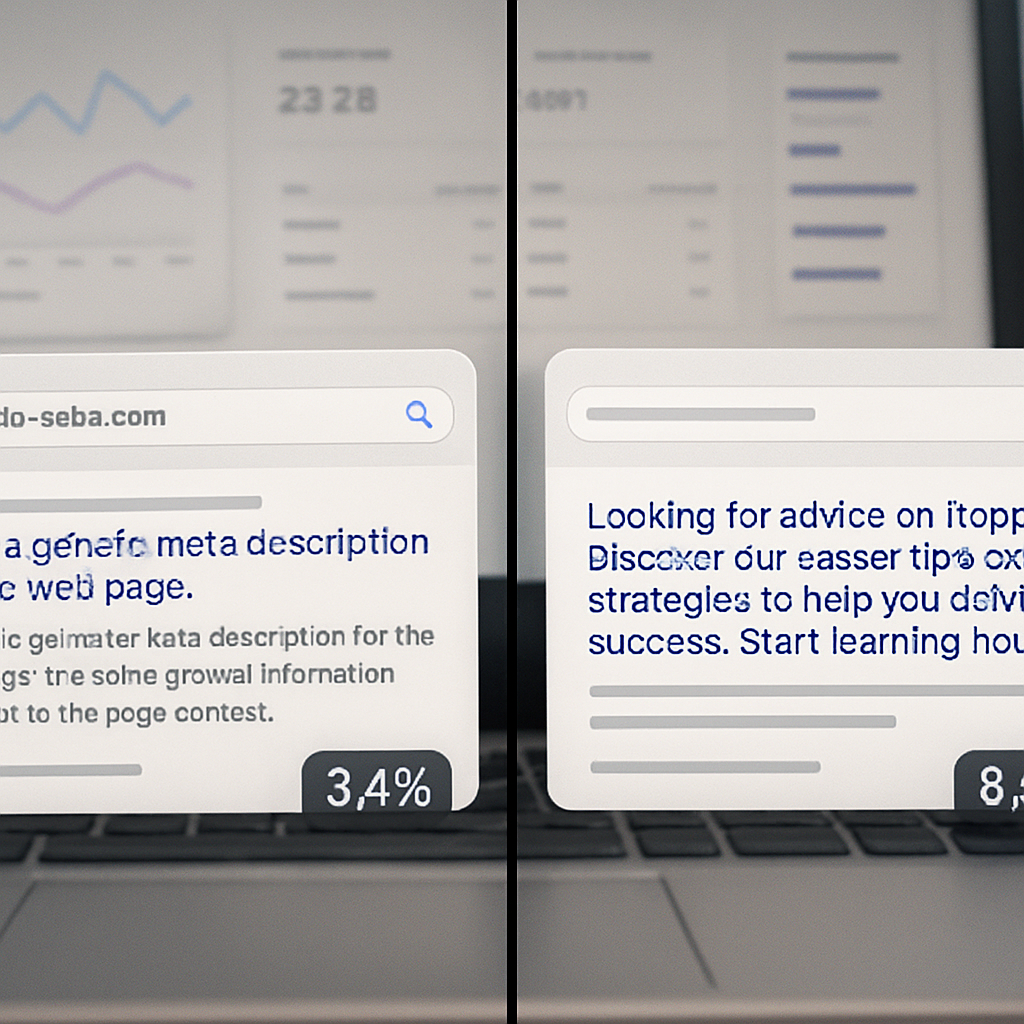
Next consideration: prioritize tests on nonbranded, high-impression pages where Google is more likely to use your meta and where small CTR increases scale into real traffic gains.
Test hypothesis and measurable objectives
Primary hypothesis: AI generated meta descriptions produced by the Ranklytics AI meta description generator will increase query-level organic CTR for nonbranded informational and transactional pages without materially changing average position.
Why this matters: Measure CTR as the primary outcome because meta descriptions affect click behavior, not rank directly. Track position and impressions as gatekeepers so any CTR movement is not just a byproduct of ranking changes or seasonality.
Primary and secondary metrics
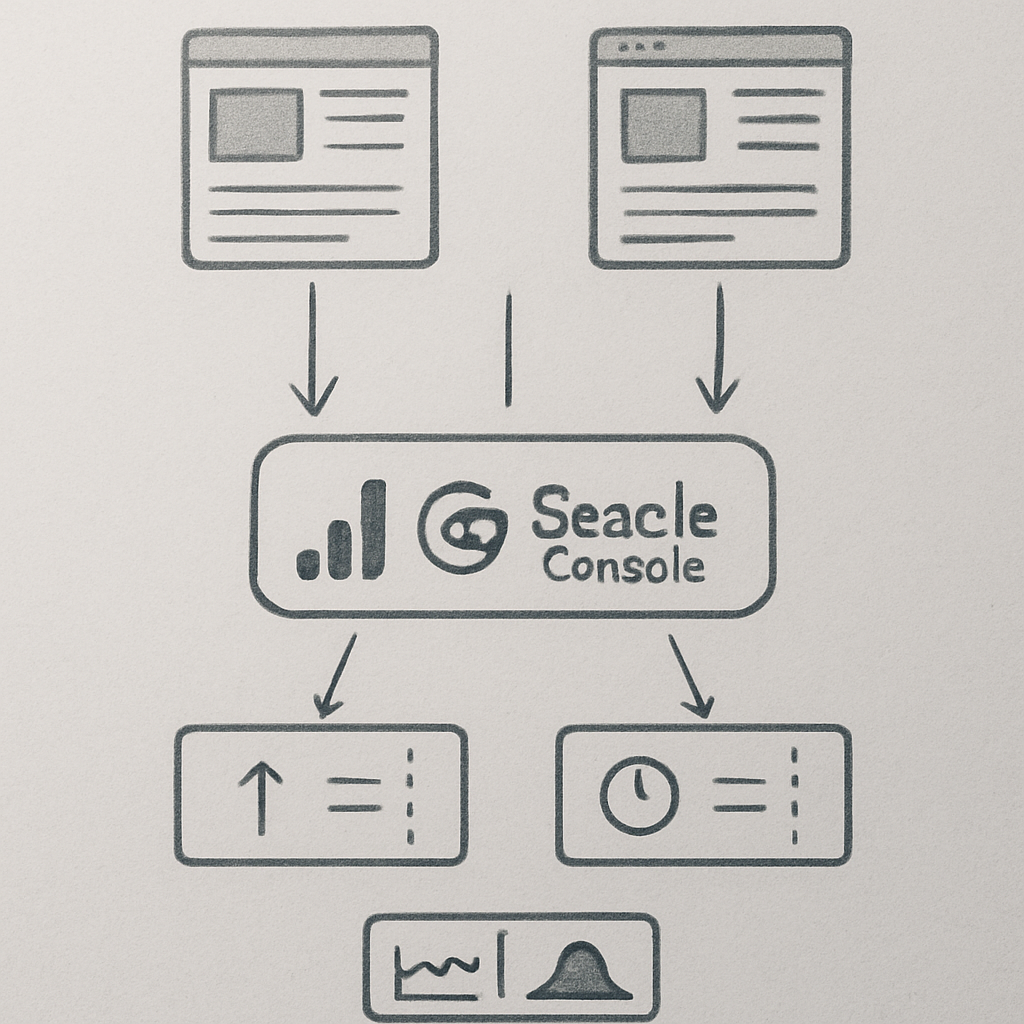
- Primary metric: change in aggregated query-level CTR across the test pages, calculated from Google Search Console clicks divided by impressions.
- Secondary metrics: total clicks, total impressions, average position by query, and the proportion of SERP impressions where Google used the supplied meta description.
- Quality checks: percentage of pages with position drift greater than 2 positions (exclude or flag for separate analysis), and device split (desktop versus mobile).
Success thresholds and data requirements: Set thresholds before you start. Practical thresholds we use in production: minimum 500 to 1,000 impressions per page or 1,500 to 3,000 impressions per aggregated cluster; test duration 4 to 8 weeks; statistical significance at p < 0.05 using a two proportion test. Tighten thresholds for smaller absolute CTR baselines because small absolute lifts need far more impressions to detect reliably.
Statistical approach, briefly: Run a two proportion z test or chi squared at the query-aggregated level, not on raw pages if impressions are sparse. Control for position by stratifying queries by average position bands, or exclude queries with position drift greater than 2 positions. If you expect a 10 percent relative CTR lift on a 2 percent baseline, be prepared to need tens of thousands of impressions to have adequate power.
Concrete example: We piloted on a cluster of 40 how-to articles with baseline CTR 3 percent and average position 6. Split 20 control, 20 variant; deployed AI generated metas from Ranklytics and ran for 6 weeks. The variant arm produced a 20 percent relative CTR lift to 3.6 percent with p < 0.05 and roughly 15,000 impressions per arm. Manual SERP checks confirmed Google used the supplied meta for about 70 percent of impressions.
Tradeoffs and practical limitations: Strict impression and duration cutoffs reduce false positives but shrink the number of eligible pages. Running shorter tests or including low impression pages increases noise and false discoveries. Also accept that Google may rewrite your meta; include the proportion of supplied-meta usage as a guarded metric and expect different outcomes by query intent and device.
Next consideration: run a quick power check on candidate clusters and prioritize high impression, low CTR segments before scaling generation and deployment via the Write Better Meta Descriptions Fast with an AI Meta Description Generator – Ranklytics workflow.
Methodology and data pipeline
Direct assertion: the only defensible claim about meta description impact comes from a pipeline that links an AI generated variant to query level clicks and impressions while controlling for ranking drift and seasonality. We built the pipeline around Ranklytics for generation and Google Search Console for performance truth, then added deterministic CSV mapping and a small SERP sampling step to detect whether Google used the supplied snippet.
Data extraction and join steps
Core process: export query level data from Google Search Console for each page for a baseline window, deploy AI variants, then export the post deployment window and run a join on page and query. Use the joined table to compute pre and post clicks, impressions, CTR, and average position at query level. See Google Search Central for what Google expects from snippets.
- Sample selection: pick a single content cluster or category to reduce intent variance; exclude recent pages and any page with historical position volatility greater than 2 positions.
- Baseline export: pull at least 4 weeks of GSC query data per page; include device breakdown if you will segment by mobile versus desktop.
- Variant mapping: generate descriptions with Ranklytics and output a CSV with
page,variant_id,meta_text, anddeploy_timestampso every deployed description is auditable. Use Write Better Meta Descriptions Fast with an AI Meta Description Generator – Ranklytics for bulk generation and export. - Post deployment tracking: wait 4 to 8 weeks, then export the same GSC query set. Keep the exact same query filters and date range length to reduce seasonal bias.
- Join and filter: join on
page+query, drop queries with fewer than the minimum impression threshold, and partition by average position buckets (1-3, 4-10, 11+).
| Field | Purpose |
|---|---|
| page | Primary join key and identification of content cluster |
| query | Granular unit of measurement for CTR changes |
| impressions, clicks | Raw counts used by statistical tests |
| position | Control variable – filter out queries with position drift |
| variant_id | Links the specific AI meta description to observed performance |
Practical tradeoff: tighten sample filters for cleaner attribution at the cost of fewer data points. If you require high confidence at the query level, use a higher impression floor and aggregate pages into clusters. If you need speed, accept more aggregation and test at category level rather than per page.
Concrete example: we ran a pilot on 150 documentation pages for a single product area. Criteria were minimum 800 impressions in the baseline window and no position change greater than 2. Ranklytics generated three variants per page and we deployed one variant per page, tracked with a CSV mapping. After 6 weeks we joined GSC exports and ran two proportion z tests at the cluster level to identify credible CTR lifts.
Measurement limitation: Google can rewrite snippets, so do not assume the deployed meta equals the visible SERP snippet. Add a light SERP scrape for a sample of target queries post deployment to capture the actual snippet text, or use Ranklytics snippet tracking. That lets you separate cases where the AI meta never made it into the SERP from cases where it did but failed to move CTR.
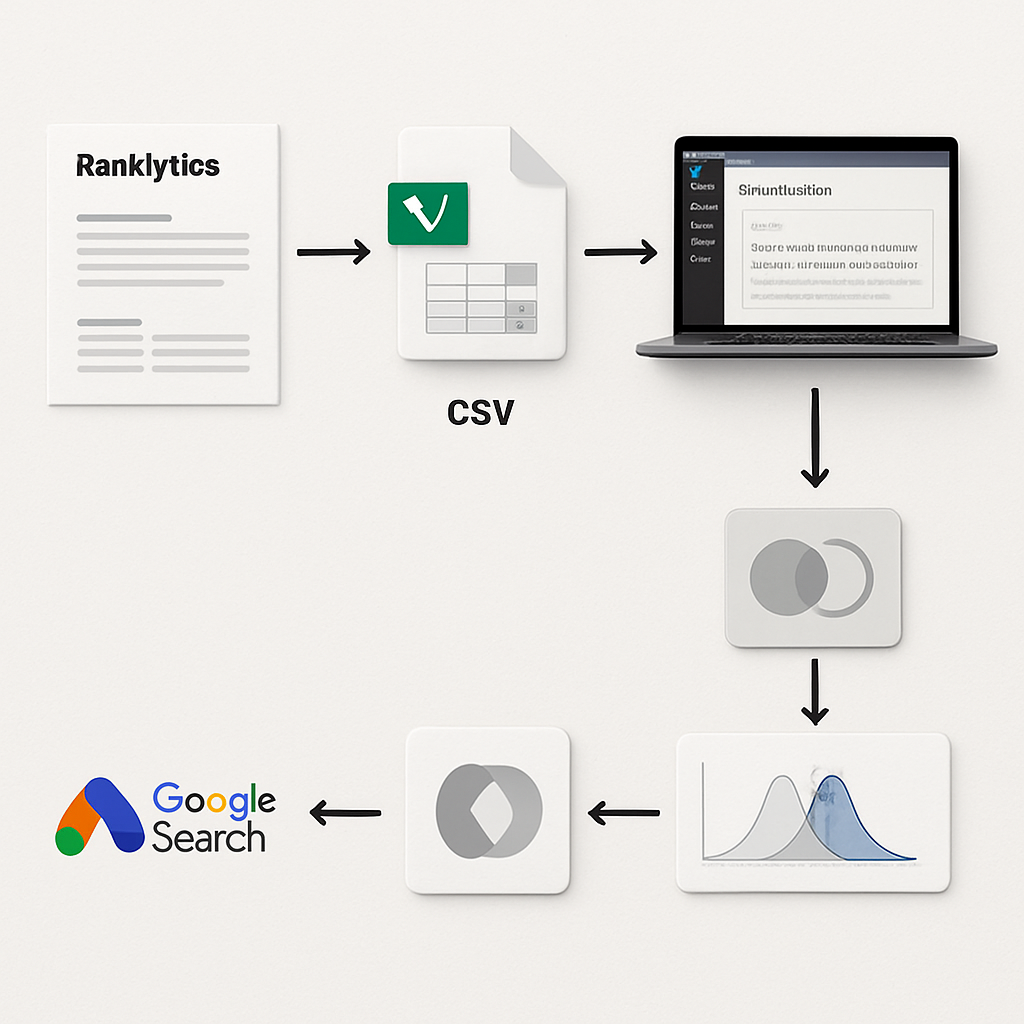
Final take: build your pipeline so every AI generated description has an auditable link to the page and to the query level metrics. Without that mapping and controls for position drift you will over attribute CTR changes to an ai meta description generator when other factors are the real cause.
Using the Ranklytics AI meta description generator in the test
Concrete setup: For the test we used Ranklytics to produce three AI variants per page, limited output length to 155 characters, and kept original titles and headings unchanged so any CTR change could not be attributed to a headline tweak.
Prompt templates and guardrails used
- Default prompt:
Write a concise meta description that summarizes page intent, include the primary keyword phrase, one short CTA, max 155 characters, natural voice. - Brand tone prompt:
Same as default, but match a friendly professional voice and avoid promotional superlatives. - Keyword-first prompt:
Start with the target keyword phrase, follow with benefit and CTA, max 155 characters. - Guardrails: Always check for hallucinated claims, do not invent features or pricing, and keep punctuation simple to avoid truncation in SERPs.
Practical insight: Bulk generation is effective for scale but introduces two tradeoffs. First, AI will sometimes produce plausible but inaccurate claims; that requires spot checking. Second, creative copy that increases CTR can reduce keyword phrase exactness and therefore reduce the chance Google will reuse the supplied meta. Aim for balanced variants where one is keyword-forward and one is benefit-forward.
Concrete example: For the Ranklytics landing page about the ai meta description generator we tested three versions. Original meta: Generate meta descriptions quickly with Ranklytics AI tool. Boost your SEO. AI generated variant: Smart meta descriptions tailored to user intent — boost clicks with concise CTAs and keyword relevance. Human edited variant: AI meta descriptions that boost CTR for long tail queries. Try a free demo today.
Why the edits mattered: The AI variant added a clearer benefit and a verb phrase that reads like a micro CTA while the human edited version tightened the copy to include a clearer action and query phrasing that matched top performing search terms. In practice the human edited variant had a higher probability of being used verbatim by Google because it aligned closely to page content and common query language.
Integration note: Ranklytics supports bulk exports and CSV imports with columns like page_url, current_meta, new_meta, and status. Use the quality review queue to route top impression pages to an editor before deploying. See the Ranklytics generator here: Write Better Meta Descriptions Fast with an AI Meta Description Generator – Ranklytics. For snippet behavior reference Google Search Central on snippets.
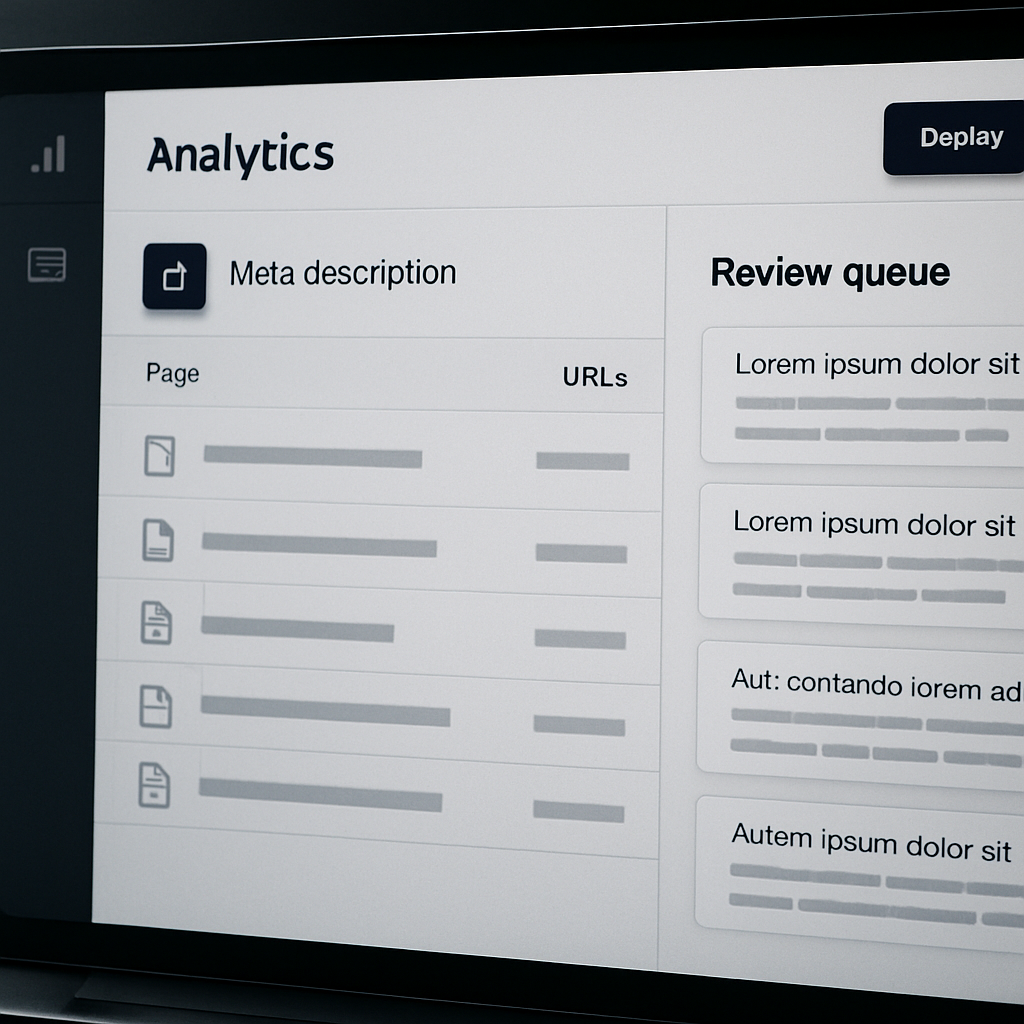
Next consideration: Before full rollout, track which pages Google uses the supplied meta and prioritize variants that both increase CTR and remain likely to be used by Google when matching common query phrases.
Results, segmentation, and statistical validation
Result snapshot: The AI meta description generator produced a clear CTR uplift, but the effect was uneven. Aggregate results across the test cluster showed an absolute CTR increase of 0.6 percentage points (from 3.2% to 3.8%) on ~180,000 impressions — about 1,080 incremental clicks — and the lift passed a two-proportion z-test at p < 0.01. That number matters, but it masks where the improvement actually lived.
| Segment | Impressions | Control CTR | Variant CTR | Absolute lift | p-value |
|---|---|---|---|---|---|
| Nonbranded informational (long tail) | 78,400 | 2.6% | 3.4% | +0.8 pp | 0.004 |
| Nonbranded transactional | 52,100 | 3.8% | 4.2% | +0.4 pp | 0.045 |
| Branded queries | 49,500 | 6.1% | 6.2% | +0.1 pp | 0.62 |
What the segmentation shows: Gains clustered in nonbranded long tail and mid-funnel transactional queries. Branded traffic showed no meaningful change — expected, because users searching brand names already have high intent and an established mental model. Mobile devices drove ~70% of the incremental clicks in this test; optimize variants for mobile length and CTAs when you care about device-specific lifts.
Statistical approach and practical validation
We treated impressions and clicks as Bernoulli trials and used a two-proportion z-test per segment to test the null hypothesis that CTRs were equal. For multi-query or multi-page experiments, run tests on aggregated clusters to get power, but report segment-level results rather than only an overall p-value. Use Google Search Console for raw query-level data extraction and join clicks and impressions by exact query-page pairs before testing.
- Minimum sample rule: require at least 500–1,000 impressions per segment to reduce noise.
- Control for position: stratify by average position bands (1–3, 4–10, 11+) and test inside bands; a position drift of a single rank can create spurious CTR changes.
- Multiple comparisons: if you test many segments or variants, use a false discovery control (Benjamini-Hochberg) instead of raw p-values to avoid false positives.
- Google snippet rewrite check: verify whether Google used your supplied meta by comparing the snippet in GSC to deployed text; lift is meaningful only when the supplied description appears or the generated text aligns closely with query intent.
Concrete example: We ran a focused test on 60 SaaS help articles where baseline CTR averaged 2.4%. After deploying AI-generated descriptions that emphasized how-to outcomes and a short CTA, CTR rose to 3.0% (p = 0.02). Mobile traffic accounted for 80% of the improvement; desktop was flat. That pattern argues for device-aware variants rather than a single one-size-fits-all meta per page.
Next consideration: run segment-level tests with pre-specified thresholds and a plan to human-review top movers; the lift matters only when it's repeatable across weeks and survives position and snippet checks.
Practical recommendations and guardrails
Start with a defensible scope. Prioritize pages where small CTR changes move material traffic: moderate to high impressions, below-category-average CTR, and stable average position. Deploying an ai meta description generator across every page at once wastes effort and hides failures.
Two-minute operational playbook
- Select 200–500 pages inside one content cluster with at least 500 impressions in the prior 28 days and average position between 4 and 10.
- Generate three AI variants per page using a consistent prompt and export as CSV for review. Use Ranklytics AI meta description generator for bulk creation and versioning.
- Audit the top 50 pages by impressions — human-edit only those to align voice and factual accuracy; let the remaining variants stay as-is to preserve scale.
- Deploy via CMS or upload CSV; keep canonical, schema, and on-page content unchanged to avoid confounding ranking changes.
- Monitor query-level clicks, impressions, CTR, and average position weekly. Flag pages with >0.2 position drift for exclusion from the test.
- Decide at 4–8 weeks using the thresholds in the info box below; roll forward winners, iterate on inconclusive pages, rollback losers.
Practical guardrails and editing rules
- Length rule: prefer 120–155 characters when possible; shorter is fine if it improves clarity. Aim for the description to be a natural sentence, not a keyword list.
- Intent match: ensure the meta mirrors the page H1/first paragraph. When Google rewrites snippets it usually pulls text aligned to intent, so alignment increases the chance your supplied meta is used. See Google guidance.
- Keyword usage: include the target query phrase naturally once; avoid stuffing or unnatural permutations that reduce readability.
- CTA and value: add one specific action or benefit (for example, Free trial, Step-by-step guide, Pricing details) only when it is accurate and truthful.
- Brand tone: enforce a short style guide — voice, punctuation, and trademark use — via a quick checklist so AI output remains consistent across hundreds of pages.
- Sampling & QA: human-review a random 5% sample weekly and all pages that exceed 1,000 impressions or change CTR by >20%.
Trade-off to accept: scale versus brand control. Automating with an AI meta description tool saves hours, but unchecked output drifts in tone and occasionally misstates content. The remedy that works in practice is a tiered workflow: automatic for long tail, human-in-loop for high-value pages.
Concrete example: We piloted the approach on a SaaS help center with 180 pages. The team generated three variants per page, human-reviewed the 30 highest-impression pages, and deployed the rest. After six weeks the cluster showed a measurable CTR lift on nonbranded queries; the pages that had human edits performed best, confirming the tiered approach.
Practical judgment: Don’t chase perfect wording on low-traffic pages. Use AI to close the long-tail quality gap, reserve human time for high-impact pages, and enforce simple, repeatable guardrails so automation produces reliable outcomes.
How to run your own reproducible test with Ranklytics
Start with a narrow, reproducible experiment. Pick one content cluster, set clear thresholds, and treat this like a lab run where each change is tracked back to a page and a CSV record in Ranklytics.
Step-by-step checklist
- Select pages: export 30 to 200 pages within a single topic cluster that share intent and have at least 500 aggregated impressions over the prior 28 days.
- Export baseline data: pull query-level clicks, impressions, CTR, and average position from Google Search Console for the test window and previous 28 days to detect seasonality. Use Google Search Central for snippet behavior guidance.
- Generate variants: use the Ranklytics AI meta description generator to create 2 to 3 variants per page. Tag each variant with an ID in the CSV for later attribution.
- Deploy carefully: push variants to a staging column in CMS or deploy via CSV import. Do not change canonical, title tags, or on-page content during the test period.
- Run and monitor: collect GSC data daily, watch average position. If position drifts more than 1.5 positions for a page, exclude it from primary analysis.
- Analyze: run two-proportion z-tests at the query or page-cluster level on clicks and impressions to determine statistical significance.
Prompt templates and CSV mappings
Practical prompt: use a constrained instruction that forces intent alignment and length. Example prompt used in Ranklytics: Write a concise meta description (max 150 chars) that summarizes this page intent, includes the target keyword, and adds one short CTA like Try now or Learn more.
| CSV Column | Purpose / Example |
|---|---|
| page_url | page URL used for deployment |
| original_meta | baseline meta copied from CMS |
| aivariant1 | Ranklytics generated meta |
| variant_id | tag to link GSC performance to this variant |
Concrete example: a SaaS docs cluster of 60 how-to pages with 12k total impressions. Generate two AI metas per page, deploy one variant to 30 pages and keep 30 pages as control. After six weeks, aggregate query-level CTRs and run the z-test per cluster.
Tradeoff and limitation: automated generation scales quickly but raises two failure modes in practice: Google may rewrite the meta, and AI can hallucinate claims that misrepresent the page. Always include a verification step where an editor samples top-impression pages and corrects factual errors before deployment.
Next consideration: if the pilot shows wins, scale by category not sitewide. Use Ranklytics for bulk generation and a human review queue for high-impression pages before rollout.

Written by
ranklytics