











Table of Contents
- 1 Off-Page SEO Audit: How to Evaluate Your Backlink Profile and Authority Signals
- 1.1 1. Define audit objectives and scope
- 1.2 2. Aggregate backlink data from multiple sources
- 1.3 3. Compute and interpret core metrics
- 1.4 4. Identify toxic links and prioritize risk
- 1.5 5. Remediation tactics: outreach, removal, and disavow escalation
- 1.6 6. Evaluate authority signals beyond links
- 1.7 7. Prioritize link building and content actions
- 1.8 8. Ongoing monitoring, reporting, and KPIs
Off-Page SEO Audit: How to Evaluate Your Backlink Profile and Authority Signals
If your backlink profile feels noisy or you suspect a manual action, an off page seo audit gives you a repeatable way to separate high impact links from risk and build a prioritized remediation plan. This guide shows exactly what data to pull, which metrics matter, how to spot toxic links, and how to combine backlink analysis with broader authority signals like brand mentions and topical relevance. You will get concrete CSV headers, outreach templates, a triage matrix for prioritization, and the KPIs to track progress month to month.
1. Define audit objectives and scope
Start with purpose. An off page seo audit without a clear objective becomes a noisy export party — lots of data, no decisions. Define one primary outcome you can measure within 3 months: reduction in toxic links, increase in high‑quality referring domains for priority pages, recovery from a manual action, or improved organic traffic to a set of target pages.
Set clear, measurable objectives
Objective must be measurable. Pick a metric tied to business impact (for example: +15% organic sessions to product pages; reduce flagged toxic links by 80%; close the referring domain gap with top 3 competitors). Avoid raw backlink count as the primary KPI — it misleads and rewards volume over relevance.
- Decide what success looks like: reduce toxic links, increase referring domains, recover from manual action, or improve rankings for target keywords.
- Select site scope: entire domain, specific subdomain, or a subset of content (blog, product pages, region).
- Choose time range: last 12 months for ongoing programs, 24 months if investigating sudden drops or historical spam patterns.
- Capture stakeholder constraints: budget for outreach, access to Google Search Console, preferred remediation channels, and legal/tone limits for outreach messaging.
Scope and trade-offs that matter
Trade-off: breadth versus actionability. Auditing the whole domain surfaces more signals but multiplies cleanup work. Narrow audits (priority pages or a subdomain) let you show wins faster and align outreach to pages that actually need link equity. Choose narrow when you have limited outreach bandwidth; choose broad when you suspect systemic spam or a manual action.
Limitation to plan for. Google Search Console is indispensable but incomplete — it omits many third‑party links and lags on deletions. Combine GSC with at least one commercial crawler (Ahrefs, Moz, Majestic) and be prepared for noisy, overlapping exports. For tool selection guidance, see The Best SEO Audit Tools Compared.
Concrete Example: A mid‑market SaaS site hit a traffic drop after an algorithm update. The team set a primary objective to recover target keyword rankings for five product pages within 6 months and scoped the audit to referring domains linking to those pages. This kept the workload focused on outreach and content updates that would move the needle quickly.
Practical insight. If you are working toward a manual action reversal, document dates, outreach attempts, and samples of toxic links from the start. Google expects evidence; a broadly scoped audit without a clear remediation plan slows a reconsideration. Reference Google guidance on link schemes here: link schemes.
Next: gather the raw backlink exports and map them to your prioritized pages so your audit moves from data collection to decision making.

2. Aggregate backlink data from multiple sources
Start with raw exports from every available source. Pull the backlink and referring domain reports from Ahrefs, Moz, Majestic, SEMrush (if available), and the Google Search Console Links report. Each provider covers different parts of the web and reports different metrics – your job is to create a single canonical dataset that preserves source-specific signals so you can compare, not overwrite, what each tool claims.
Essential exports and what to collect
- Ahrefs Backlinks export: source URL, target URL, anchor text, first seen, last seen, referring domain, DR, link type. Use this for breadth and link velocity.
- Moz Link Explorer export: Moz DA, Spam Score, anchor distribution. Moz Spam Score is noisy but useful when combined with other signals.
- Majestic Backlinks export: Trust Flow, Citation Flow, topical trust. Trust Flow is the best single metric here for trust signals.
- Google Search Console Links: actual links Google counts and how they point to your pages. It has lower coverage but is directly relevant to Search Console signals.
- SEMrush backlink export (optional): extra coverage and historical trends where available.
Minimum CSV schema to export and merge
| Column | Why include it |
|---|---|
| source_tool | Preserves origin so you can see which provider reported the link |
| source_url | Exact linking page – use for context and contact attempts |
| target_url | Which page on your site receives the link – map to content priorities |
| referring_domain | Aggregate signal and dedupe anchor stuffing |
| anchor_text | For anchor distribution checks and exact match spikes |
| firstseen|lastseen | Link velocity and whether the link is persistent |
| follow_status | follow, nofollow, sponsored, ugc – important for intent |
| DR|DA|TrustFlow|SpamScore | Authority and risk metrics from each provider |
| placement_context | footer, sidebar, contextual – infer likely value |
Normalize and dedupe deliberately. Normalize target URLs to their canonical forms, strip tracking parameters when they are noise, and build both a unique linking-page view and a unique referring-domain view. In practice you will use the referring-domain rollup for priority signals, and the linking-page detail for outreach and removal work.
- Union then flag: combine all exports into a single file but keep source_tool flags so you know which tool reported which link.
- Dedupe at two levels: exact sourceurl + targeturl for outreach, and referringdomain + targetdomain for authority metrics.
- Enrich: add Ranklytics content mapping to match each target_url to its content objective and tracked keywords. Use that to prioritize pages that need link support.
Practical tradeoff to accept. The union approach gives you the broadest picture but increases noise. Intersection of tools reduces false positives but misses many valid links. I recommend union with source flags and scoring rules that weight multi-tool corroboration higher when prioritizing remediation or outreach.
Concrete example: We recently merged exports for a mid market SaaS site and found Ahrefs reported 12,400 backlinks from 2,100 referring domains, Moz reported 9,200 backlinks and 1,900 domains, and GSC showed 1,100 links. After normalization and dedupe the team had 3,050 unique referring domains. Flagging links seen by two or more providers reduced the initial outreach list by half while keeping the highest confidence targets for reclamation.
Key judgment: do not trust a single metric. Use multi-source confirmation for action, but preserve single-source links for monitoring since new or niche coverage often appears first in only one tool.
Next consideration: after the merge you will score links for toxicity and impact – the quality of that scoring depends on disciplined exports and consistent normalization up front. Without that step your remediation work will chase noise instead of high ROI links.
3. Compute and interpret core metrics
Start with referring domains, not raw link counts. A handful of links from unique, relevant domains beats hundreds of links from the same network. Tool exports will flood you with pages; your first computed ratio should be referring domains divided by total backlinks to spot duplication and sitewide patterns.
Key metrics to compute and what they actually tell you
- Referring domains vs total backlinks: Measures link diversity. High backlinks + low referring domains usually indicates networks, sitewide placements, or scraped links.
- Domain-level authority (Ahrefs DR / Moz DA) and Majestic Trust Flow: Use them together. DR/DA are broad popularity signals; Trust Flow measures topical trust. If DA/DR are high but Trust Flow is very low, investigate citation quality.
- Spam Score and manual signals: Moz Spam Score and evidence of link schemes are practical red flags. Treat high spam score as a trigger for human review, not an automatic disavow.
- Anchor text distribution: Compute percentage of exact-match anchors, branded anchors, and generic anchors. Spikes in exact-match anchors are a common penalty vector.
- Follow vs nofollow ratio and link placement: Calculate percent followed links and percent contextual links (in-body vs footer/sidebar). Contextual, followed links from relevant pages carry most SEO value.
- Link velocity and time-based metrics: Chart new referring domains per week/month and first-seen/last-seen dates. Sudden spikes deserve manual attention; steady growth is healthier.
- Page-level signals (GSC impressions and CTR): Pull impressions for linked pages from Google Search Console. A link to a page with measurable impressions is more likely to move rankings than a link to an ignored page.
Practical trade-off: Authority metrics are noisy and inconsistent across tools. Normalize each metric against your top 3 organic competitors before you set thresholds; absolute DR or DA means little on its own.
How to combine metrics into a usable triage score
- Export unified rows per linking URL with columns: referring domain, target URL, anchor text, DR, DA, Trust Flow, Citation Flow, Spam Score, follow/nofollow, placement type, first seen, last seen, GSC impressions for target page.
- Assign lightweight weights and compute a composite score. Example heuristic: Referring domain uniqueness 30%, Trust Flow 20%, Spam Score -25%, contextual placement 15%, follow 10%.
- Flag items by composite score ranges: require human review if composite < threshold A, automatic outreach if between A and B, keep/monitor if > B. Adjust thresholds per niche after competitor normalization.
| Metric | Why it matters | Quick threshold (example) |
|---|---|---|
| Referring domains / backlinks ratio | Shows whether links represent true domain diversity or sitewide/network placements | Target > 0.4; investigate if < 0.15 |
| Majestic Trust Flow | Topical trust signal; low TF with high Citation Flow indicates low-quality link farms | TF > 15 is useful; TF < 8 requires review |
| Moz Spam Score | Risk indicator for spammy domains; needs human verification | Spam Score 0-4 low risk; 5+ inspect |
| Anchor exact-match % | High % suggests manipulative anchor profiles | Keep exact-match under 5-10% of anchors |
| GSC impressions for linked page | Shows whether the linked page is already getting search visibility | Any impressions > 0 increases the link's practical value |
Concrete example: A mid-market SaaS documentation page has 18 backlinks but only 4 referring domains; Ahrefs DR reads 32, Majestic Trust Flow is 7, and exact-match anchors make up 40% of the anchors. Computed score and manual review reveal two sitewide footer links from a single template and several low-trust directories. Prioritize removing or disavowing the sitewide placements and pursue outreach to convert a high-impression support article into a contextual link from a unique domain.
Tools disagree. Use composite scores and competitor baselines, not any single metric, as the source of truth.

Next consideration: use these triage scores to feed your remediation matrix—start outreach on high-impact risky links and reserve disavow for confirmed failures after documented outreach. That decision is the next operational step.
4. Identify toxic links and prioritize risk
Toxic links are rare but high impact. A handful of low quality or manipulative links can trigger ranking volatility or manual actions; the audit task is not to find every dodgy URL but to surface the links that are both risky and actionable.
Signals that reliably flag low quality links
- High Moz Spam Score: combined with other signals this is a red flag rather than a single source decision.
- Trust Flow much lower than Citation Flow: indicates a site with many low value links; check Majestic for this ratio Majestic Trust Flow.
- Exact match anchor text spikes: sudden concentration of keyword heavy anchors suggests manipulation.
- Irrelevant topical context: links from unrelated niches or obvious link directories and PBNs have low value and high risk.
- Unnatural placement: footer, sidebar, or sitewide template links on low quality sites amplify risk.
- Scraped or thin pages: pages with little original content that just host a list of links.
Practical insight: use multiple signals together. Tools disagree; treat any single metric as noisy. Combine Moz Spam Score, Majestic Trust Flow/Citation Flow, anchor text patterns, and placement context before labeling a link toxic.
A simple scoring method and thresholds for triage
| Signal | Points |
|---|---|
| Moz Spam Score >= 7 | 3 |
| Trust Flow / Citation Flow ratio < 0.3 | 2 |
| Exact match anchor share > 40% | 2 |
| Sitewide or footer placement | 1 |
| Topical mismatch | 2 |
| Page is thin/scraped | 2 |
Triage thresholds: sum the points. 6 or more = High toxic risk; 3 to 5 = Medium; below 3 = Low. High risk links go into immediate remediation workflows. This system is not perfect but gives a repeatable way to prioritize thousands of links.
- High risk, high impact: removal outreach first; disavow only after failed outreach or if contact is impossible.
- High risk, low impact: disavow is acceptable after documenting context because removal effort brings low ROI.
- Low risk, high impact: keep and monitor; consider outreach to improve anchor or placement.
- Low risk, low impact: document and ignore unless patterns emerge.
Real world example: A midmarket SaaS site found 12 links from a network of low content directories with exact match anchors after a traffic drop. Using the scoring method above those links scored as high risk and connected to core product pages. The team prioritized removal requests for the pages that sent referral clicks, logged failed outreach, and submitted a targeted disavow for the irretrievable remainder. Rankings recovered on key queries within two months.
Tradeoff and limitation: aggressive removal can be time consuming and yield little if the link provides no traffic or rank influence. Conversely, overuse of disavow produces no immediate positive effect and can mask effort that should go into building new, strong links. Balance cleanup with a forward link building plan tied to content priorities.
Key judgment: do not disavow based on a single metric. Document outreach attempts and evidence. Use disavow as escalation, not the first fix.
Next consideration: after cleanup, shift effort to closing the quality referring domain gap versus competitors using prioritized outreach and content that naturally attracts contextual editorial links. See practical tool guidance in the Ranklytics audit mistakes article: Why Your SEO Audit Is Not Delivering Results (And How to Fix It).
5. Remediation tactics: outreach, removal, and disavow escalation
Start with targeted outreach for the links that matter. Manual removal requests move the needle when the referring domain is high-impact or the link sits in a visible editorial placement. Disavow is an escalation tool, not a first response — use it after tried-and-true outreach and when evidence shows a link is clearly harmful or unremovable.
Practical outreach cadence
- Prioritize: sort by combined impact (traffic to target page, keyword importance) and toxicity score. Target the top 20 to 50 links first.
- Find contact: check page and site contact, WHOIS, LinkedIn for the editor, or a site-specific webmaster address. If none, use the hosting provider as last resort.
- Initial message (personalized): short note explaining the issue, the exact URL to remove, and a friendly reason. Example template: Hi, I manage content for example.com. A link on your page [source URL] points to our page [target URL] and appears to be outdated/incorrect. Could you remove or update it? Thank you — [Name].
- Follow-up: two follow-ups at 7 and 14 days with increasing specificity and a screenshot of the offending link if available.
- Final notice: one firm message offering a 7–10 day deadline before escalation (host, registrar, or disavow). Keep tone factual; avoid threats.
- Escalation: if no response, file an abuse/hosting complaint when the host is clearly identifiable, or prepare disavow documentation when removal is impossible.
Practical insight: personalized outreach works far better than templated blasts. In practice you will get 20–40 percent removal on reasonably maintained sites; the rest are dead links or ignored. Budget your time accordingly and reserve manual outreach for the top-impact subset.
Removal vs disavow: decision checkpoints
- Attempt removal when the domain is contactable, the link is high-toxicity and high-impact, and removal is likely to change rankings or clear a manual action.
- Escalate to host/registrar or file DMCA when content is stolen, copyrighted, or the site clearly violates terms; this is effective but slow and must be used selectively.
- Disavow when you have documented outreach attempts, the link shows strong spam signals (very low Trust Flow, high Moz Spam Score, PBN indicators), and the domain owner is unresponsive.
Trade-off to accept: chasing every link wastes time; disavowing too broadly reduces visibility into which links actually mattered. Use a conservative disavow that focuses on domains scoring above your toxicity threshold rather than bulk domain lists.
Important: keep proof of outreach and removal attempts — dates, messages, screenshots. Google expects documentation if you ever submit a manual action reconsideration.
Concrete example: A mid-market SaaS site discovered 120 low-quality forum and directory links flagged during an off page seo audit. The team prioritized the 30 links pointing to two monetized pages, performed personalized outreach, and secured removal for 9 links within three weeks. They escalated 5 links to the host for abusive content and disavowed the remaining 106 after documenting outreach attempts in a spreadsheet; organic traffic to the affected pages stabilized within two months.
Record-keeping and the disavow file. Maintain a single CSV that records source URL, target URL, toxicity score, outreach dates and responses, removal confirmation (URL or screenshot), and final action (removed/disavowed). When you build the disavow file, include only domains or URLs you have documented and link to the evidence in your audit folder.
Judgment call most teams miss: if a domain has a mixed profile (some legitimate pages and some spammy ones), try partial URL disavow rather than whole-domain disavow. Blanket domain disavows can remove potentially valuable links and slow recovery. Be surgical unless the domain is irrevocably a PBN or spam farm.
Further reading and rules: follow Google's disavow and link scheming guidance when preparing escalation steps: Google Search Central – link schemes. For audit process gaps, see Why Your SEO Audit Is Not Delivering Results.
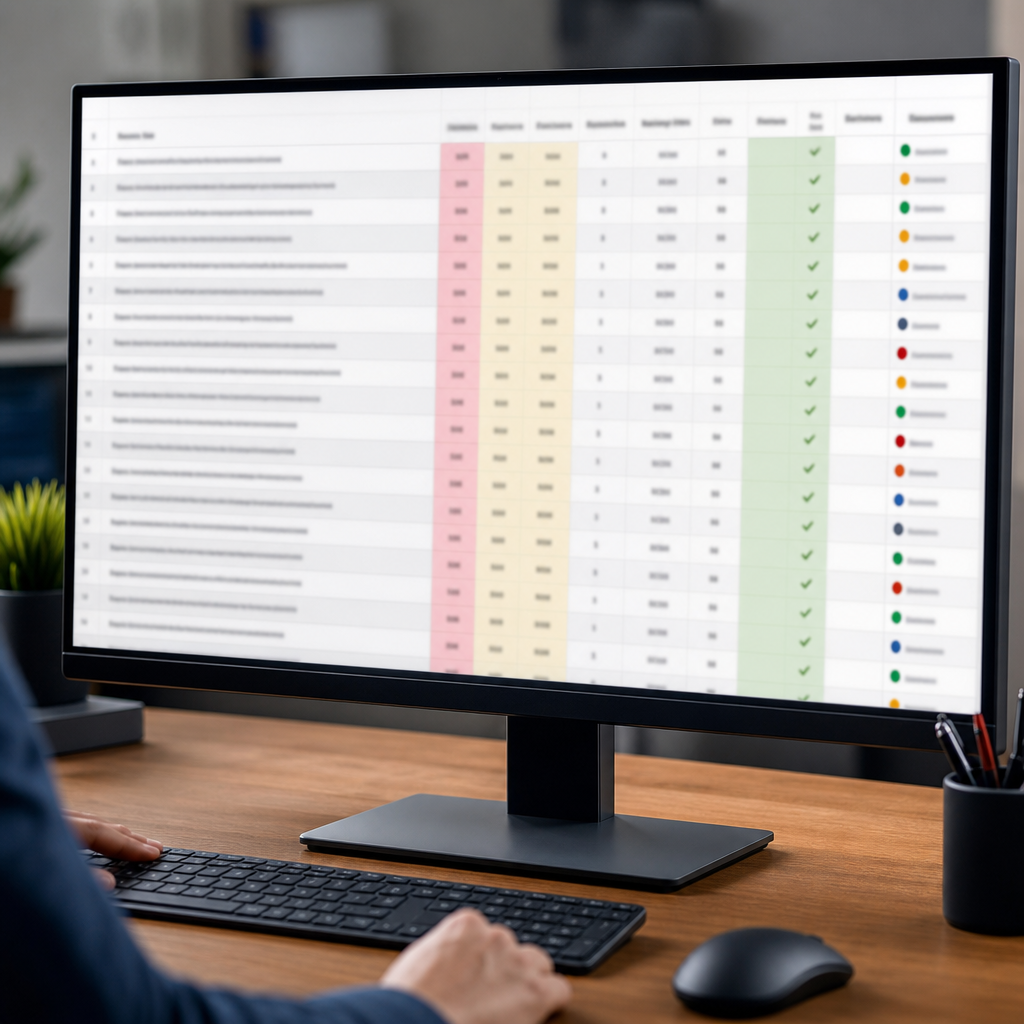
Direct links are necessary but not sufficient. Brand mentions, citations, topical associations, and trusted third-party endorsements all contribute to perceived authority in search and in human decision-making. Treat these as complementary signals you must measure and act on — not optional extras.
What to measure and why it matters
Brand mention volume and linkability: Count total mentions of your brand or core product names, then separate linked versus unlinked mentions. Unlinked mentions are low-hanging wins — they rarely require new content to earn a link and often convert faster than cold outreach.
- Unlinked mentions: number found, publication authority, contactability for link reclamation
- Local citations (for local businesses): NAP consistency across Google Business Profile, Yelp, industry directories; discrepancies that harm local visibility
- Topical co-occurrence: how often your brand or pages are cited alongside target keywords or competitor brands on authoritative sites
- Third-party trust signals: reviews, awards, guest posts on recognized trade publications, mentions in buyer guides
- Social distribution of earned coverage: shares and engaged reach on platforms that drive referral traffic
Tools to collect the data. Use Google Alerts for basic mentions, Ahrefs Content Explorer and [Mention or Brand24] for scalable discovery, and site-level checks (BrightLocal or Moz Local) for citation consistency. Combine these exports with your backlink analysis so you know which mentions are already linked and which are reclamation targets.
Practical trade-off. Measuring these signals at scale requires either a small budget for monitoring tools or manual review. Automation finds mentions but misses context; manual review finds relevance but costs time. Balance by automating discovery, then hand-review high-authority mentions only.
Topical authority vs raw endorsements. A mention in a high-authority, topically relevant outlet is worth far more than several links from tangential sources. Prioritize mentions in publications that already rank for your target keywords — they provide topical context that helps search engines associate your site with those queries.
Concrete Example: A SaaS customer discovery article on a recognized industry blog mentioned your product without linking. Using Ahrefs Content Explorer you find the instance, confirm the article ranks for a target keyword, and send a short reclamation note to the editor. The added link and anchor text helped the product page move into the top 10 for that keyword within six weeks — a faster win than a cold guest post campaign.
What usually gets misinterpreted. Teams chase social signals as if they were direct ranking factors. In practice, social shares increase visibility and referral traffic but rarely change authority unless they lead to editorial coverage or links on trusted sites. Treat social as distribution fuel, not a substitute for topical citations and press coverage.
How to prioritize efforts. Focus first on: reclaiming unlinked mentions from authoritative sources, fixing NAP inconsistencies that block local search performance, and pursuing citations on trade publications that rank for your target keywords. Deprioritize low-effort social boosts unless they regularly produce referral traffic or press pickups.
High ROI authority work is often reclamation and correction, not more link volume.
7. Prioritize link building and content actions
Start with impact, not tactics. An off page seo audit is only useful if it turns into a prioritized plan that targets pages where links move business metrics — organic traffic, conversions, or referral leads — rather than chasing raw metrics like Domain Authority alone.
Build an opportunity scoring matrix
Use a simple, repeatable score to rank pages for link investment. Combine page value (conversion intent or traffic potential), link gap versus top competitors, link quality lift (how many contextual editorial links are needed to change rankings), and outreach difficulty (contactability, language, paywall). Weight the factors to reflect your constraints — for example, if you have a small outreach team, double-weight outreach difficulty.
- Calculate page value: use Ranklytics or Google Search Console to get target keyword volume and conversion estimates for the page.
- Measure the link gap: count referring domains the top 3 organic competitors have to the same or similar pages using Ahrefs or Moz.
- Estimate quality lift: judge how many high-quality contextual links (not sitewide or directory links) would plausibly move the page in SERPs. Use competitor link profiles as the baseline.
- Score outreach difficulty: check if linking sites are contactable, in English (if relevant), and topically aligned.
- Compute Opportunity Score = (Page Value × Link Gap × Quality Lift) / Outreach Difficulty. Rank pages by score to prioritize actions.
| Page | Traffic value | Link gap (referring domains) | Outreach difficulty | Opportunity score | Recommended action |
|---|---|---|---|---|---|
| Pricing page | High (commercial intent) | 15 | Medium | 120 | Target partner mentions, recover broken links, outreach to industry roundups |
| How-to guide on feature X | Medium | 8 | Low | 64 | Resource page outreach, guest contribution to domain-specific blogs |
| Older blog post (thin) | Low | 2 | Low | 8 | Content refresh + internal linking; low-priority external outreach |
Practical trade-off: high Opportunity Score pages deserve manual outreach and bespoke assets. Lower score pages are better served with content refines and internal linking. If you try to scale outreach evenly, you waste time on low-value wins and reduce measurable ROI from your off page optimization.
Quick wins versus sustainable plays
- Quick wins: reclaim broken links, convert unlinked brand mentions, recover links lost during redesigns, and secure placements on relevant resource pages. These actions are low-cost and often convert quickly into traffic.
- Sustainable plays: invest in original research, data-driven assets, interactive tools, or long-form guides that attract natural editorial links and social amplification over months. These require investment but scale with content relevance and topical authority.
- Don’t overvalue single high-DA links: a single non-contextual sitewide link rarely moves rankings. Prioritize topical relevance and editorial placement over a vanity metric.
Concrete example: A SaaS pricing page with strong conversion intent but zero referring domains ranked below competitors. Using the opportunity matrix, the team focused outreach on 12 industry partners and recovered three editorial mentions through link reclamation and a compact case study asset. Over the next three months the pricing page saw a 20 percent increase in organic sessions from relevant keywords and a measurable uptick in demo requests tied to that page.
What people get wrong: teams treat link building as a campaign of volume — outreach to many low-relevance sites — instead of a strategic effort targeted at pages where links change outcomes. In practice, narrowing focus to top-scoring pages and a handful of high-probability targets produces better measurable results and cleaner SEO metrics for reporting.

Next consideration: link priorities must plug into your editorial calendar and keyword strategy. Use the prioritized list to assign owners, timelines, and KPIs, and track outcomes in your monthly off page seo audit dashboard. For guidance on mapping content priorities to audit outputs, see SEO Inspection: A Step-by-Step Guide to Optimizing Your Site's Health.
8. Ongoing monitoring, reporting, and KPIs
Measurement is a process, not a spreadsheet. Set up monitoring so the audit becomes a living system: automatic alerts for regressions, a tactical dashboard for the link team, and a short executive view that ties authority signals to business outcomes.
Design dashboards that drive decisions
Focus on outcomes over vanity metrics. Domain Authority and Domain Rating are useful relative signals, but they do not equal organic growth. Your primary KPIs should connect link activity to search engine ranking movement, organic traffic, or conversions for prioritized pages.
| KPI | Why it matters | How to act when off-target |
|---|---|---|
| New referring domains (monthly) | Shows successful outreach and link diversity. One high-quality domain beats many low-quality links. | If flat for 2 months, re-evaluate outreach list, swap tactics from mass outreaches to targeted resource page or partner reclamation |
| Referring domains lost (monthly) | Signals removals or churn that can erode authority quickly. | If spike detected, check for pattern (same domain owner, plugin removal); follow up with partner or replace links for affected pages |
| Organic sessions to target pages (90-day trend) | Direct business outcome for the pages you supported with links. | If links increased but traffic did not after 3 months, check on-page UX, keyword intent mismatch, or search visibility changes |
| Toxic link count or toxicity score | Risk control metric; keeps manual action risk visible. | If rising, prioritize high-impact toxic links for removal and document outreach before considering escalation |
| Anchor text concentration | Detects unnatural optimization and potential penalties. | If exact match anchors >15% of high-value referring domains, diversify anchor text through follow-ups and editorial outreach |
Monitoring cadence, alerting, and trade-offs
- Monthly tactical checks: Pull automated exports from primary providers and reconcile new/lost referring domains, high-impact inbound links, and toxicity trendlines. This is the minimum cadence for an active campaign.
- Quarterly deep audit: Full backlink reconciliation across all sources, anchor text audit, and topical relevance analysis. Deep audits catch slow-moving problems that monthly checks miss.
- Alert rules: Set alerts for >20% month-over-month loss in referring domains to a priority page, sudden spikes in toxic-score, or a drop in organic sessions after a link gain. Alerts should triage to a human within 48 hours.
- Trade-off to accept: More frequent alerts catch problems earlier but create noise. Start conservative, tune thresholds after two cycles, then automate what consistently requires no action.
Data alignment matters. Reconcile metrics from Ahrefs, Moz, Majestic, and Google Search Console in the dashboard so stakeholders see a single source of truth. If your toolset reports different numbers, document which provider informs each KPI and why. For tool comparisons see The Best SEO Audit Tools Compared.
Attribution is delayed and noisy. Expect a 6–12 week lag before a new high-quality link materially affects organic sessions. Do not reassign credit for ranking gains to the first link you see; look for consistent correlation across multiple signals — ranking, impressions, and conversions.
Concrete Example: A mid-market SaaS ran a focused outreach to resource pages and gained 12 new referring domains to a product guide. Over the next 10 weeks the guide saw an 18 percent increase in organic sessions and moved from page two to the top 8 results for a priority keyword. The team used a monthly dashboard to correlate link acquisition dates, impressions from Google Search Console, and conversion lifts before expanding the tactic.
Report formats to use. Provide a one-page executive summary with three numbers: net referring domain delta, top 3 pages with the largest link-driven traffic gains, and any active manual actions or high-risk toxic clusters. Attach a tactical sheet showing recent outreach, status, and follow-up dates for the link team. For repeatable processes see SEO Inspection: A Step-by-Step Guide.
Next consideration: Decide which KPI will trigger a full audit and who on the team owns that escalation. Ownership and thresholds are what turn monitoring into effective risk control and growth management.

Written by
ranklytics