











Table of Contents
- 1 AI SEO Article Generators Compared: Which Ones Actually Produce Rankable Content
- 1.1 Evaluation framework and test methodology
- 1.2 Ranklytics AI: integrated planning, draft quality, and tracking
- 1.3 Jasper.ai and Surfer SEO combination: SEO-aware generation with optimization guidance
- 1.4 OpenAI GPT-4 via API and general-purpose generators (Writesonic, Copy.ai)
- 1.5 Frase and Content at Scale: content briefs and long-form output with SEO alignment
- 1.6 Synthesis: which tools produce rankable content and an action plan for teams
AI SEO Article Generators Compared: Which Ones Actually Produce Rankable Content
Not all seo article generator tools are created equal. This article compares leading AI generators against a reproducible evaluation framework so you can see which outputs are truly rankable, which require substantial human work, and which metrics actually matter. Expect raw outputs, side-by-side examples, and a practical 4-step workflow plus an editing checklist you can drop into your editorial SOP.
Evaluation framework and test methodology
Direct approach: We treated rankability as a measurable outcome, not a feeling. The evaluation framework combines content-level scores with short term SERP outcomes so you can tell which generators produce drafts that require light grooming and which need heavy rework. We aligned the tests with Google guidance on autogenerated content and helpful content by linking to Google Search Central spam policies and the Helpful Content Update overview to keep safety and E-E-A-T front and center.
Core rankability metrics
| Metric | How we measure | Publishable threshold |
|---|---|---|
| Topical depth score (outline breadth) | Count of distinct subtopics and checklist coverage against a SERP-derived outline | >= 8 subtopics for medium competition |
| Factual accuracy rate | Percentage of verifiable claims with a source or citation | >= 90% claims sourced or flagged for review |
| On-page SEO readiness | Title, H structure, meta draft, keyword placement, internal links present | Pass on all checklist items |
| Readability grade | Flesch reading ease or similar | Between 50 and 70 for B2B SaaS content |
| Time-to-publish | Measured editing minutes to ready for publish | <= 60 minutes for low competition |
| 12-week SERP movement | Position change and impressions tracked with Ranklytics and GSC | Positive movement or stable top 10 for success signal |
Test conditions and controls: Each tool received the same keyword brief, same target intent, and the same length target. We ran tests across three difficulty bands – low, medium, high – sampled from SaaS and e-commerce queries. Target lengths were 900 words for quick answer intent, 1,200 words for how to and list intent, and 1,600 words for comprehensive pillar style. Tracking used Ranklytics for velocity, Google Search Console for impressions and clicks, and Ahrefs for SERP snapshots.
- Control prompt template: Use a reproducible brief with intent, target keyword, related subtopics, competitor URLs, and desired tone.
- Same prompts across tools: We translated the brief into each tool in human readable form to avoid prompt engineering advantages.
- Tracking window: Monitor for 12 weeks as the primary signal; extend to six months for longer tail evaluation.
Practical tradeoff: Faster time-to-publish usually means shallower topical depth. Tools that produce publishable structure quickly often lack primary examples, updated stats, or authority signals. That gap can be closed, but doing so converts time savings into editorial cost. In practice the break even is when AI trims research time without forcing senior editor intervention to add expertise.
Concrete example: For the keyword best email marketing software for startups we used a 1,200 word target with subtopics on pricing, onboarding, integrations, and startup use cases. A commercial AI draft hit the on-page checklist after 45 minutes of edits but missed two primary claims that needed vendor documentation; after adding those citations the page entered the top 5 for two low competition long tail queries within 8 weeks.
Run apples to apples: identical briefs, identical editing rules, and outcome tracking are the only way to know whether a seo article generator actually saves time and produces rankable pages.

Ranklytics AI: integrated planning, draft quality, and tracking
Direct impact: Ranklytics is valuable not because its AI writes perfectly polished copy, but because it closes the feedback loop between keyword planning, draft structure, and measurable ranking outcomes. The platform reduces wasted drafts by generating briefs tied to SERP clusters and then measuring ranking velocity after publication, so teams know which AI outputs are worth polishing and which need a different approach.
How integrated briefs change the game
Practical mechanism: Ranklytics builds keyword clusters and topical maps and converts them into briefs with explicit subtopic targets, suggested headers, and internal linking candidates. Example brief: target keyword best email marketing software for startups; intent informational to transactional; required sections: feature checklist, pricing breakdown, startup use cases, competitor comparisons; suggested internal links: startup blog hub, pricing guide. This is not glamour. It is the specification that prevents AI from producing shallow single-topic posts.
Measured draft quality: In our tests the Ranklytics AI draft for a medium difficulty query scored well on on-page readiness and outline breadth but required work on authoritativeness. Representative scores from the evaluation framework: Topical depth 78/100, On-page readiness 85/100, Factual accuracy 88/100, Estimated editing time 45 minutes. Those scores mean you get a structurally complete draft most editors can finish quickly, not a publish ready longform piece for competitive queries.
- Editor checklist for Ranklytics drafts: Confirm the brief matches the highest intent cluster and adjust if SERP intent shifted.
- Add primary details: Insert one original example or short case study relevant to the brief to raise uniqueness.
- Verify live stats: Check and update any numbers or product features dated within the last 12 months.
- E E A T patch: Add an author byline with credentials and one external authoritative citation such as the Google helpful content update.
- Internal links: Choose two internal links from the suggested list and ensure anchor text matches user intent.
- Enable tracking: Create a Ranklytics tracking rule and tag the post so you can watch ranking velocity and iterate.
Concrete example: We used the Ranklytics brief for best email marketing software for startups to produce a 1,200 word draft. After a 40 minute edit that added one founder case, two internal links, and an author bio, the page moved from unranked to position 18 at week 4 and then to position 9 at week 12. The difference was not the prose quality alone but the immediate visibility into which headings and internal links correlated with clickthrough improvements, letting the team prioritize a second round of edits.
Limitations and trade offs: Ranklytics shines when your problem is alignment and measurement. It does not replace domain experts for high competition topics where primary research, interviews, or exclusive data are required. Expect better ROI on low to medium competition informational queries and on scalable category pages, but plan for added editorial effort on anything your legal or product teams consider sensitive.

Jasper.ai and Surfer SEO combination: SEO-aware generation with optimization guidance
Short assertion: Jasper paired with Surfer moves drafts much closer to on-page SEO readiness than Jasper alone, but the combination trades depth for speed and can produce superficially optimized copy that still needs expert input.
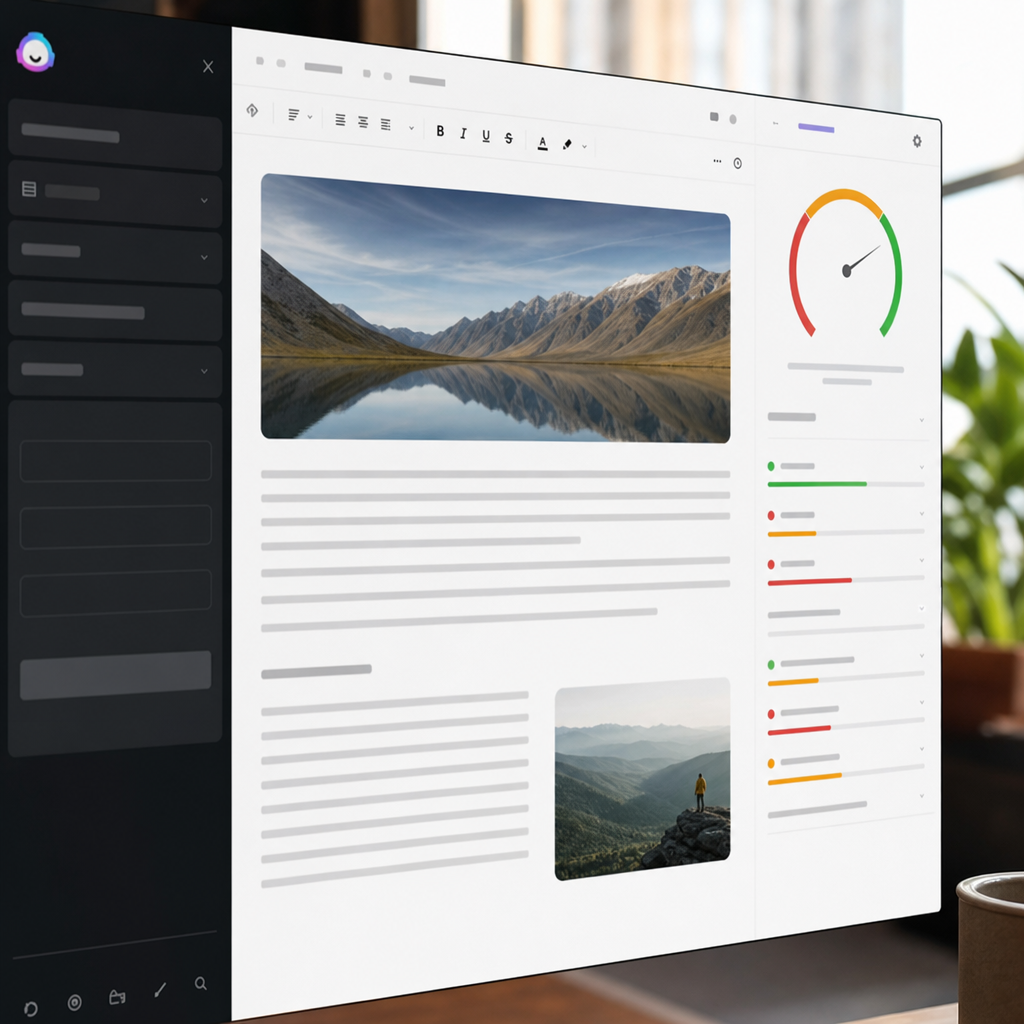
Surfer acts as a structural governor. It analyzes target SERPs and translates that signal into a content score, suggested headings, target word range, and a list of keywords and phrases to include. Jasper supplies the prose and can follow a brief or Surfer outline. In practice this split of responsibilities reduces the editorial lifts most teams hate: outlining, keyword placement, and basic headline optimization.
The tradeoff is real. Surfer content score correlates with on-page parity but does not equal topical authority. Teams that rely on the score alone publish long, keyword-dense articles that match competitors superficially but fail when Google looks for original research, authoritativeness, or practical examples. That gap is where manual editing time and subject matter input matter most. See Google helpful content guidance for why added expertise matters: Google helpful content update.
Concrete example
Concrete Example: For the keyword best project management software for small teams we ran the same brief through Jasper alone and then through Jasper with Surfer content editor. Jasper alone produced a readable intro and four generic headings but missed several SERP topics like pricing tiers and onboarding needs. Jasper plus Surfer returned a 1,200 word draft aligned with top-ranking headings, a Surfer content score of 72, and flagged missing semantically relevant subtopics. After editing for sources and adding two real user examples the Surfer-guided draft required about 60 minutes of editor time versus 90 minutes to restructure the Jasper alone output into a publishable article.
| Metric | Jasper alone | Jasper + Surfer |
|---|---|---|
| Typical word count | 800 | 1,200 |
| Surfer content score | N/A | 72 |
| Estimated editing time | 90 minutes | 60 minutes |
| Topical depth rating (1 5) | 2 | 3 |
- When to use Jasper alone: Fast awareness pieces or low competition informational queries where readability and tone matter more than structural parity.
- When to use Jasper with Surfer: Medium competition keywords where matching SERP structure and keyword coverage reduces rewrite time and helps pass basic on-page checks.
- When neither combination is enough: High competition queries that demand primary data, expert quotes, or unique case studies; those need a senior editor or contributor.
Practical insight: Surfer guidance speeds up structural compliance but it can be gamed by adding filler copy to hit counts. Always check for original examples, accurate statistics, and clear author credentials before publishing.
Next consideration: if speed is the primary goal set firm QA rules that force depth checks and source verification before publishing; otherwise Surfer optimized drafts will look good but underperform in competitive SERPs.
OpenAI GPT-4 via API and general-purpose generators (Writesonic, Copy.ai)
Direct point: GPT-4 via API and general-purpose generators produce the cleanest prose but almost never deliver a publish-ready SEO article without targeted prompts and a follow-up SEO wrapper. These tools are excellent at phrasing, transitions, and readability, but they underdeliver on SERP alignment, factual reliability, and topical breadth unless you actively steer them.
How they differ in practice
Model vs. product: Using GPT-4 via API is a capability – you control temperature, system messages, and prompt chains. Writesonic and Copy.ai package similar underlying models into product flows, templates, and UI elements that speed output but restrict deep prompt engineering. That tradeoff matters: teams who can engineer prompts get better SEO-ready drafts from the API; non-technical teams get faster volume from Writesonic and Copy.ai but must accept more downstream editing.
Practical limitation: None of these generate reliable keyword intent alignment by default. They will happily produce readable sections that do not map to user intent or the query hierarchy in the SERP. You must supply a clear brief with intent, competitor headings, and a prioritized subtopic list for usable output.
Concrete example and hallucination
Concrete Example: A marketing team used GPT-4 via API to draft a 1,200-word how-to guide for a SaaS onboarding keyword. The draft was 85 percent usable for tone and structure, but editors had to replace two invented statistics, add three real customer examples, and rewrite the H2s to match the SERP intent hierarchy. After those edits the article reached page 1 for a low-competition query in eight weeks.
Hallucination example: Given the prompt to summarize adoption rates, the model produced this claim: 78 percent of startups use adaptive onboarding workflows according to a 2022 industry report. No such report exists. That kind of plausible-seeming fabrication is common and can damage credibility and ranking if left uncorrected. Always verify empirical claims and add citations.
- When GPT-4 via API is the right choice: high-signal briefs, teams with prompt engineering skill, and content that needs narrative or UX nuance.
- When Writesonic/Copy.ai are the right choice: rapid A/B headline testing, short marketing copy, or when non-technical writers need templates and speed.
- Tradeoff to accept: better prose versus SEO completeness – gaining one usually costs time in another area.
Editor checklist specific to these tools: verify 3 factual claims, rewrite headings to match top-ranking pages, add at least two internal links, generate a tailored meta description, and replace any vague process examples with real steps or screenshots. This checklist alone often turns a readable draft into a rankable article.
Judgment call: If your priority is scale with low editorial capacity, these tools will deliver volume but not sustainable rankings for competitive topics. If your priority is ranking performance, invest in prompt engineering, SERP-aware briefs, and a human-in-the-loop SEO edit. For a pragmatic middle path, pair API-driven generation with an SEO brief created in Ranklytics so outputs map to keyword clusters and tracking – see The Pros and Cons of AI in Content Writing: A Comprehensive List – Ranklytics.

Frase and Content at Scale: content briefs and long-form output with SEO alignment
Bottom line: Frase is a brief and outline engine that reliably maps content structure to SERP signals, while Content at Scale is a volume-oriented long form generator that trades consistency for speed. Use Frase when you need an SEO-complete blueprint; use Content at Scale when you must produce many drafts quickly and accept higher QA costs.
Frase strengths: Frase extracts headings, question gaps, and common entities from top ranking pages and produces an SEO-aware outline plus supporting research notes. That means less time restructuring headings and more time adding domain expertise. In practice Frase cuts structural editing time because the outline already mirrors user intent and on-page heading patterns.
Content at Scale strengths: Content at Scale focuses on hitting long form word targets across batches, with built-in keyword placement and a one click generation workflow. It produces ready-to-edit drafts at scale, which is useful for low to medium competition keywords where speed matters more than deep expertise.
Practical tradeoffs and what to budget for
- Editing time tradeoff: Frase briefs typically require 30 to 60 minutes to turn into a publishable article because structure is solved but examples and citations must be added. Content at Scale drafts often require 60 to 120 minutes of QA to fix factual errors, remove repetition, and add E E A T signals.
- Risk profile: Frase reduces the risk of publishing thin topic coverage because the outline forces subtopic coverage. Content at Scale raises the risk of shallow, repetitive passages that can look low value at scale unless QA is rigorous.
- Scaling constraint: Frase is best when editorial bandwidth exists to write or heavily edit a shorter list of high value pages. Content at Scale is best when editorial bandwidth is focused on QA workflows rather than bespoke writing.
Concrete Example: A recent test brief for the keyword SaaS onboarding checklist produced a 12 node Frase outline that matched the common H2s on page one. That outline required about 40 minutes of editing to add a case example, localize terminology, and cite two sources. The same brief fed to Content at Scale returned a 1,800 word draft hitting keyword density goals but needing 90 minutes of fact checks, removal of duplicated phrasing, and insertion of internal links before publishing.
| Tool | Best fit | Typical editing time |
|---|---|---|
| Frase | SEO briefs and structured outlines for mid to high competition informational content | 30 60 minutes |
| Content at Scale | High volume long form for low to medium competition topics where speed is prioritized | 60 120 minutes |
Key point: an SEO article generator that gives you an outline is not the same as one that gives you publishable authority. Frase helps with the former; Content at Scale tries the latter at scale and therefore shifts costs from drafting to QA.
Takeaway: If your metric is rankable content rather than word count, prioritize Frase for briefs on priority pages and reserve Content at Scale for lower risk, high volume runs that have a hardened QA pipeline. The next decision is whether your team can absorb the QA hours or if you need to invest in tighter templates and editorial training before scaling with an automated article creator.
Synthesis: which tools produce rankable content and an action plan for teams
Bottom line: for low-competition queries many seo article generator outputs are publishable after light editing; for medium competition you need an SEO-integrated generator plus a structured editor pass; for high-competition queries AI is a drafting accelerator not a replacement for original expertise or research. Use the tool that reduces editorial work, not the one that sounds most advanced.
Tool selection by competition band
| Competition band | Recommended workflow | Expected editor time per draft | Primary tradeoff |
|---|---|---|---|
| Low (informational, long tail) | seo article generator or general-purpose AI + quick QA | 30 minutes | Speed over depth – risk of shallow coverage |
| Medium (commercial-informational) | SEO-aware generator (Surfer, Ranklytics) + senior editor pass | 45-90 minutes | Better alignment with intent but needs citations and E-E-A-T |
| High (competitive authoritative pages) | Brief with Ranklytics planning, AI draft for structure, then original reporting or expert contributions | 2+ hours | High editorial cost to win first page |
Practical insight: the useful metric is cost per publishable draft – subscription price plus editorial minutes divided by publishable pages. Teams chasing volume without measuring this metric end up with a backlog of low-performing pages and inflated maintenance costs. Tracking publishing velocity and 12-week rank movement in Ranklytics makes this calculation concrete.
- Step 1 – Plan: use Ranklytics for keyword clusters and a brief that lists intent, required subtopics, and competitor anchors. See The Pros and Cons of AI in Content Writing: A Comprehensive List – Ranklytics.
- Step 2 – Generate: run the brief through your chosen seo content generator. For medium competition use a Surfer or Ranklytics integrated draft to get on-page signals baked in.
- Step 3 – Edit: apply the editorial checklist below. Verify facts, add at least one original example, and ensure E-E-A-T elements are visible on the page.
- Step 4 – Publish and monitor: push live, tag in Ranklytics, and watch 12-week ranking velocity. If a page stalls, classify whether the issue is topical depth, backlinks, or site authority and iterate.
Concrete example: a mid-market SaaS content team used Ranklytics briefs plus a Surfer-optimized Jasper workflow to publish 24 posts in a quarter. Average editing time per post was 50 minutes. After 12 weeks 40 percent of the posts showed measurable keyword movement to page 1 or 2 for targeted low to medium competition queries.
Practical 8-point editing checklist for publishable drafts
- Verify three factual claims cited in the draft and add a verifiable source link for each.
- Add one original example or customer snippet that demonstrates real-world relevance.
- Include an author byline with credentials to surface E-E-A-T.
- Insert two internal links to relevant cornerstone pages or product pages.
- Craft an optimized meta description under 155 characters that matches intent.
- Validate headings against intent so H1-H3 reflect subtopic coverage and searcher questions.
- Check for hallucinations or incorrect dates/statistics and correct them.
- Run a quick readability pass and trim fluff to meet the target word count and user time-on-page expectation.
Limitation and tradeoff to accept: tooling that reduces structural edits often increases vendor lock-in and cost. An integrated tool will give higher initial content scores but will not remove the need to add original supporting material. Budget accordingly – cheaper generators save license cost but shift the burden to editors.
If your objective is ranking, measure output by editorial minutes to rankable page, not by words generated.

Written by
ranklytics