










Table of Contents
Complete SEO Audit Checklist: Step-by-Step Guide to Optimize Your Website
Establishing SEO Audit Objectives
A staggering 93% of online experiences begin with a search engine, which means if your website isn’t optimized, you’re missing out on a massive chunk of potential traffic. Imagine pouring your heart into a beautiful website only for it to be buried under the digital rubble of the internet. That’s where a solid SEO audit checklist comes into play.
Setting clear objectives for your SEO audit is like packing for a road trip; without knowing your destination, you might end up lost in the middle of nowhere—like that time I tried to find the best taco truck in town and ended up at a gas station.
Define Your Goals
Before you even think about crawling through analytics or checking backlinks, you need to pinpoint what you want to achieve. Are you looking to boost organic traffic? Improve rankings for specific keywords? Or perhaps enhance user experience? Each of these goals requires a tailored approach and specific metrics to measure success.
- Increase organic traffic by 30% over the next quarter.
- Achieve top 5 rankings for targeted keywords within six months.
- Reduce bounce rate by improving page load speed and content relevance.
Identify Key Performance Indicators (KPIs)
What gets measured gets managed—a phrase that rings true in the world of SEO audits. Once you've outlined your objectives, it’s time to identify KPIs that will help track progress toward those goals. Think of KPIs as your trusty GPS guiding you on this journey.
- Organic search traffic: Track growth using Google Analytics.
- 'Keyword ranking changes: Monitor shifts with tools like SEMrush or Ahrefs.
- 'Conversion rates: Measure how many visitors take desired actions on your site.
Clear objectives and measurable KPIs are crucial for an effective SEO audit checklist.
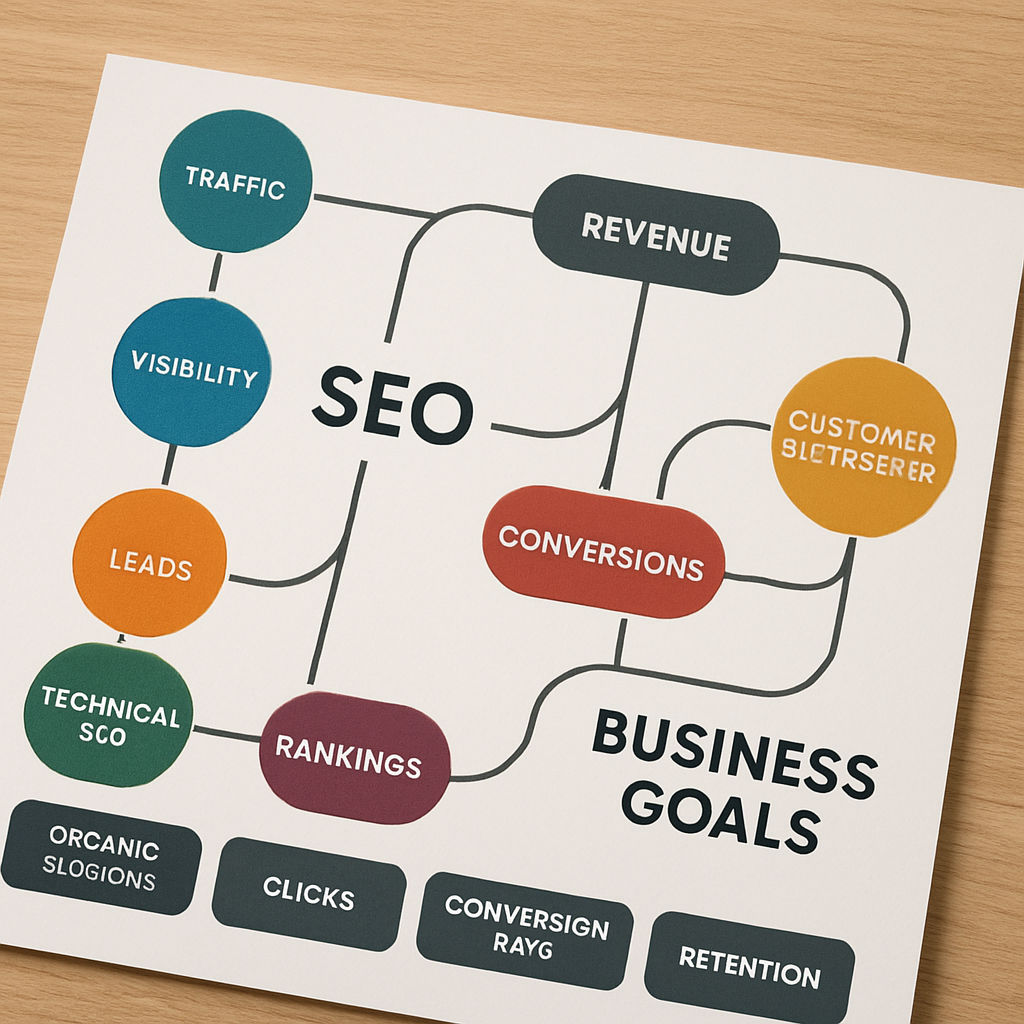
'Align Objectives with Business Goals
'Your website exists to support broader business goals; hence, your SEO objectives should align with them. For instance, if you're an e-commerce site aiming for increased sales, focus on optimizing product pages and improving conversion funnels.'
Finally, remember that establishing these objectives isn’t just a one-and-done task; it’s an ongoing process. Revisit them regularly as market conditions change or as new opportunities arise. The digital landscape is ever-evolving, and so should be your strategies.
So grab your favorite beverage, fire up those analytics tools, and start crafting an SEO audit checklist that not only meets but exceeds expectations! You'll be amazed at how much clarity this brings to your optimization efforts.
A staggering 93% of online experiences begin with a search engine, which means if your website isn’t optimized, you’re missing out on a massive chunk of potential traffic. Imagine pouring your heart into a beautiful website only for it to be buried under the digital rubble of the internet. That’s where a solid SEO audit checklist comes into play.
Setting clear objectives for your SEO audit is like packing for a road trip; without knowing your destination, you might end up lost in the middle of nowhere—like that time I tried to find the best taco truck in town and ended up at a gas station.
Define Your Goals
Before you even think about crawling through analytics or checking backlinks, you need to pinpoint what you want to achieve. Are you looking to boost organic traffic? Improve rankings for specific keywords? Or perhaps enhance user experience? Each of these goals requires a tailored approach and specific metrics to measure success.
- Increase organic traffic by 30% over the next quarter.
- Achieve top 5 rankings for targeted keywords within six months.
- Reduce bounce rate by improving page load speed and content relevance.
Identify Key Performance Indicators (KPIs)
What gets measured gets managed—a phrase that rings true in the world of SEO audits. Once you've outlined your objectives, it’s time to identify KPIs that will help track progress toward those goals. Think of KPIs as your trusty GPS guiding you on this journey.
- Organic search traffic: Track growth using Google Analytics.
- 'Keyword ranking changes: Monitor shifts with tools like SEMrush or Ahrefs.
- 'Conversion rates: Measure how many visitors take desired actions on your site.
Clear objectives and measurable KPIs are crucial for an effective SEO audit checklist.
'Align Objectives with Business Goals
'Your website exists to support broader business goals; hence, your SEO objectives should align with them. For instance, if you're an e-commerce site aiming for increased sales, focus on optimizing product pages and improving conversion funnels.'
Finally, remember that establishing these objectives isn’t just a one-and-done task; it’s an ongoing process. Revisit them regularly as market conditions change or as new opportunities arise. The digital landscape is ever-evolving, and so should be your strategies.
So grab your favorite beverage, fire up those analytics tools, and start crafting an SEO audit checklist that not only meets but exceeds expectations! You'll be amazed at how much clarity this brings to your optimization efforts.
Technical SEO Assessment
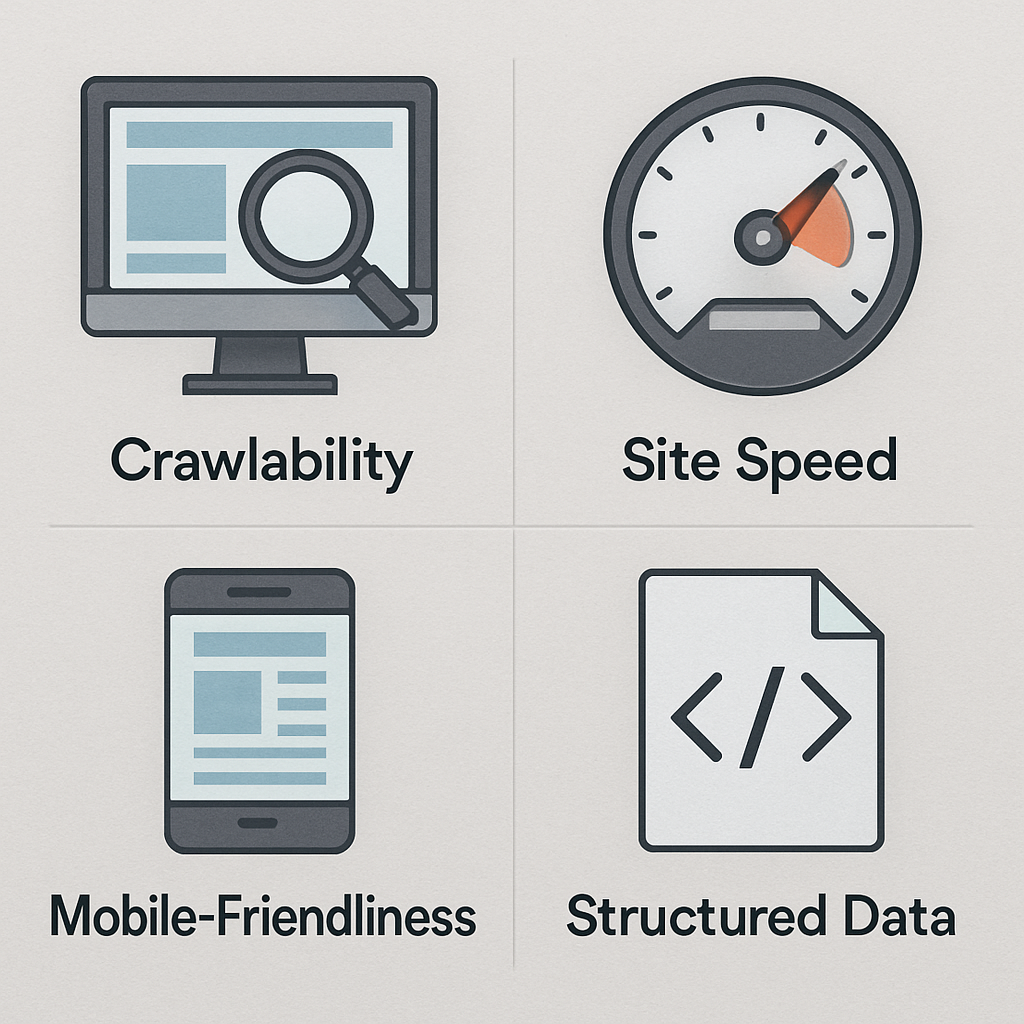
When it comes to technical SEO, skipping the assessment is like trying to build a house without checking the foundation—good luck with that! In fact, a staggering 70% of websites have at least one critical technical issue that could be holding them back from ranking higher.
Crawlability and Indexability
First things first: ensure search engines can crawl and index your site. Use tools like Google Search Console to check for crawl errors. You don't want a bot showing up at your door only to find it locked, right? Look for any 404 Not Found errors or blocked resources in your robots.txt file.
- Check for crawl errors in Google Search Console.
- Review your robots.txt file to ensure you're not blocking important pages.
- Utilize an XML sitemap to guide search engines through your site.
Site Speed Matters
Slow and steady wins the race might work in tortoise-and-hare scenarios, but not in SEO. According to Google, 53% of mobile users abandon sites that take longer than three seconds to load. Use PageSpeed Insights or GTmetrix to analyze your site speed and identify areas for improvement.
A fast website not only improves user experience but also boosts your rankings.
- 'Optimize images by compressing them without losing quality.
- 'Minimize HTTP requests by combining CSS and JavaScript files.
- 'Leverage browser caching to speed up repeat visits.
'Mobile-Friendliness: A Must-Have
'With over half of global web traffic coming from mobile devices, ignoring mobile-friendliness is like hosting a party but forgetting the snacks. Run your site through Google's Mobile-Friendly Test tool to see how it performs on smaller screens.
'Structured Data: The Secret Sauce
- Identify relevant schema types for your content (e.g., articles, products).
- Add structured data markup using JSON-LD format.
- Test implementation using Google's Structured Data Testing Tool.
Remember, technical SEO isn't just about fixing issues; it's about building a strong foundation for everything else you do online. Regular assessments should be part of your routine—think of it as routine maintenance for a car; neglect it, and you'll end up stranded on the side of the road!
Now that you've got this technical SEO assessment under your belt, it's time to put these insights into action! Start fixing those issues today so you can climb higher in search rankings tomorrow.
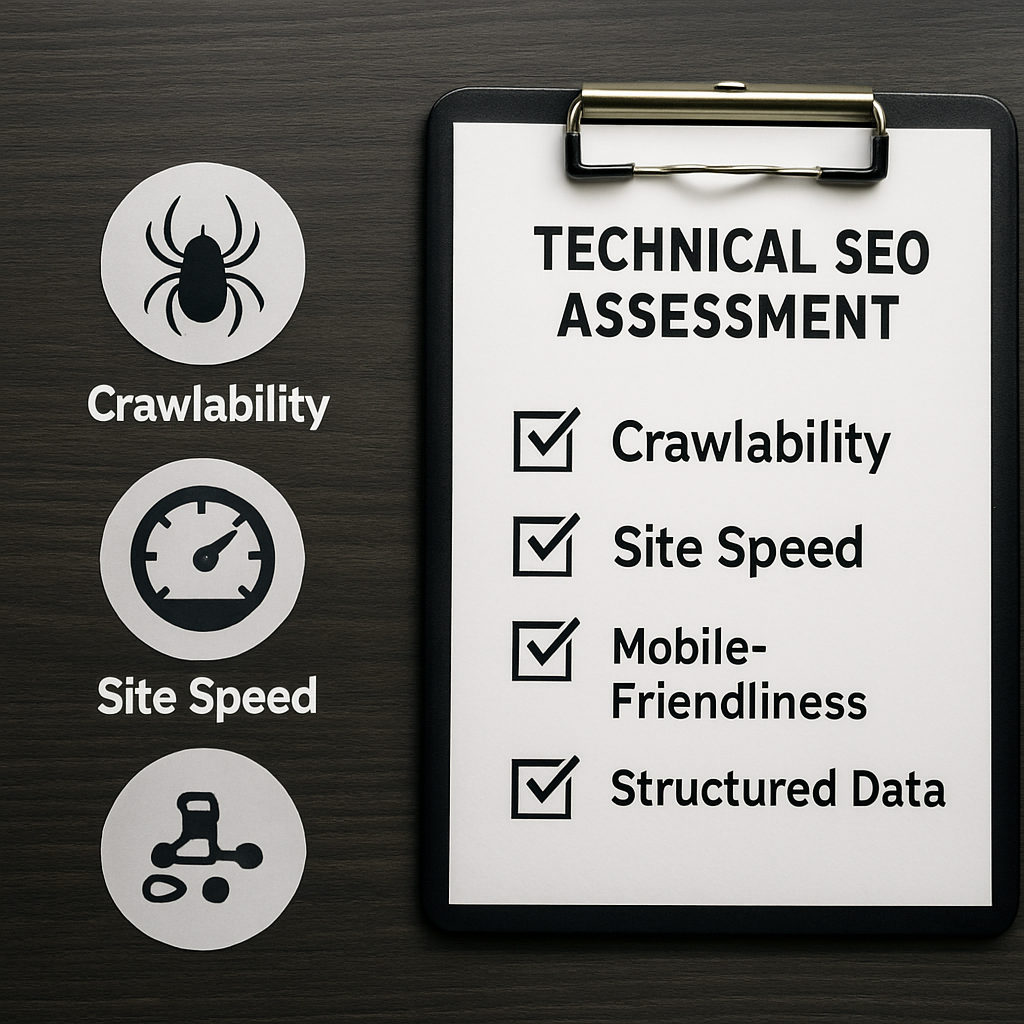
When it comes to technical SEO, skipping the assessment is like trying to build a house without checking the foundation—good luck with that! In fact, a staggering 70% of websites have at least one critical technical issue that could be holding them back from ranking higher.
Crawlability and Indexability
First things first: ensure search engines can crawl and index your site. Use tools like Google Search Console to check for crawl errors. You don't want a bot showing up at your door only to find it locked, right? Look for any 404 Not Found errors or blocked resources in your robots.txt file.
- Check for crawl errors in Google Search Console.
- Review your robots.txt file to ensure you're not blocking important pages.
- Utilize an XML sitemap to guide search engines through your site.
Site Speed Matters
Slow and steady wins the race might work in tortoise-and-hare scenarios, but not in SEO. According to Google, 53% of mobile users abandon sites that take longer than three seconds to load. Use PageSpeed Insights or GTmetrix to analyze your site speed and identify areas for improvement.
A fast website not only improves user experience but also boosts your rankings.
- 'Optimize images by compressing them without losing quality.
- 'Minimize HTTP requests by combining CSS and JavaScript files.
- 'Leverage browser caching to speed up repeat visits.
'Mobile-Friendliness: A Must-Have
'With over half of global web traffic coming from mobile devices, ignoring mobile-friendliness is like hosting a party but forgetting the snacks. Run your site through Google's Mobile-Friendly Test tool to see how it performs on smaller screens.
'Structured Data: The Secret Sauce
- Identify relevant schema types for your content (e.g., articles, products).
- Add structured data markup using JSON-LD format.
- Test implementation using Google's Structured Data Testing Tool.
Remember, technical SEO isn't just about fixing issues; it's about building a strong foundation for everything else you do online. Regular assessments should be part of your routine—think of it as routine maintenance for a car; neglect it, and you'll end up stranded on the side of the road!
Now that you've got this technical SEO assessment under your belt, it's time to put these insights into action! Start fixing those issues today so you can climb higher in search rankings tomorrow.
On-Page SEO Evaluation
If you think on-page SEO is just about sprinkling keywords like confetti, think again. A mere 20% of websites have optimized their on-page elements effectively, leaving a treasure trove of opportunities for those willing to dig deeper.
Picture this: you're a local bakery with the best chocolate croissants in town. You’ve got a stunning website, mouth-watering photos, and a loyal customer base. But if your on-page SEO is as stale as last week's bread, potential customers searching for best chocolate croissants near me might never find you. Ouch!
Title Tags and Meta Descriptions
First up, let’s talk title tags and meta descriptions. These are your website's first impressions in search results—like your bakery's enticing window display! A well-crafted title tag should include your primary keyword and be under 60 characters to avoid getting cut off. For example, instead of a bland Welcome to Our Bakery, try Freshly Baked Chocolate Croissants | [Your Bakery Name].
Meta descriptions should be compelling enough to make users click but also include relevant keywords without sounding robotic. Think of it as the icing on the cake—sweeten the deal! Aim for around 150-160 characters.
- Include primary keywords in title tags.
- Keep title tags under 60 characters.
- Write engaging meta descriptions with relevant keywords.
- Limit meta descriptions to 150-160 characters.
Header Tags: The Structure of Your Content
Header tags are like the chapters in a book—they help readers navigate your content. Use H1 tags for your main title (and only one per page), while H2 and H3 tags can organize subheadings and sections. This not only improves readability but also helps search engines understand the hierarchy of your content.
If you think on-page SEO is just about sprinkling keywords like confetti, think again. A mere 20% of websites have optimized their on-page elements effectively, leaving a treasure trove of opportunities for those willing to dig deeper.
Picture this: you're a local bakery with the best chocolate croissants in town. You’ve got a stunning website, mouth-watering photos, and a loyal customer base. But if your on-page SEO is as stale as last week's bread, potential customers searching for best chocolate croissants near me might never find you. Ouch!
Title Tags and Meta Descriptions
First up, let’s talk title tags and meta descriptions. These are your website's first impressions in search results—like your bakery's enticing window display! A well-crafted title tag should include your primary keyword and be under 60 characters to avoid getting cut off. For example, instead of a bland Welcome to Our Bakery, try Freshly Baked Chocolate Croissants | [Your Bakery Name].
Meta descriptions should be compelling enough to make users click but also include relevant keywords without sounding robotic. Think of it as the icing on the cake—sweeten the deal! Aim for around 150-160 characters.
- Include primary keywords in title tags.
- Keep title tags under 60 characters.
- Write engaging meta descriptions with relevant keywords.
- Limit meta descriptions to 150-160 characters.
Header Tags: The Structure of Your Content
Header tags are like the chapters in a book—they help readers navigate your content. Use H1 tags for your main title (and only one per page), while H2 and H3 tags can organize subheadings and sections. This not only improves readability but also helps search engines understand the hierarchy of your content.
Frequently Asked Questions

Written by
Michael TorresMichael is an SEO analyst and data nerd obsessed with rank tracking, SERP trends, and algorithm updates. He has spent the last 6 years turning search data into actionable content strategies for startups and growth-stage companies.