










Table of Contents
- 1 Understanding Search Engine Positioning: What It Means For Your Business
- 1.1 How search engine positioning translates into business value
- 1.2 Core determinants of search engine positioning for businesses
- 1.3 Metrics and tools to measure positioning and business impact
- 1.4 Common causes of poor positioning and prioritised remediation
- 1.5 A practical 90-day roadmap for improving search engine positioning
- 1.6 How to incorporate Ranklytics into your positioning workflow
- 1.7 Realistic examples and decision rules for allocating resources
- 1.8 Action checklist and next steps for business teams
- 1.9 Frequently Asked Questions
Understanding Search Engine Positioning: What It Means For Your Business
Search engine positioning is the practical measure of where your pages appear on the search engine results page and how visible they are to customers, and it directly influences traffic quality, brand discovery, and customer acquisition cost. This article breaks down what determines positioning – relevance and intent, content and authority, and user experience – shows how to connect ranking movement to revenue, and offers a 90-day roadmap for prioritised action. You will also see how to use Ranklytics for keyword planning, AI-assisted content briefs, and continuous rank monitoring so your team can move from activity to measurable outcomes.
How search engine positioning translates into business value
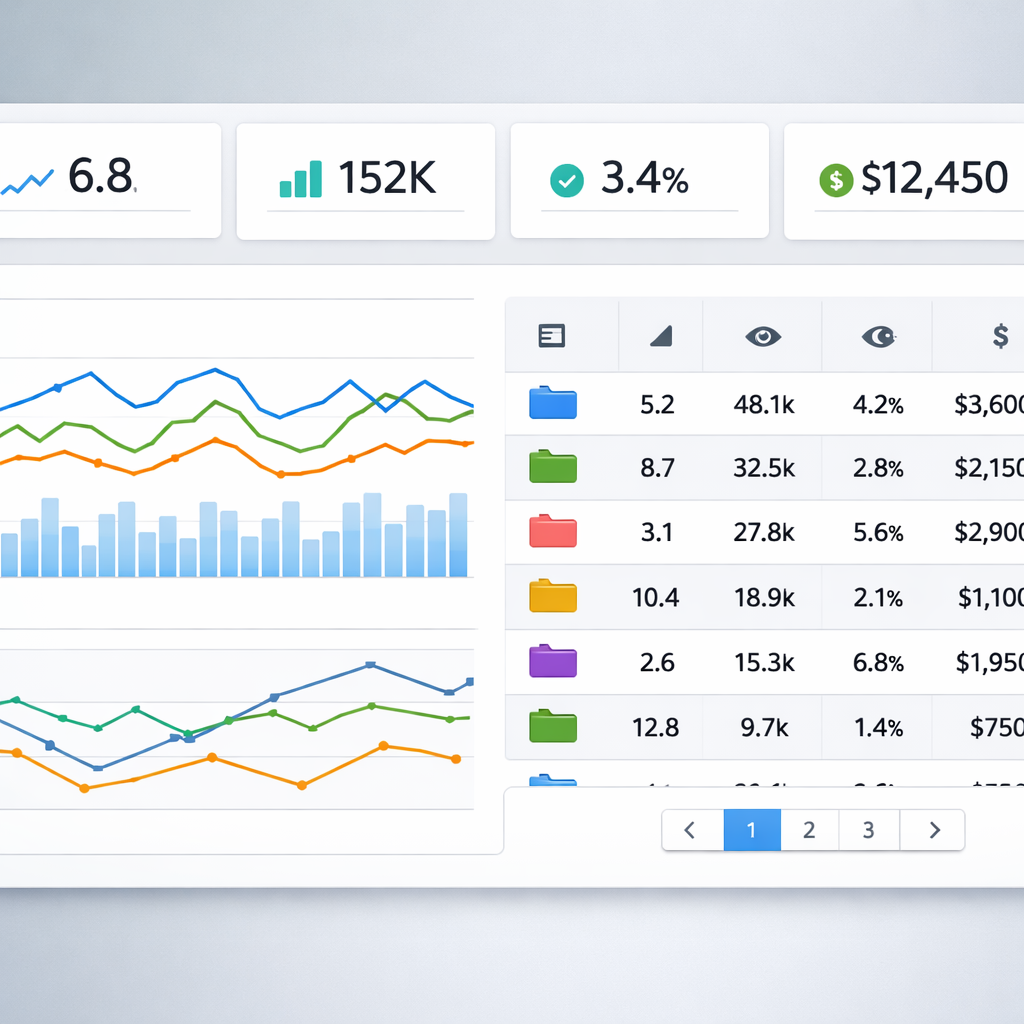
Position on the SERP is a revenue lever, not an abstract KPI. Being visible where users search converts into predictable streams of traffic, and with a simple math model you can translate rank changes into expected leads and customer acquisition costs.
Direct and indirect value channels
Direct value: organic impressions turn into clicks, clicks into sessions, sessions into leads and revenue. Track impressions, click-through rate, organic sessions, and goal conversions by keyword group to see this flow. Indirect value: search visibility increases brand discovery, shortens other acquisition channels, and contributes to assisted conversions that show up in multi-touch attribution.
- Short-term metrics: impressions, CTR, clicks, average SERP position.
- Bottom-line metrics: leads, demo requests, transactions, revenue per keyword group.
- Contextual metrics: SERP feature ownership, branded versus non-branded share of voice, and assisted conversions.
Measurement approach that ties position to money. Build a value-per-click model for priority keywords: estimate conversion rate from organic traffic and expected average order value or lifetime value. Multiply that by expected click volume by position band and you have a decision-ready ROI for chasing a top-3 position versus alternative investments.
Practical limitation and trade-off. Position alone is an incomplete signal. A top-ranked page that mismatches intent will produce clicks but few conversions. Conversely, owning a featured snippet or product listing can shift clicks as much or more than moving from position two to one. Prioritise fixes that improve both position and intent alignment.
Concrete example: A product category page ranking first for a commercial query will typically capture a large share of clicks; the average CTR for the top organic result is around 33% (SEMrush). If that page moves from page two to the top 3, expect a material increase in lead volume and a lower acquisition cost, provided the page matches purchase intent and the checkout or lead form converts at an acceptable rate.
Where teams waste time. Many teams chase broad authority signals before fixing intent mismatch and on-page experience. In practice, content improvements and on-page SEO deliver faster, measurable gains when the page already serves the right intent. Prioritise backlink building only when high-quality content exists but is losing out to domain authority gaps.
Tools that make the translation practical. Use Google Search Console for impressions and CTR by query, Google Analytics for conversions and behavior, competitive backlink data from Ahrefs or SimilarWeb, and a platform like Ranklytics for grouping keywords by intent, producing briefs, and continuous rank tracking to connect activity to outcomes.
Key consideration: improving position must be judged by incremental conversions and cost avoided, not position alone.
Core determinants of search engine positioning for businesses
Short answer: four practical signal clusters drive where your pages appear on the SERP — intent alignment, content quality & topical depth, authority/backlinks, and user experience/technical signals. Each cluster interacts; neglect one and the others pay less than you expect.
Relevance and search intent alignment
Core point: pages that match the user intent behind a query beat superficially optimised pages. Focus on format and intent (comparison, how-to, transactional) before you worry about keyword density or meta tags. Use search query analysis to map intent buckets and design a single canonical page for each high-value intent to avoid cannibalisation.
Content quality and topical depth
Core point: depth and topical coverage matter more than chasing exact-match keywords. Build hub-and-cluster structures where a single authoritative hub resolves the primary intent and clusters cover related subtopics. This reduces churn from algorithm updates and increases chances of capturing SERP features like featured snippets and people-also-ask.
Authority signals and backlink building
Core point: backlinks from relevant, authoritative domains remain a decisive tiebreaker on competitive queries. But links cost time and budget. If your content is weak, links amplify nothing — invest in content first when intent misalignment is the problem. Prioritise link acquisition only when you already have competitive content that needs a credibility boost.
User experience and technical SEO improvements
Core point: page speed, mobile usability, structured data, and clear information architecture affect both crawling and user engagement. These are often the fastest wins for position movement on mid-competition queries because they improve conversion and reduce bounce, which changes behavioural signals search engines observe. Use quick diagnostics to catch regressions after releases.
- Practical trade-off: invest in content depth when intent mismatch is the problem; invest in backlinks when content quality is already competitive.
- Limitation: technical fixes give a ceiling lift but rarely replace the need for topical authority in high-competition verticals.
- Measurement note: track position bands, CTR, and conversion rates together — position alone misleads.
Concrete example: An ecommerce site selling office chairs had good product descriptions but ranked poorly for the comparison intent keyword office chair vs ergonomic chair. The team created a single comparison page that matched commercial intent, added internal links from related guides, and ran a targeted outreach campaign to three industry review sites. Within 12 weeks the page moved into the top 5 and organic conversion value rose because the page matched intent and had improved authority.
Judgment: most teams over-prioritise backlinks because they are easy to package as campaigns. In practice, start by proving content relevance against intent and then use outreach to break past competitors who have higher domain authority. If you have limited resources, quick UX and technical wins produce measurable lift faster than broad link-chasing.
Next consideration: after addressing these determinants, design experiments that change one variable at a time — a rewrite, a speed improvement, or a targeted outreach — so you can attribute shifts in search engine positioning to specific investments.
Metrics and tools to measure positioning and business impact
Position data alone is a vanity metric unless you connect it to impressions, clicks, and conversions. Average SERP position tells you where a page sits, but business decisions require the next layer: how many people saw the listing, how many clicked, and how many converted.
Which metrics matter and why
Core metrics: track average position, impressions, clicks, CTR, organic sessions, goal conversions, assisted conversions, and revenue per organic visitor.** Position explains visibility; impressions and CTR explain opportunity capture; conversions and revenue show business impact.
SERP feature and visibility metrics matter as much as position. Capture of featured snippets, local pack presence, product listing impressions, and knowledge panels will change click distribution. A top three position that loses clicks to a shopping carousel is not equivalent to a top three without that feature.
Practical tools and what each gives you
Google Search Console provides query-level impressions, average position, and CTR. Use it for baseline visibility and to spot keyword trends by device and country. See Google Search Central SEO Starter Guide for measurement basics.
Analytics platform (Google Analytics or GA4) links organic sessions to goals and revenue. Do not try to infer conversions from rank data alone; attribute conversions to organic landing pages and then map those pages back to keyword groups.
Competitive and backlink tools (Ahrefs, SEMrush, Moz) are for market context – backlink profiles, competitor rankings, and keyword difficulty. Use them when you need to decide between on-page work and backlink building.
Ranklytics is useful for grouping keywords by intent, monitoring SERP feature capture, generating alerts for position shifts, and producing data-driven content briefs that map to target intent. Combine Ranklytics with GSC and analytics data to move from insight to action.
- Position band reporting: segment keywords into bands 1, 2-3, 4-10, 11-20 to compare CTR and conversion rates by band and set realistic targets
- Intent segmentation: group queries into commercial, transactional, informational and local to measure value per keyword set
- Value-weighted prioritisation: calculate expected leads by multiplying forecasted clicks by measured conversion rate and average deal value
Tradeoffs and limitations to account for. Third-party rank trackers use different data centers, device emulation, and locales which produce variation. Personalization and localization mean no single position number is definitive. Smooth rank noise with a 7 to 14 day moving average and check ranks from buyer geographies and mobile devices.
Measurement blindspots. Query-level data in Google Search Console is sampled and historic; Search Console will not tell you which external link caused a ranking shift. Backlink tools estimate link authority but cannot prove causation. Expect to use multiple signals and human judgment to infer impact.
Concrete example: A B2B SaaS product tracked 30 commercial keywords and mapped them to three landing pages. After optimizing on-page intent and updating meta titles, average position moved from 12 to 6 for the primary set. Impressions rose 180 percent, clicks rose 70 percent, and pipeline-qualified leads from organic increased 2.4x in 10 weeks, proving that position improvement plus intent alignment converted to measurable revenue.
| Metric | Why it matters for business reporting |
|---|---|
| Average position | Shows visibility trend but not click yield |
| Impressions | Measures potential audience and share of voice |
| CTR | Indicates relevance and title/description effectiveness |
| Organic conversions | Direct tie to revenue and acquisition cost |
| SERP feature capture | Shifts clicks and should shape content format decisions |
Do not chase position for its own sake. Prioritise keywords where the traffic volume, conversion rate, and average deal value imply a positive ROI.
Next consideration: start your measurement with a defined keyword asset list mapped to landing pages, choose an agreed conversion metric, and run a 90 day measurement window with weekly rank smoothing and monthly conversion reviews. Track long tail queries too since more than half of searches are four words or more which is where intent clarity often lives Long tail keyword research.
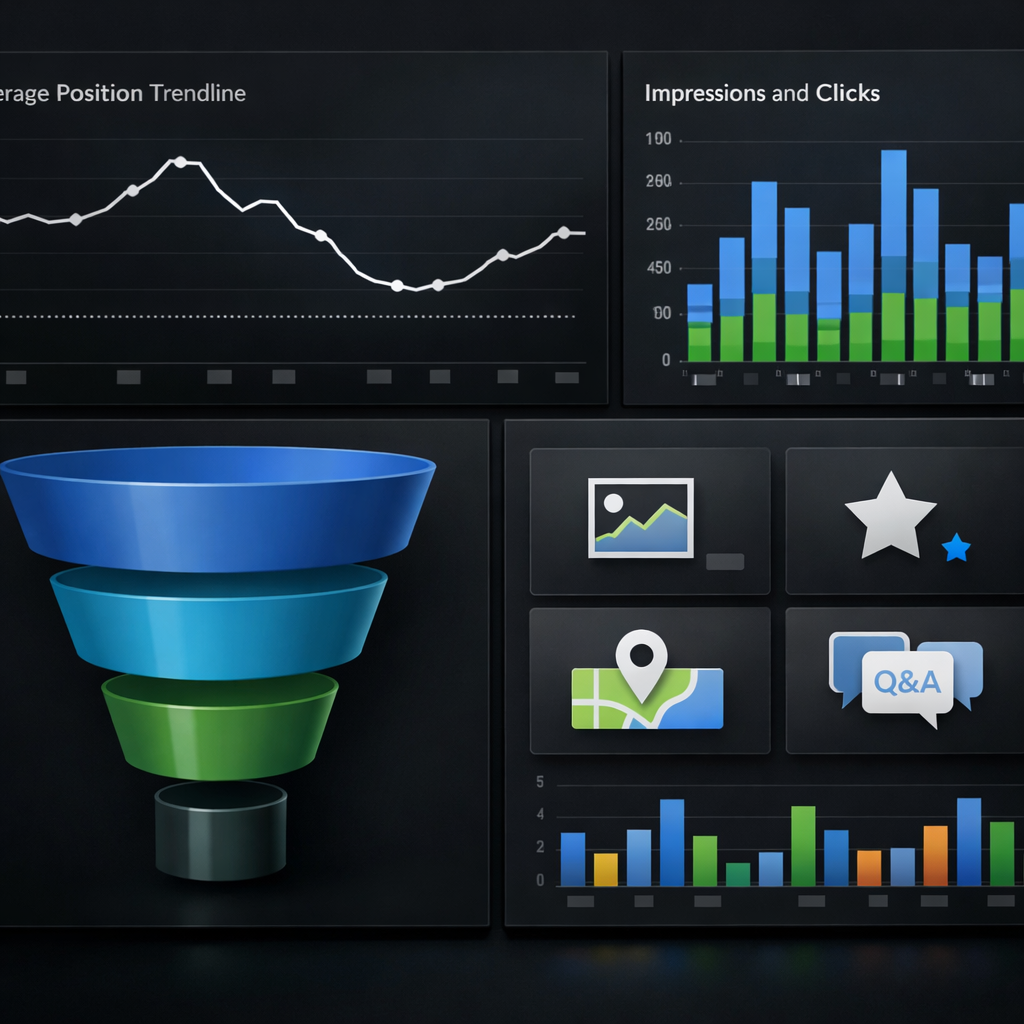
Common causes of poor positioning and prioritised remediation
Most poor search engine positioning stems from a small set of predictable failures rather than mysterious algorithm changes. Fix the right failure first and you get leverage; fix the wrong thing and you waste months of effort.
Top causes and why they matter
Misaligned content and intent: Pages that target the wrong intent attract impressions but not clicks or conversions. Remediation focuses on rewriting for intent and changing the page type when needed (transactional vs informational).
Thin, duplicate content and cannibalisation: Multiple weak pages fighting the same keywords dilute ranking signals and confuse crawlers. Consolidation or canonicalisation is usually faster and higher ROI than producing more thin pages.
Insufficient authority: Good on-page work stalls when competing pages have stronger backlink profiles from high-authority domains. This requires targeted backlink building and PR, not more keyword stuffing.
Technical and UX blockers: Crawl errors, slow pages, or mobile usability problems reduce indexing or user engagement and amplify ranking problems. These are high priority because they make other work ineffective.
Prioritised remediation matrix
| Cause | Immediate remediation | Expected timeline |
|---|---|---|
| Misaligned intent | Retarget or create correct page type; update meta titles and H1 to reflect intent | 2–6 weeks |
| Cannibalisation / thin content | Audit similar URLs, consolidate, set canonicals or redirects | 1–4 weeks |
| Low authority | Identify top pages for outreach; run targeted backlink campaigns | 3–6 months |
| Page speed / mobile issues | Prioritise Largest Contentful Paint and mobile usability fixes | 1–8 weeks depending on dev backlog |
- Quick triage first: Run a 30-minute audit combining Google Search Console impressions, page CTR, and the site search to find intent mismatches.
- Fix blockers next: Resolve crawl errors, meta tag problems, and obvious mobile issues so content work can take effect.
- Consolidate underperformers: Merge or redirect thin pages before commissioning new content.
- Target authority where needed: Use outreach for a handful of strategic pages rather than broad link churn.
Practical trade-off to accept: If you have limited content resource, prioritize depth for fewer pages that map to high-value intent rather than broad coverage. Volume-first approaches often increase maintenance cost and reduce search visibility per page.
Concrete example: A B2B software site ranks on page two for a buyer-intent query because the landing page is a feature list targeting informational intent. The remediation was to build a focused pricing/comparison page, update internal links and meta copy, and run three outreach emails to industry reviewers. Within 8 weeks impressions and CTR rose, and the page began converting trial signups at a measurable rate.
Fixing technical and intent mismatches delivers the fastest measurable lift; link building is effective but slower and should be targeted.
Where teams commonly misjudge effort: Many assume writing more content will outrank competitors. In practice, content without clean intent alignment, internal linking, and at least baseline authority will not climb. Use Ranklytics to accelerate intent mapping and brief production, and consult the Google Search Central SEO Starter Guide for technical baseline checks.
Next consideration: After these fixes, monitor position and conversions for 4–12 weeks and only then decide whether the next investment is more content, technical work, or authority building – that sequencing prevents wasted effort and clarifies ROI.
A practical 90-day roadmap for improving search engine positioning
Direct claim: A focused 90-day sprint will not guarantee top rankings for every competitive term, but it will produce measurable improvements in search visibility and conversion-ready traffic when you prioritise by business value, intent, and resource cost.
Phase overview and how to choose priorities
Key principle: Prioritise work that moves revenue first. Filter candidate keywords by intent, estimated conversions, and difficulty, not just volume. Use Google Search Console for query-level signals and a tool like Ranklytics to score business value and set alerts.
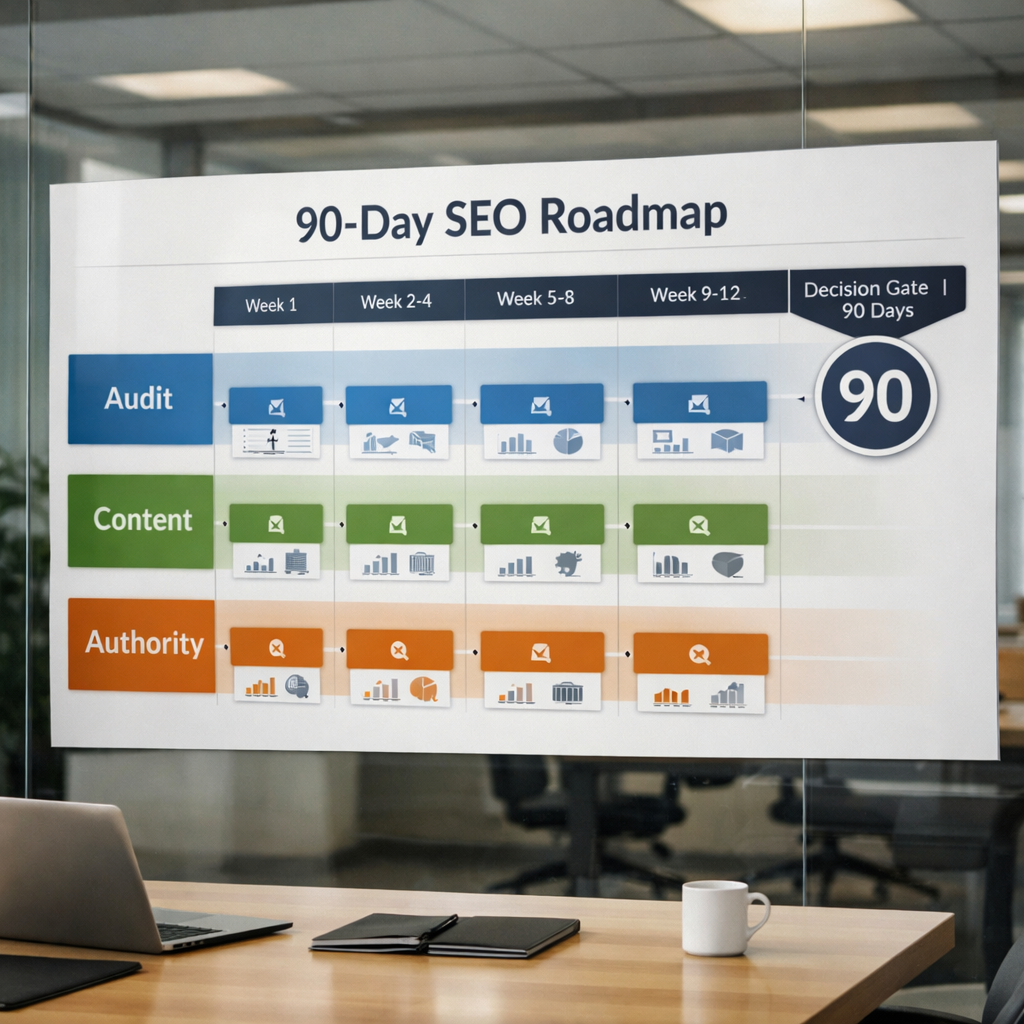
- Days 1 30: Audit and prioritisation: Export queries and landing pages from Search Console, map them to business outcomes, and produce a target keyword list with intent tags and expected conversion value. Deliverables: target list, content gap map, and a ranked remediation backlog. Tradeoff: spend less time chasing high-volume, low-intent queries; focus on fewer high-value targets.
- Days 31 60: Content production and on-page optimisation: Create or overhaul 3 to 6 pages: one primary conversion page per target cluster plus supporting content that answers adjacent informational queries. Include meta tags, header hierarchy, internal linking, and clear CTAs tailored to intent. Use Ranklytics to generate AI-assisted briefs and recommended on-page elements, but have an editor add commercial nuance and brand voice. Limitation: rapid content rolls will not outrank established authority without distribution and links.
- Days 61 90: Authority building and measurement: Run targeted outreach for backlinks to the new or updated pages, monitor SERP feature capture, and iterate on underperforming pages. Establish weekly rank trend checks and a 30 60 90 day conversion review. Tradeoff: outreach costs time and budget; if link acquisition is constrained, reallocate to amplification via partnerships and PR.
Concrete example: A B2B SaaS product targets three mid-funnel keywords with known trial conversion value. In month one the team identifies two low-difficulty opportunity phrases and an underperforming product page. In month two they publish a conversion-optimised landing page plus two how-to guides mapped to the trials flow. In month three they secure three backlinks from relevant industry blogs and measure a measurable increase in organic trials from the targeted pages. This sequence produced measurable leads within 90 days because the team prioritized intent and conversion value over raw volume.
90-day decision gate: if fewer than 30 percent of priority keywords are in the top 20 after 90 days, escalate either to link building or to technical performance fixes based on the audit findings.
Practical insight and judgement: Low-effort on-page fixes and targeted high-intent content deliver the fastest wins. However, for competitive commercial terms you must budget for authority work; content alone will stall. In practice this means split your sprint budget 60 percent content and 40 percent outreach or PR for mid to high competition targets.
How Ranklytics fits: Use Ranklytics to filter keywords by intent and estimated business value, produce data-driven content briefs, and set alerts for ranking shifts and SERP feature opportunities. Pair Ranklytics outputs with manual editorial review and outreach execution for best results. See the pragmatic considerations of AI-assisted content in The Pros and Cons of AI in Content Writing.
Next consideration: After the 90-day gate, convert the backlog into a rolling plan: repeat the audit for the next set of priority keywords, scale what worked, and stop what did not produce measurable conversion lift.
How to incorporate Ranklytics into your positioning workflow
Start with outcomes, not features. Use Ranklytics to translate target revenue or lead goals into a ranked set of keyword opportunities, then treat the platform as the central planner for content and monitoring rather than a one-off research tool.
1. Setup and prioritisation
Connect and validate data sources. Link Google Search Console and your analytics view so Ranklytics can map impressions and clicks to on-site conversions; this mapping is essential for valuing keywords and avoiding wasted effort on low-value high-volume queries. See Google Search Central for verification best practices.
- Create intent-scored keyword buckets: Group keywords by commercial, transactional, informational, and local intent; Ranklytics supports tagging — use it. Prioritise commercial intent with proven conversion history first.
- Value each keyword: Combine search volume, current position, and conversion rate (or proxy value). Ranklytics rank-trend data lets you calculate expected traffic lift by moving from position 8 to 3; use that to rank opportunity.
- Set a 90-day target list: Choose a mix of quick wins (low competition, indexable gains) and strategic wins (topical hubs that require more effort).
2. Content production and quality controls
Use AI briefs as a time-saver, not a replacement. Ranklytics generates structured briefs and draft copy aligned to target intent and recommended on-page elements. Expect to spend 30-60% of time editing for brand voice, accuracy, and proprietary product details.
- Enforce an editorial gate: Require one SME and one editor to review AI drafts before publishing.
- Embed on-page checklist into the workflow: meta tags, H1 alignment with intent, required internal links to hub pages, and schema suggestions where relevant.
- Use Ranklytics content briefs to standardise briefs: this reduces variance in quality and speeds up contractor onboarding.
Trade-off to accept: automation reduces time-to-publish but amplifies errors if you skip human review. In practice, teams that treat AI output as first draft avoid brand or factual mistakes and preserve positioning gains.
3. Monitoring, alerts and iterative decisions
Make Ranklytics your rank and SERP-feature hub. Set keyword groups, track position bands, and enable alerts for drops or new SERP features so you can act quickly — either refresh content, add supporting pages, or start outreach.
- Weekly reviews: check top 30 priority keywords for movement and CTR changes; flag pages with falling CTR despite stable position.
- Trigger rules: if a target keyword loses more than 3 positions or a competitor takes a featured snippet, queue a refresh or a rapid test within 7 days.
- Use evidence to decide outreach: if Ranklytics shows strong content relevance but low domain visibility, prioritise backlink campaigns and pair with competitive backlink checks in Ahrefs or SEMrush.
Limitation to plan for: Ranklytics excels at planning and monitoring content-driven gains; its backlink dataset and enterprise crawl depth may not replace specialised backlink tools for aggressive link acquisition strategies. Pair tools deliberately.
Concrete example: A B2B SaaS team targets the phrase subscription management software pricing. They use Ranklytics to group related queries, generate an AI brief for a pricing page plus two supporting comparison guides, publish after SME edits, and set alerts for position and snippet changes. Within six weeks they see improved CTR for the pricing page and a measurable lift in demo sign-ups tied back to the tracked keyword group.
Next consideration: define clear decision gates (when to refresh content, when to launch outreach, when to stop investing) and enforce them through Ranklytics alerts so positioning work maps directly to business outcomes.
Realistic examples and decision rules for allocating resources
Start with expected incremental value, not tasks. Allocate SEO effort by estimating the additional conversions or revenue a better search engine positioning will produce, then compare that to cost and time to execute. This flips the common mistake of prioritising busywork such as dozens of blog drafts without evidence they will move the needle.
Decision rules to guide where to invest
- Prioritise high-intent, high-value keywords when conversion value is known. If a single top position can generate customer value that covers production plus outreach costs within three months, make it a priority.
- Fix high-impact technical issues before scaling content. Mobile usability and slow pages reduce returns on content and link investment. Spend developer cycles where they unblock visible traffic gains.
- Choose content over links when relevance is the limiting factor. If competitor pages outrank you because they answer intent better, improve content depth and structure first; backlinks help after content quality is competitive.
- Choose links over content when authority is the bottleneck. If your page is topically strong but never breaks past position 8 to 12 against high-authority domains, allocate outreach budget to targeted backlink building.
Practical tradeoff to accept. Backlink acquisition has longer lead times and variable ROI. Content creation is predictable in cost and scope but will not outrank high-authority sites without time or links. Most teams must sequence work: remove technical blockers, create targeted content, then run concentrated outreach for a subset of priority pages.
Quick allocation matrix — pick a play and stick to it
| Situation | Recommended primary investment | Typical timeframe | Why this matters |
|---|---|---|---|
| Small site with weak backlinks but some relevant pages | Targeted link outreach to 5 pages + one high-quality supporting article | 60–90 days | Authority lifts let existing content convert; quicker rank movement on commercial queries |
| Pages with low relevance and high bounce | Content rewrite focusing on intent and structured headings | 30–60 days | Improves CTR and on-page signals; cheaper than outreach and often sufficient for niche queries |
| Site with mobile or speed issues | Technical fixes (mobile-first, LCP improvements) | 2–6 weeks | Unblocks all other efforts; prevents wasted content and link spend |
| Brand building or broad awareness goals | Topical hub plus multiple long-form articles and PR outreach | 3–6 months | Invests in long-term search visibility and SERP feature capture |
Concrete example: A B2B SaaS product sells at an average contract value of $2,400 annually. A target commercial query has 1,000 monthly searches. If a first position capture yields ~30% CTR, that is 300 clicks; at a 2% demo request rate that is six leads, and at a 20% sales close rate that is 1.2 customers worth about $2,880 monthly. If producing the landing page and two supporting guides plus targeted outreach costs $6,000 and takes 60 days, the expected three month revenue justifies the investment. That calculation makes resource allocation defensible to finance.
Judgment most teams miss. Many organisations treat all keywords as equal. In practice, you should categorise by intent clarity and competitive gap. Pick a small set of high-return keywords where you can reasonably move into top three within 3 months and concentrate resources there. Spreading thin across too many topics gives no clear signal to search engines and dilutes limited outreach capacity.
Allocate by expected business outcome, not equal time slices. One focused campaign that moves a keyword from page two to page one is better than ten half-done posts.
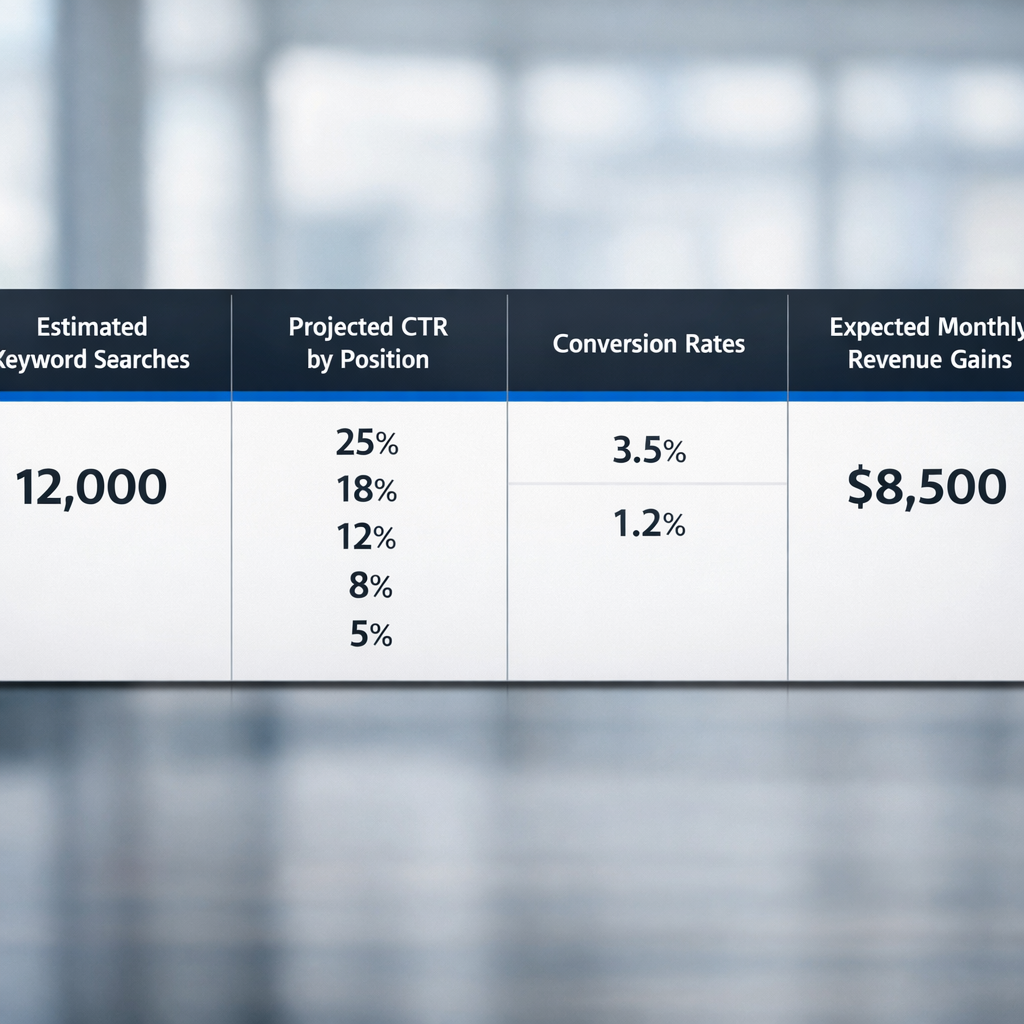
Next consideration: build a short list of five candidate keywords and run this simple value calculation for each. Use those results to sequence work across content, technical fixes, and outreach, and document assumptions so you can iterate when results differ from expectations. For help accelerating the research and briefing steps, see Ranklytics resources such as The Pros and Cons of AI in Content Writing.
Action checklist and next steps for business teams
Start with a short, executable list you can run every week. Convert your strategic target keywords into operational tasks: export current query performance, pick priorities, assign owners, and schedule content or outreach work — repeatable rituals beat one-off audits.
- This week (immediate): Export top queries from Google Search Console and filter by intent; choose five priority keywords where conversion value is known or can be estimated.
- Create briefs: Draft two content briefs for the highest-value keywords and assign one content owner and one reviewer for each brief.
- Low-effort wins: Update meta title and description for three pages with high impressions but low CTR; fix obvious mobile usability issues flagged in your mobile audit — see Mobile SEO Audit: 7 Benefits & How to Do One in 30 Minutes.
- Backlink triage: Identify three competitor-referring domains for outreach that are realistic to win given your budget and relationships.
- Set alerts: Configure rank and traffic alerts in your toolset (Ranklytics or equivalent) for >20% traffic drops or new SERP feature losses on priority keywords.
Monthly governance and resource rules
Monthly cadence: Run one content production sprint, one outreach campaign, and a rank-performance review tied to business KPIs.** Keep the cycle disciplined: create, test, measure, then decide — don’t pile new topics onto underperforming pages.
Decision gate at 30 days for tactical fixes, 90 days for strategic changes. If a content change produces no uplift in 30 days, iterate the content or reassign the keyword. If a keyword still lags after 90 days and content quality is high, escalate to authority work (link acquisition or PR).
- When to prioritise content over links: choose content if your pages fail on relevance, depth, or intent alignment despite reasonable performance signals.
- When to prioritise links over content: choose links when your content matches intent and competitors outperform you on domain authority or backlink volume.
- When to involve devs: open a ticket for technical SEO when page speed or mobile issues are causing >15% bounce on priority landing pages or Core Web Vitals fail on pages driving conversions.
A practical trade-off to accept: with limited resources, invest first where you can control outcomes — content and on-page SEO. Backlink building is valuable but slow and uncertain; treat outreach as a parallel, measurable project, not a substitute for solid content.
Concrete example: A B2B software team identifies a commercial keyword with steady impressions but mid-funnel intent. They create a single transactional landing page, a supporting how-to guide, and a two-week outreach push to earn three industry backlinks. After 60 days they measure not just rank but demo requests and cost per lead to evaluate whether to scale the approach.
Focus reporting on visibility to value — impressions and CTR matter, but track clicks and conversions by keyword group to show real business impact.
Reporting cadence and escalation triggers: present a one-slide status at weekly marketing standups and a deeper review monthly. Escalate when a priority keyword sees a sustained >30% drop in clicks for 14+ days or when conversion rate falls below the expected baseline — treat these as operational incidents, not noise.
Use tools smartly, not slavishly. Automate data collection with Ranklytics or Google Search Console, but use human review to interpret intent shifts, algorithm update impact (see Google Search Central), and competitor moves. Alerts are useful — but they should trigger prioritized actions, not frantic rework.
Frequently Asked Questions
Direct answer up front: search engine positioning matters only when it moves the right traffic into your conversion funnel. Ranking increases that deliver uninterested visitors or low-intent clicks are noise. Focus on position plus intent plus conversion value.
Measurement and attribution
- How is search engine positioning different from general SEO effort tracking: Positioning is a performance metric — where you appear on the SERP for target queries. SEO effort tracking is activity-level: pages published, links attempted, tickets closed. You need both, but positioning must be coupled to business KPIs (conversions, lead value) to judge effectiveness.
- Which single metric should business leaders track: There is no single metric that covers visibility and value. Combine impressions (visibility), CTR (relevance), and conversions or revenue (business outcome). Report by position bands (1, 2-3, 4-10, 11-20) to see where investment shifts behavior.
- How long to expect results: Low-competition, long-tail queries can move in weeks; competitive commercial terms usually take months. Expect measurable business outcomes in 3 to 6 months for most mid-market priorities; faster only if intent is tightly matched and technical issues are absent.
Strategy trade-offs and when to choose tactics
- When to prioritise content over backlinks: If your pages fail to satisfy the user intent or are thin, fix content first. Backlink building buys visibility only when you already have something worth ranking.
- Head terms versus long-tail: Chasing high-volume head terms is resource-heavy and often slower; prioritise high-intent mid-tail queries where conversion value outweighs traffic volume.
- SERP feature focus: Target features that match intent — featured snippets for information, product listings for transactional queries, and local packs for geo intent. Capturing a SERP feature can reduce CPC and increase qualified clicks, but it may reduce overall click volume if visibility shifts away from the main result.
Concrete Example: A B2B SaaS marketing team found their demo-request page ranking fifth for a core commercial keyword. They updated the page to match buyer intent (clear pricing cues and CTA), consolidated two competing blog posts to remove cannibalisation, and focused outreach to three industry blogs. Within 10 weeks they moved to position two and demo conversion rate rose 35 percent — the ranking lift mattered because the page matched buying intent and the funnel was optimised.
Practical limitation to accept: Rankings are volatile and influenced by algorithm updates and competitor moves. Build short feedback loops: weekly rank checks, immediate content or meta adjustments for sudden CTR drops, and a 90-day review before changing strategic priorities. Use Google Search Central for signals Google documents and stay pragmatic about signals that actually move business metrics.
- Immediate actions: Export top queries from Google Search Console, tag them by intent, and pick three mid-tail keywords with clear conversion value to optimise this month.
- Next 30 days: Update or create pages mapped explicitly to intent, add measurement (goals and assisted conversions), and run a focused outreach list of 5 authoritative domains for link opportunities.
- Reporting cadence: Weekly rank snapshots, monthly conversion attribution by position band, and a 90-day decision gate to continue, pivot, or stop investment.

Written by
Emma RodriguezEmma is a digital marketing consultant specializing in technical SEO and international search strategy. With a background in linguistics and data analytics, she helps brands expand into new markets through multilingual SEO and structured content frameworks.