














Table of Contents
- 1 Best Free SEO Audit Tools to Improve Your Website Performance
- 1.1 Comprehensive Feature Analysis of Free SEO Audit Tools
- 1.2 Technical SEO Insights Provided by Free Tools
- 1.3 Content Optimization Capabilities in Free SEO Audit Tools
- 1.4 Backlink Analysis Features in Free Audit Tools
- 1.5 User Experience Metrics from Free SEO Audits
- 1.6 Limitations of Free SEO Audit Tools
- 1.7 Integrating Free SEO Audit Insights into Actionable Strategies
Best Free SEO Audit Tools to Improve Your Website Performance
Comprehensive Feature Analysis of Free SEO Audit Tools
A staggering 93% of online experiences begin with a search engine, yet many websites remain invisible due to overlooked SEO opportunities. Enter the free SEO audit tool—your website's secret weapon for visibility.
Imagine you're running an e-commerce store that just launched a new line of eco-friendly products. You’ve invested time and money into creating a stunning website, but sales are sluggish. What gives? Often, it’s not the product but how well your site is optimized for search engines. This is where a free SEO audit tool can shine a light on hidden issues.
Key Features to Look For
When sifting through the plethora of free SEO audit tools, some features stand out as essential for effective analysis. Here’s what you should prioritize:
- Keyword Analysis: Understand which keywords are driving traffic and which ones you’re missing.
- On-Page Optimization: Get insights on meta tags, headers, and content structure.
- Site Speed Evaluation: A slow-loading site can kill conversions—find out how fast your pages really are.
- Mobile Responsiveness Check: With mobile traffic skyrocketing, ensure your site looks great on all devices.
- Backlink Analysis: Discover your link profile and identify opportunities for improvement.
Comparing Popular Tools
Not all free SEO audit tools are created equal. Some are like that friend who always shows up late to the party—unreliable and frustrating. Others deliver detailed insights that can transform your strategy overnight. Here's a quick comparison of some popular options:
| Tool Name | Key Features | Limitations |
|---|---|---|
| SEO Site Checkup | ||
| Ubersuggest | ||
| Woorank | ||
| SEOptimer |
Pro Tip: Always cross-reference findings from multiple tools to get the most accurate picture of your site's health.
A staggering 93% of online experiences begin with a search engine, yet many websites remain invisible due to overlooked SEO opportunities. Enter the free SEO audit tool—your website's secret weapon for visibility.
Imagine you're running an e-commerce store that just launched a new line of eco-friendly products. You’ve invested time and money into creating a stunning website, but sales are sluggish. What gives? Often, it’s not the product but how well your site is optimized for search engines. This is where a free SEO audit tool can shine a light on hidden issues.
Key Features to Look For
When sifting through the plethora of free SEO audit tools, some features stand out as essential for effective analysis. Here’s what you should prioritize:
- Keyword Analysis: Understand which keywords are driving traffic and which ones you’re missing.
- On-Page Optimization: Get insights on meta tags, headers, and content structure.
- Site Speed Evaluation: A slow-loading site can kill conversions—find out how fast your pages really are.
- Mobile Responsiveness Check: With mobile traffic skyrocketing, ensure your site looks great on all devices.
- Backlink Analysis: Discover your link profile and identify opportunities for improvement.
Comparing Popular Tools
Not all free SEO audit tools are created equal. Some are like that friend who always shows up late to the party—unreliable and frustrating. Others deliver detailed insights that can transform your strategy overnight. Here's a quick comparison of some popular options:
| Tool Name | Key Features | Limitations |
|---|---|---|
| SEO Site Checkup | ||
| Ubersuggest | ||
| Woorank | ||
| SEOptimer |
Pro Tip: Always cross-reference findings from multiple tools to get the most accurate picture of your site's health.
Technical SEO Insights Provided by Free Tools
If you think technical SEO is just for the elite web developers, think again. A whopping 61% of marketers consider improving SEO and growing their organic presence as their top inbound marketing priority. Yet, many still overlook the crucial insights that free SEO audit tools can provide.
Consider a local bakery that recently launched its website. They’ve got mouth-watering images of pastries and a user-friendly layout, but they’re still not attracting foot traffic. The culprit? Technical SEO issues lurking under the surface. This is where free tools come into play, revealing those hidden gremlins that could be keeping potential customers at bay.
Uncovering Technical Issues
Free SEO audit tools can help identify a range of technical issues that might be sabotaging your site’s performance. From crawl errors to broken links, these tools act like a magnifying glass for your website’s health. Here are some common technical insights you can gain:
- Crawlability: Ensure search engines can access all your pages without hitting dead ends.
- Indexability: Check if your important pages are indexed or if they’re stuck in no-index limbo.
- Site Speed: Identify slow-loading pages that could frustrate users and hurt rankings.
- Mobile Usability: Verify that your site is mobile-friendly—because nobody wants to zoom in on a desktop layout.
Optimizing for Performance
Why should I care about technical SEO? you might ask. Well, imagine running an online store with high-quality products but no one can find them because your site is riddled with technical issues. Free tools can pinpoint what’s dragging down your performance so you can optimize effectively.
A well-optimized site not only improves rankings but also enhances user experience.
Think of it like tuning a car; without proper maintenance, even the best model won’t perform well. By using free SEO audit tools regularly, you can keep your website running smoothly and efficiently.
Next Steps
If you think technical SEO is just for the elite web developers, think again. A whopping 61% of marketers consider improving SEO and growing their organic presence as their top inbound marketing priority. Yet, many still overlook the crucial insights that free SEO audit tools can provide.
Consider a local bakery that recently launched its website. They’ve got mouth-watering images of pastries and a user-friendly layout, but they’re still not attracting foot traffic. The culprit? Technical SEO issues lurking under the surface. This is where free tools come into play, revealing those hidden gremlins that could be keeping potential customers at bay.
Uncovering Technical Issues
Free SEO audit tools can help identify a range of technical issues that might be sabotaging your site’s performance. From crawl errors to broken links, these tools act like a magnifying glass for your website’s health. Here are some common technical insights you can gain:
- Crawlability: Ensure search engines can access all your pages without hitting dead ends.
- Indexability: Check if your important pages are indexed or if they’re stuck in no-index limbo.
- Site Speed: Identify slow-loading pages that could frustrate users and hurt rankings.
- Mobile Usability: Verify that your site is mobile-friendly—because nobody wants to zoom in on a desktop layout.
Optimizing for Performance
Why should I care about technical SEO? you might ask. Well, imagine running an online store with high-quality products but no one can find them because your site is riddled with technical issues. Free tools can pinpoint what’s dragging down your performance so you can optimize effectively.
A well-optimized site not only improves rankings but also enhances user experience.
Think of it like tuning a car; without proper maintenance, even the best model won’t perform well. By using free SEO audit tools regularly, you can keep your website running smoothly and efficiently.
Next Steps
Content Optimization Capabilities in Free SEO Audit Tools
Imagine this: you’ve poured your heart into crafting an engaging blog post, complete with stunning visuals and a witty tone. Yet, it’s languishing in the depths of search engine results, barely making a ripple. This is where free SEO audit tools step in, offering content optimization capabilities that can turn your digital masterpiece into a traffic magnet.
Keyword Optimization and Content Relevance
One of the standout features of many free SEO audit tools is their ability to analyze keyword usage. Take, for example, a local gym’s blog that focuses on fitness tips. A quick audit reveals they’re consistently using ‘workout routines’ but missing out on variations like ‘home workouts’ or ‘quick exercise tips.’ By identifying these gaps, the gym can optimize their content to capture a wider audience.
On-Page SEO Insights
Free tools don’t just stop at keywords; they offer insights into on-page elements like meta tags and header structures. Picture an online boutique with beautiful product descriptions but no meta descriptions to speak of. A free SEO audit tool can highlight this oversight, helping the boutique enhance its search visibility by crafting compelling meta tags that entice clicks.
- Meta Title Optimization: Ensure titles are catchy yet relevant to improve click-through rates.
- Header Tag Hierarchy: Proper use of H1, H2, and H3 tags helps search engines understand content structure.
- Image Alt Text: Descriptive alt text not only aids accessibility but also improves image search rankings.
Tip: Regularly update your content based on keyword performance to stay relevant.
Content Quality and Engagement Metrics
Content is king may be a tired phrase, but it still rings true—especially when backed by data. Many free SEO audit tools analyze engagement metrics such as bounce rates and average time spent on page. Let’s say you run a travel blog; if readers are bouncing off within seconds of landing on your articles, it’s time for a content makeover. Tools can suggest ways to enhance readability or engagement through better formatting or more interactive elements.
| Metric | % Improvement | % Benchmark |
|---|---|---|
| Bounce Rate | -15% | <50% |
| Average Time on Page | +30% | >2 mins |
| Page Views per Session | +25% | >3 pages |
Free SEO audit tools provide valuable insights that can help you elevate your content game beyond mere visibility—think user experience and engagement!
So next time you’re feeling frustrated about your website's performance, fire up one of these handy tools and let them guide you toward optimizing your content strategy effectively.
Imagine this: you’ve poured your heart into crafting an engaging blog post, complete with stunning visuals and a witty tone. Yet, it’s languishing in the depths of search engine results, barely making a ripple. This is where free SEO audit tools step in, offering content optimization capabilities that can turn your digital masterpiece into a traffic magnet.
Keyword Optimization and Content Relevance
One of the standout features of many free SEO audit tools is their ability to analyze keyword usage. Take, for example, a local gym’s blog that focuses on fitness tips. A quick audit reveals they’re consistently using ‘workout routines’ but missing out on variations like ‘home workouts’ or ‘quick exercise tips.’ By identifying these gaps, the gym can optimize their content to capture a wider audience.
On-Page SEO Insights
Free tools don’t just stop at keywords; they offer insights into on-page elements like meta tags and header structures. Picture an online boutique with beautiful product descriptions but no meta descriptions to speak of. A free SEO audit tool can highlight this oversight, helping the boutique enhance its search visibility by crafting compelling meta tags that entice clicks.
- Meta Title Optimization: Ensure titles are catchy yet relevant to improve click-through rates.
- Header Tag Hierarchy: Proper use of H1, H2, and H3 tags helps search engines understand content structure.
- Image Alt Text: Descriptive alt text not only aids accessibility but also improves image search rankings.
Tip: Regularly update your content based on keyword performance to stay relevant.
Content Quality and Engagement Metrics
Content is king may be a tired phrase, but it still rings true—especially when backed by data. Many free SEO audit tools analyze engagement metrics such as bounce rates and average time spent on page. Let’s say you run a travel blog; if readers are bouncing off within seconds of landing on your articles, it’s time for a content makeover. Tools can suggest ways to enhance readability or engagement through better formatting or more interactive elements.
| Metric | % Improvement | % Benchmark |
|---|---|---|
| Bounce Rate | -15% | <50% |
| Average Time on Page | +30% | >2 mins |
| Page Views per Session | +25% | >3 pages |
Free SEO audit tools provide valuable insights that can help you elevate your content game beyond mere visibility—think user experience and engagement!
So next time you’re feeling frustrated about your website's performance, fire up one of these handy tools and let them guide you toward optimizing your content strategy effectively.
Backlink Analysis Features in Free Audit Tools
Did you know that 91% of web pages don’t get any organic traffic from Google? It’s not just about creating great content; it’s also about who’s linking to you. Enter the world of backlinks, where a solid link profile can make or break your site’s authority and visibility.
Imagine running a boutique digital marketing agency that specializes in eco-friendly brands. You’ve crafted the perfect website, but it’s stuck on page two of Google search results. The reason? Your backlink profile is as barren as a desert. Free SEO audit tools can help you identify this issue and turn things around.
Understanding Backlink Profiles
A backlink profile is like your website's social life—it's all about who you know. The more high-quality sites linking back to yours, the better your credibility in the eyes of search engines. Free SEO audit tools often provide insights into your current backlink status, including:
- Total number of backlinks: How many sites are linking to you?
- Domain Authority: Are these links coming from reputable sources?
- Anchor Text Distribution: What phrases are being used to link back to you?
Identifying Toxic Backlinks
Not all backlinks are created equal. Some links can be downright toxic—think spammy sites or low-quality directories that could harm your reputation. Free audit tools can help identify these problematic backlinks so you can disavow them before they drag down your rankings.
Pro Tip: Regularly check for toxic backlinks and take action to disavow them using Google Search Console.
Finding New Link-Building Opportunities
If you build it, they will come doesn’t apply here. You need a strategy! Free SEO audit tools often suggest potential backlink opportunities by analyzing competitor profiles. This means you can find out where similar businesses are getting their links and pursue those same avenues.
- – Guest blogging on industry-related sites.
- – Collaborating with influencers for product reviews.
- – Getting listed in relevant online directories.
Leveraging competitor analysis for backlinks can be a game changer!
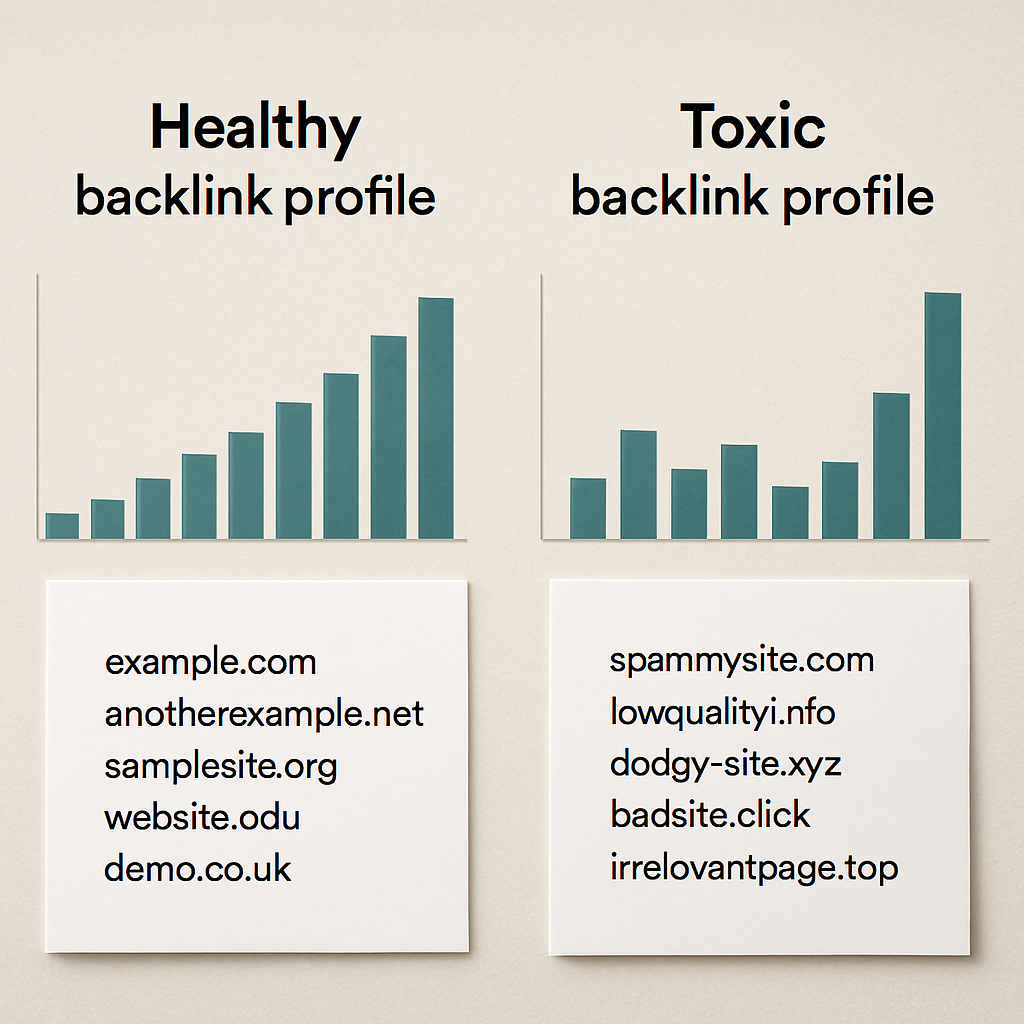
In conclusion, leveraging the backlink analysis features in free SEO audit tools enables businesses to not only assess their current standing but also strategize effectively for future growth. Start digging into your link profile today!
Did you know that 91% of web pages don’t get any organic traffic from Google? It’s not just about creating great content; it’s also about who’s linking to you. Enter the world of backlinks, where a solid link profile can make or break your site’s authority and visibility.
Imagine running a boutique digital marketing agency that specializes in eco-friendly brands. You’ve crafted the perfect website, but it’s stuck on page two of Google search results. The reason? Your backlink profile is as barren as a desert. Free SEO audit tools can help you identify this issue and turn things around.
Understanding Backlink Profiles
A backlink profile is like your website's social life—it's all about who you know. The more high-quality sites linking back to yours, the better your credibility in the eyes of search engines. Free SEO audit tools often provide insights into your current backlink status, including:
- Total number of backlinks: How many sites are linking to you?
- Domain Authority: Are these links coming from reputable sources?
- Anchor Text Distribution: What phrases are being used to link back to you?
Identifying Toxic Backlinks
Not all backlinks are created equal. Some links can be downright toxic—think spammy sites or low-quality directories that could harm your reputation. Free audit tools can help identify these problematic backlinks so you can disavow them before they drag down your rankings.
Pro Tip: Regularly check for toxic backlinks and take action to disavow them using Google Search Console.
Finding New Link-Building Opportunities
If you build it, they will come doesn’t apply here. You need a strategy! Free SEO audit tools often suggest potential backlink opportunities by analyzing competitor profiles. This means you can find out where similar businesses are getting their links and pursue those same avenues.
- – Guest blogging on industry-related sites.
- – Collaborating with influencers for product reviews.
- – Getting listed in relevant online directories.
Leveraging competitor analysis for backlinks can be a game changer!
In conclusion, leveraging the backlink analysis features in free SEO audit tools enables businesses to not only assess their current standing but also strategize effectively for future growth. Start digging into your link profile today!
User Experience Metrics from Free SEO Audits
Picture this: you’ve launched a vibrant online store selling artisanal chocolates, but your sales are disappointingly low. You suspect it’s not the product—after all, who doesn’t love chocolate? The culprit might just be lurking in the shadows of your website’s user experience. This is where free SEO audit tools can come to the rescue.
Understanding User Experience Metrics
User experience (UX) metrics are like the vital signs of your website—they tell you how well users are interacting with your content. A free SEO audit tool can reveal critical insights such as bounce rates, average session duration, and page load times. Let’s break these down:
- Bounce Rate: This indicates the percentage of visitors who leave without engaging further. A high bounce rate often signals that users aren’t finding what they expect.
- Average Session Duration: This measures how long visitors stay on your site. Longer sessions typically indicate better engagement.
- Page Load Time: If your pages take too long to load, users will abandon ship faster than you can say ‘chocolate-covered pretzel’.
Real-World Example: The Chocolate Store Dilemma
Let’s return to our chocolate store. After running a free SEO audit, you discover that your page load time is a sluggish 8 seconds! No wonder customers are bouncing like they’re on a trampoline! With this insight, you can focus on optimizing images and reducing server response time to enhance user experience.
Important Insight: A fast-loading site improves user retention significantly—consider aiming for under 3 seconds!**
Turning Insights into Action
Armed with user experience metrics from your free SEO audit tool, it’s time to take action. Here’s a quick checklist to get started:
1. Optimize Images: Compress images without sacrificing quality.
2. Minimize Redirects: Each redirect adds load time; keep them minimal.
3. Leverage Browser Caching: This allows returning visitors to load pages faster.
4. Mobile Optimization: Ensure your site is responsive and performs well on mobile devices.
Improving user experience isn’t just about aesthetics; it’s about creating an environment where visitors feel comfortable exploring and ultimately making purchases. So next time you’re frustrated with low conversion rates, remember: the devil is in the details—and those details start with understanding user experience metrics!
Picture this: you’ve launched a vibrant online store selling artisanal chocolates, but your sales are disappointingly low. You suspect it’s not the product—after all, who doesn’t love chocolate? The culprit might just be lurking in the shadows of your website’s user experience. This is where free SEO audit tools can come to the rescue.
Understanding User Experience Metrics
User experience (UX) metrics are like the vital signs of your website—they tell you how well users are interacting with your content. A free SEO audit tool can reveal critical insights such as bounce rates, average session duration, and page load times. Let’s break these down:
- Bounce Rate: This indicates the percentage of visitors who leave without engaging further. A high bounce rate often signals that users aren’t finding what they expect.
- Average Session Duration: This measures how long visitors stay on your site. Longer sessions typically indicate better engagement.
- Page Load Time: If your pages take too long to load, users will abandon ship faster than you can say ‘chocolate-covered pretzel’.
Real-World Example: The Chocolate Store Dilemma
Let’s return to our chocolate store. After running a free SEO audit, you discover that your page load time is a sluggish 8 seconds! No wonder customers are bouncing like they’re on a trampoline! With this insight, you can focus on optimizing images and reducing server response time to enhance user experience.
Important Insight: A fast-loading site improves user retention significantly—consider aiming for under 3 seconds!**
Turning Insights into Action
Armed with user experience metrics from your free SEO audit tool, it’s time to take action. Here’s a quick checklist to get started:
1. Optimize Images: Compress images without sacrificing quality.
2. Minimize Redirects: Each redirect adds load time; keep them minimal.
3. Leverage Browser Caching: This allows returning visitors to load pages faster.
4. Mobile Optimization: Ensure your site is responsive and performs well on mobile devices.
Improving user experience isn’t just about aesthetics; it’s about creating an environment where visitors feel comfortable exploring and ultimately making purchases. So next time you’re frustrated with low conversion rates, remember: the devil is in the details—and those details start with understanding user experience metrics!
Limitations of Free SEO Audit Tools
Think a free SEO audit tool is your golden ticket to SEO success? Think again! While these tools can provide valuable insights, they often come with limitations that can leave you feeling like you’ve just received a half-baked cake instead of the full dessert.
Consider this: many free tools only scratch the surface of what’s really going on with your website. They’re like that friend who gives you a thumbs up on your outfit but misses the fact that your shirt is on inside out. Sure, they mean well, but you need more than just surface-level feedback to truly shine in search rankings.
Limited Depth of Analysis
Most free SEO audit tools provide a basic overview and may miss critical details. For instance, while they might flag duplicate content or missing meta descriptions, they often overlook nuanced issues like keyword cannibalization or local SEO factors crucial for businesses targeting specific geographic areas.
Imagine running a small local restaurant that’s optimized for keywords like best pizza in town. A free tool might tell you your site is fine but won’t highlight that you’re competing against multiple pages for the same keyword. This could lead to missed opportunities as potential customers find themselves lost in a sea of similar offerings.
Data Limitations and Accuracy
Another kicker? The data provided by free tools can be outdated or inaccurate. Some tools rely on limited databases or infrequent crawls, which means that the information you're acting on could be stale—like last week’s pizza leftovers. If you’re basing your strategy on flawed data, it’s no wonder your rankings are stuck in quicksand.
Important Note: Always cross-reference findings from multiple sources to ensure accuracy.
Lack of Comprehensive Features
You get what you pay for rings true here! Many free tools lack advanced features such as competitor analysis, backlink audits, and detailed performance tracking. Without these insights, it’s like trying to navigate without a map—you might get somewhere eventually, but it’ll take longer and be way more frustrating.
'Let’s say you're a growing e-commerce store specializing in handmade jewelry. You need to know not only how well your site performs but also how it stacks up against competitors. A basic audit tool won't help you identify where competitors are gaining backlinks or which keywords they're ranking for. Without this knowledge, you're flying blind in an increasingly competitive market.'
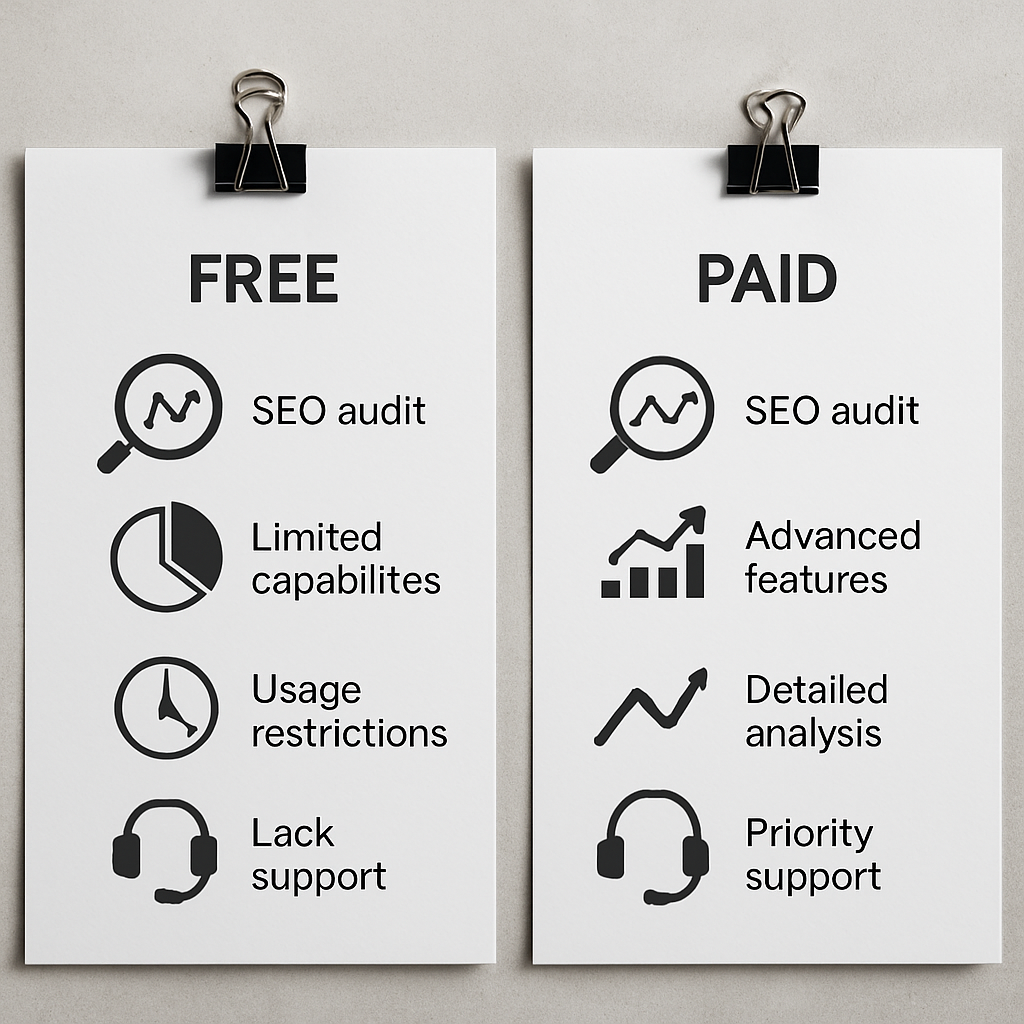
So what should you do? Use these free tools as a starting point rather than the end-all-be-all solution. Consider investing in more robust options when you're serious about taking your site to the next level.
Think a free SEO audit tool is your golden ticket to SEO success? Think again! While these tools can provide valuable insights, they often come with limitations that can leave you feeling like you’ve just received a half-baked cake instead of the full dessert.
Consider this: many free tools only scratch the surface of what’s really going on with your website. They’re like that friend who gives you a thumbs up on your outfit but misses the fact that your shirt is on inside out. Sure, they mean well, but you need more than just surface-level feedback to truly shine in search rankings.
Limited Depth of Analysis
Most free SEO audit tools provide a basic overview and may miss critical details. For instance, while they might flag duplicate content or missing meta descriptions, they often overlook nuanced issues like keyword cannibalization or local SEO factors crucial for businesses targeting specific geographic areas.
Imagine running a small local restaurant that’s optimized for keywords like best pizza in town. A free tool might tell you your site is fine but won’t highlight that you’re competing against multiple pages for the same keyword. This could lead to missed opportunities as potential customers find themselves lost in a sea of similar offerings.
Data Limitations and Accuracy
Another kicker? The data provided by free tools can be outdated or inaccurate. Some tools rely on limited databases or infrequent crawls, which means that the information you're acting on could be stale—like last week’s pizza leftovers. If you’re basing your strategy on flawed data, it’s no wonder your rankings are stuck in quicksand.
Important Note: Always cross-reference findings from multiple sources to ensure accuracy.
Lack of Comprehensive Features
You get what you pay for rings true here! Many free tools lack advanced features such as competitor analysis, backlink audits, and detailed performance tracking. Without these insights, it’s like trying to navigate without a map—you might get somewhere eventually, but it’ll take longer and be way more frustrating.
'Let’s say you're a growing e-commerce store specializing in handmade jewelry. You need to know not only how well your site performs but also how it stacks up against competitors. A basic audit tool won't help you identify where competitors are gaining backlinks or which keywords they're ranking for. Without this knowledge, you're flying blind in an increasingly competitive market.'
So what should you do? Use these free tools as a starting point rather than the end-all-be-all solution. Consider investing in more robust options when you're serious about taking your site to the next level.
Integrating Free SEO Audit Insights into Actionable Strategies
You’ve just run a free SEO audit tool on your website, and the results are in. Congratulations! You now possess a treasure trove of insights that could catapult your site from obscurity to stardom. But wait—what’s next? Insights without action are like a cake without frosting: underwhelming and lacking flavor.
Imagine you’re the proud owner of a bustling local coffee shop that’s just launched an online ordering system. Your free SEO audit reveals that your site is slow to load and has several broken links. Sure, those findings are great, but how do you turn them into strategies that actually boost sales? Let’s break it down.
Step 1: Prioritize Your Findings
First things first—prioritize the issues flagged by your free SEO audit tool. Use a simple matrix to categorize them based on impact and effort. For instance, fixing broken links might be an easy win that significantly improves user experience, while optimizing images for faster loading might take more time but is equally crucial.
- Identify high-impact issues: Focus on elements affecting user experience and search rankings.
- Evaluate effort required: Consider how much time or resources each fix will consume.
- Create a prioritized action list: This will serve as your roadmap for optimization.
Step 2: Set Clear Goals
What gets measured gets managed is an adage worth repeating here. Set specific, measurable goals based on the insights you've gathered. If your audit shows high bounce rates on certain pages, aim to reduce them by, say, 20% within the next month through targeted content updates or improved page design.
SMART goals—Specific, Measurable, Achievable, Relevant, Time-bound—are your best friends in this stage.
Step 3: Implement Changes Gradually
'Rome wasn't built in a day,' and neither is an optimized website. Start implementing changes gradually rather than trying to overhaul everything at once. This allows you to monitor the impact of each adjustment without overwhelming yourself or your team.
- Fix one major issue per week: Whether it's improving site speed or updating meta tags.
- Monitor performance metrics: Use Google Analytics or another tool to track changes in traffic or engagement.
- Iterate based on results: If something isn’t working as planned, don’t hesitate to pivot.'
You’ve just run a free SEO audit tool on your website, and the results are in. Congratulations! You now possess a treasure trove of insights that could catapult your site from obscurity to stardom. But wait—what’s next? Insights without action are like a cake without frosting: underwhelming and lacking flavor.
Imagine you’re the proud owner of a bustling local coffee shop that’s just launched an online ordering system. Your free SEO audit reveals that your site is slow to load and has several broken links. Sure, those findings are great, but how do you turn them into strategies that actually boost sales? Let’s break it down.
Step 1: Prioritize Your Findings
First things first—prioritize the issues flagged by your free SEO audit tool. Use a simple matrix to categorize them based on impact and effort. For instance, fixing broken links might be an easy win that significantly improves user experience, while optimizing images for faster loading might take more time but is equally crucial.
- Identify high-impact issues: Focus on elements affecting user experience and search rankings.
- Evaluate effort required: Consider how much time or resources each fix will consume.
- Create a prioritized action list: This will serve as your roadmap for optimization.
Step 2: Set Clear Goals
What gets measured gets managed is an adage worth repeating here. Set specific, measurable goals based on the insights you've gathered. If your audit shows high bounce rates on certain pages, aim to reduce them by, say, 20% within the next month through targeted content updates or improved page design.
SMART goals—Specific, Measurable, Achievable, Relevant, Time-bound—are your best friends in this stage.
Step 3: Implement Changes Gradually
'Rome wasn't built in a day,' and neither is an optimized website. Start implementing changes gradually rather than trying to overhaul everything at once. This allows you to monitor the impact of each adjustment without overwhelming yourself or your team.
- Fix one major issue per week: Whether it's improving site speed or updating meta tags.
- Monitor performance metrics: Use Google Analytics or another tool to track changes in traffic or engagement.
- Iterate based on results: If something isn’t working as planned, don’t hesitate to pivot.'