











Table of Contents
- 1 How to Get Your Website to the Top of Google: Actionable SEO Strategies
- 1.1 1. Run a Technical SEO Audit and Fix Blocking Issues
- 1.2 2. Keyword Research and Intent Mapping for Highest ROI
- 1.3 3. Create Intent-Aligned Content Using Data-Driven Briefs
- 1.4 4. On-Page Optimization and Structured Data
- 1.5 5. Build Authority: Tactical Link Acquisition and PR
- 1.6 6. Internal Linking, Site Architecture, and Scaling Content
- 1.7 7. Measure, Track, and Iterate with KPIs and Tools
How to Get Your Website to the Top of Google: Actionable SEO Strategies
If you want to know how to get your website to the top of google, stop hoping for shortcuts and start executing a clear tactical plan. This guide lays out that plan: run a technical audit, prioritize intent-aligned keywords, produce data-driven content at scale with human review, fix internal linking and site architecture, pursue targeted authority building, and measure outcomes using tools like Ranklytics. You will get concrete checklists, tool commands, and realistic timelines so you can prioritize actions, measure progress, and know when to scale or change approach.
1. Run a Technical SEO Audit and Fix Blocking Issues
Start by removing blockers — not by chasing every low-priority item. If Google cannot crawl or reliably render your pages, content and links won't matter. Treat the technical audit as triage: stop the biggest sources of wasted crawl and poor UX first.
Quick GSC + crawl-first workflow
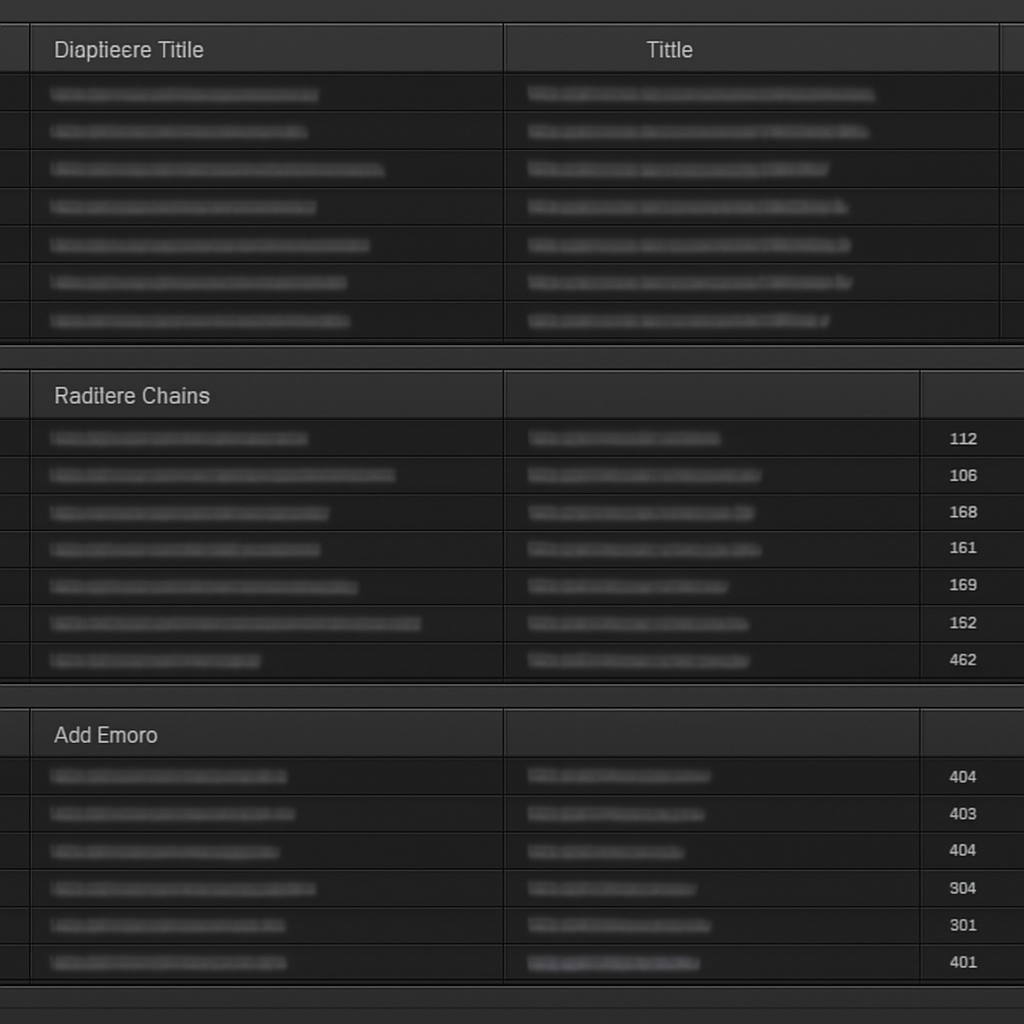
- Google Search Console checks: Open the Coverage report, then inspect URLs showing errors; check Manual actions and Security issues under Settings; review Experience > Core Web Vitals and Mobile Usability for flagged pages. Use the URL Inspection tool to test problem pages.
- Run a full crawl: Use
Screaming FrogorSitebulband export filters for Client Errors (4xx), Redirect chains, Duplicate Titles, Missing Meta Descriptions, Canonicalised pages, and Noindex pages. Prioritize 4xx/5xx and redirect chains first. - Measure speed and vitals: Run Lighthouse and PageSpeed Insights for representative page templates. Capture LCP, CLS and FID/INP scores and group fixes by template (product, category, article).
- Crawl budget triage: Identify low-value URL patterns (tag pages, date archives, faceted filters). Either
noindexthem or block viarobots.txtif they should never be crawled; canonicalize near-duplicates. - Sitemap and index hygiene: Ensure your XML sitemap contains only canonical, 200 pages, is gzipped if large, and is submitted in GSC. Remove staging or redirecting URLs from sitemaps.
Practical trade-off: Blocking and noindexing saves crawl budget but can hide potentially useful pages from discovery. Use noindex when a page must be removed from results but still crawled for internal links; use robots.txt when you want to stop crawling entirely. Mistakes here can accidentally deindex important pages.
Concrete example: An ecommerce site discovered 120k parameterized filter URLs flooding its crawl budget. The team applied noindex to filter pages, canonicalized category pages, and removed filters from the sitemap. Within 10 weeks product pages indexed more reliably and organic product page traffic rose ~15%.
Common misunderstanding: Many teams treat performance fixes as optional. In practice, shaving LCP from 4s to 2s on high-traffic templates often improves impressions and rankings because pages become usable and Google's rendering is more consistent. Expect engineering constraints and test changes on staging first — deferring third-party scripts can break functionality.
If you want a checklist that actually delivers results, compare your audit output to operational goals: pages to index, templates to speed-optimize, and a short list of URLs for immediate re-crawl. See practical audit mistakes and how to fix them in our deeper guide: Why Your SEO Audit Is Not Delivering Results (And How to Fix It).
Google processes over 63,000 search queries every second — small indexing or rendering failures scale into large visibility loss. Source
2. Keyword Research and Intent Mapping for Highest ROI
Prioritize ROI over raw volume. High search volume alone rarely moves the needle; the keywords that pay are those that match buyer intent and your current ability to convert or acquire links.
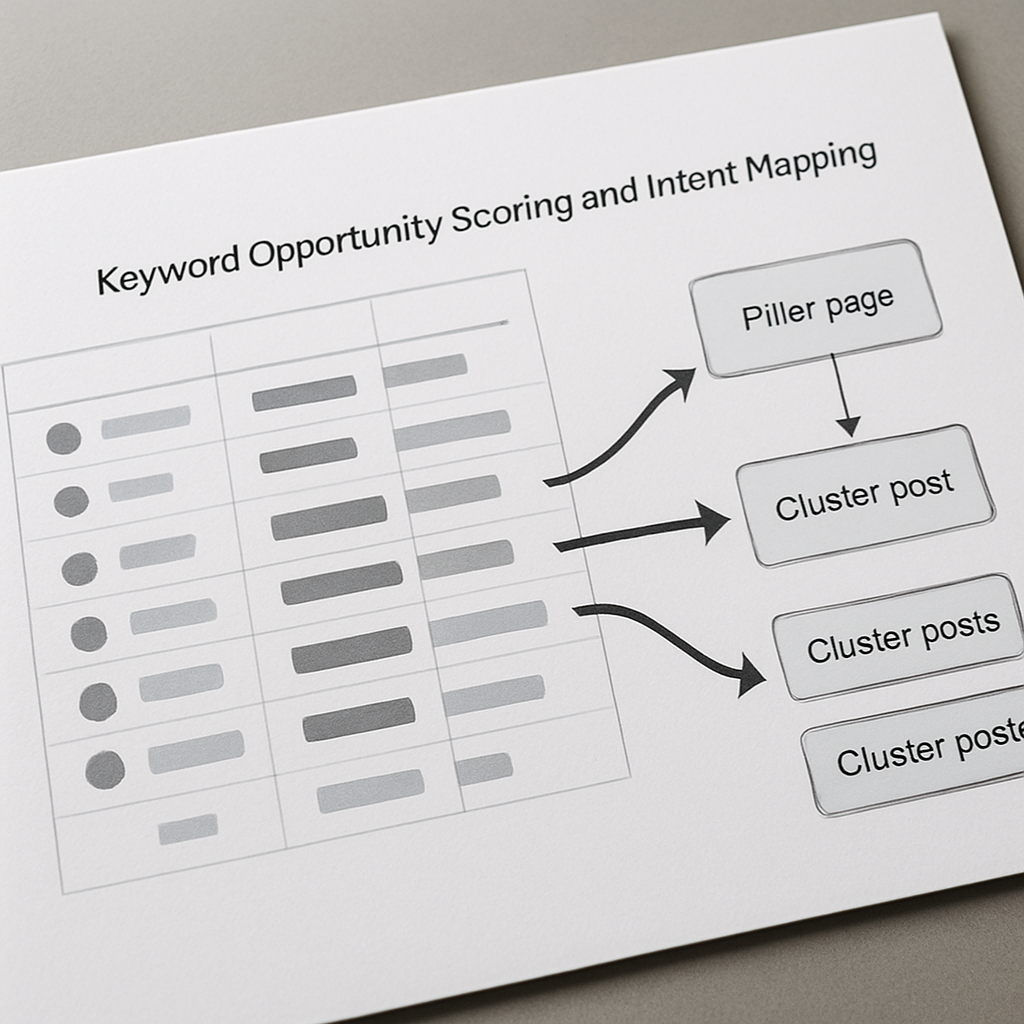
Key point: combine search volume, difficulty, and business value into a single opportunity score, then map each keyword to an action: build a pillar, write a cluster post, optimize a product page, or leave alone.
How to build a prioritized keyword list
- Gather data: pull keywords from
Google Search Console,Ahrefs,Semrush, and Ranklytics. Include impressions, clicks, volume, KD, and SERP features for each term. - Calculate opportunity: use an opportunity score to rank keywords. See the table below for a simple, practical formula.
- Classify intent: label each keyword as informational, commercial investigation, transactional, or navigational and map to the correct page type.
- Cluster and de-duplicate: group close variants and questions into a single content task to avoid cannibalization and spread of link equity.
- Prioritize execution: pick the top 20 percent of keywords that drive 80 percent of potential traffic and conversion given your resources.
| Keyword | Volume | KD (0-100) | Business Value (1-5) | Opportunity Score |
|---|---|---|---|---|
| how to get your website to the top of google | 1,200 | 45 | 5 | (1200 * 5) / 45 = 133 |
| improve Google ranking local business | 400 | 30 | 4 | (400 * 4) / 30 = 53 |
| best SEO tools 2026 | 2,000 | 70 | 2 | (2000 * 2) / 70 = 57 |
Practical insight: the raw score above is a directional filter, not a final decision. Adjust for SERP features that reduce organic clicks, your existing page authority, and the time required to produce a competitive asset.
Intent mapping and page type decisions
Tradeoff to manage: targeting high commercial intent can drive conversions faster but costs more in content quality and link building. Informational intent scales traffic cheaply but requires follow up CTAs and internal linking to convert.
Concrete example: For the keyword how to get your website to the top of google classify it as high-value informational with commercial intent overlay. Build one long-form pillar that explains strategy and links to a services or product comparison page. Then publish three cluster posts focused on keyword research, technical fixes, and link building to feed the pillar with internal links and topic depth.
Competitor gap workflow: run a top-10 SERP export in Ahrefs or Semrush, filter pages you do not rank for, and prioritize targets where competitors have weak content or few referring domains. This finds low-cost wins faster than chasing head terms.
Focus on intent alignment first. A well mapped mid-volume keyword with a clear conversion path usually beats a high-volume head term with ambiguous intent.
Next consideration: once you have prioritized keywords, build briefs that specify intent, target conversions, and required internal links so writers and developers execute to the same outcome.
3. Create Intent-Aligned Content Using Data-Driven Briefs
Key point: A precise, data-driven content brief is the multiplier that turns publishing into ranking; without it, teams produce noise that Google ignores. A brief forces one target: match user intent for the keyword and solve the user's task better than the pages already ranking for that query.
What a data-driven brief must include
- Target keyword and primary intent: exact phrase (for example, how to get your website to the top of google) and whether the page should inform, compare, or convert.
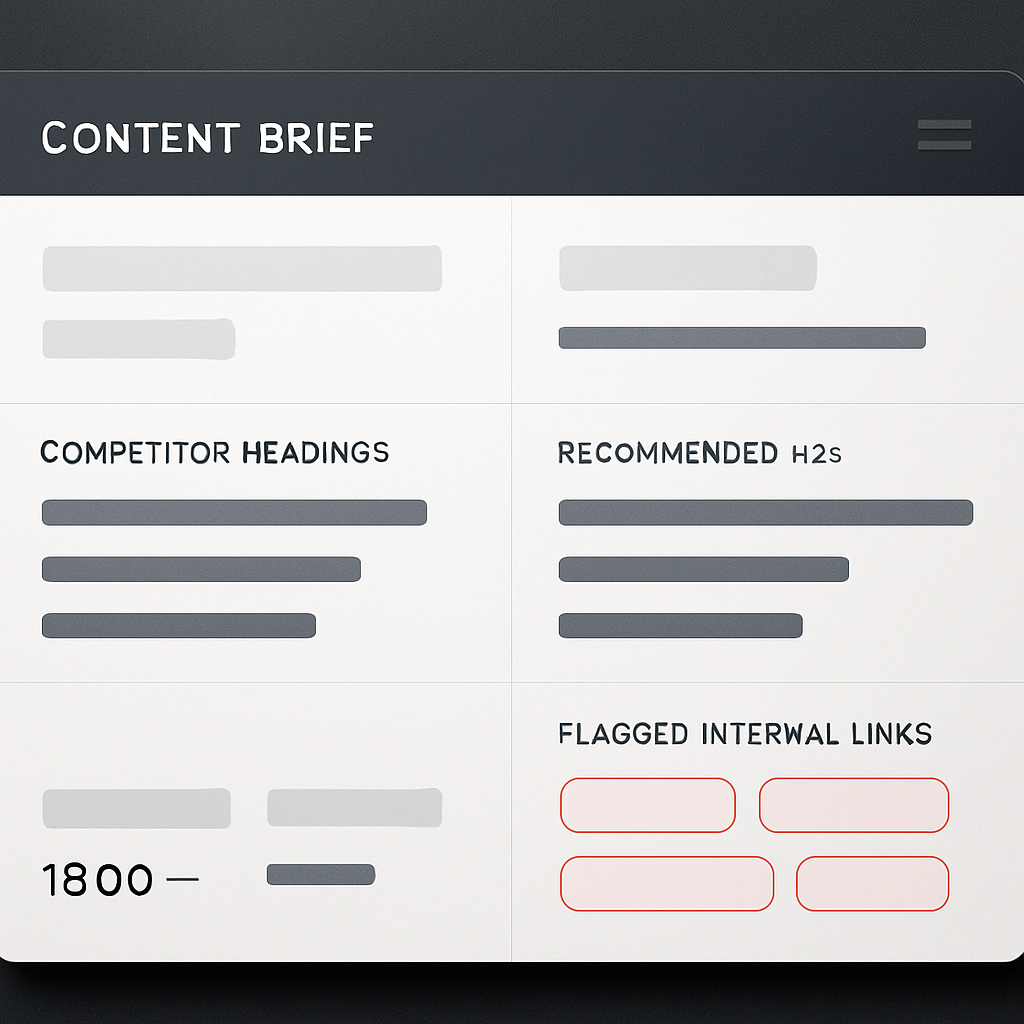
- Top-competitor snapshot: 3–5 top-ranking URLs with their common H2s, average word count range, and notable SERP features (People Also Ask, Featured Snippet).
- Required headings and subtopics: prioritized list of H2s/H3s to cover the exact tasks users expect.
- LSI/related terms: a short list to include naturally—avoid forcing every term into the intro.
- On-page conversion goal and CTA: what action the page must drive (email capture, demo, product page visit).
- Target internal links: specific pages to link from and to, and suggested anchor text.
- Performance targets and timeline: target word count range, primary KPI (rank for X keyword), and review date (60–90 days).
Practical insight: Use SERP analysis, not gut. Pull headings from ranked pages, capture which questions appear in People Also Ask, and note which pages earn featured snippets. Tools like Surfer, Clearscope, or Ranklytics speed this extraction, but the brief must translate those signals into a tight narrative and conversion goal.
Trade-off to accept: Longer content is not always better. Depth must map to intent. If search intent is a quick how-to, a 1,000-word action guide that answers the task and links to deeper resources will beat a 4,000-word unfocused article. Prioritize task completion over word count inflation.
A practical brief-to-publish workflow
- Run a SERP scrape for the target keyword and extract common H2s, snippets, and question clusters.
- Assemble the brief with intent, headings, CTA, and target internal links; set a 60–90 day measurement check.
- Generate an AI-assisted draft from the brief, then perform human editing for accuracy, tone, and E-E-A-T evidence.
- Publish with on-page schema and immediately add internal links from two high-traffic hub pages.
Concrete Example: A SaaS marketing team used a brief targeted at how to get your website to the top of google that specified a conversion goal (ebook download), five required H2s (technical fixes, content strategy, link tactics, timeline, checklist), and three internal links to product pages. After publishing and adding internal links, the page moved from position 25 to the top 10 for several long-tail variants in 60–90 days while delivering qualified demo sign-ups.
Judgment: Relying solely on AI to write without a tight brief is the single biggest waste I see—it scales output but not rank. Use AI to speed drafting, use humans to sculpt intent, and record the brief as the single source of truth for future updates. For responsible AI use, follow the Ranklytics guidance on ethics: The Ethics of AI in Content Writing.
Next consideration: Pair every brief with a plan for internal links and one outreach angle — content without initial distribution almost never reaches top Google rankings.
4. On-Page Optimization and Structured Data
Start with CTR-first meta elements. Title tags, meta descriptions, and H1s still control the first impression in search results — optimize them for clicks and relevance, not keyword density. Use a clear template: Title = Primary Keyword – Differentiator | Brand (aim 50–60 characters), Meta = Enticing summary + CTA (120–155 characters). H1 should match intent but can be more natural than the title.
Practical trade-off: pushing the exact keyword into every meta element can raise relevance signals but often lowers CTR because titles sound robotic. Prioritize readability and action — Google measures engagement; a higher CTR from a slightly less keyword-heavy title often beats an exact-match, low-CTR title.
Schema that moves the needle (and what it won’t do)
Structured data expands real estate, it does not directly move ranking positions. Use Article, HowTo, FAQPage, and Product schema where they match user intent to win rich snippets, people also ask entries, and recipe-like appearances. But structured data is a visibility multiplier — it increases impressions and CTR, not raw relevance.
Limitation to note: Google can ignore or remove markup that is incorrect or spammy. Only mark up content that is visible on the page and written for users. Overloading pages with irrelevant FAQ entries or hidden markup backfires; treat schema as a UX feature, not a loophole.
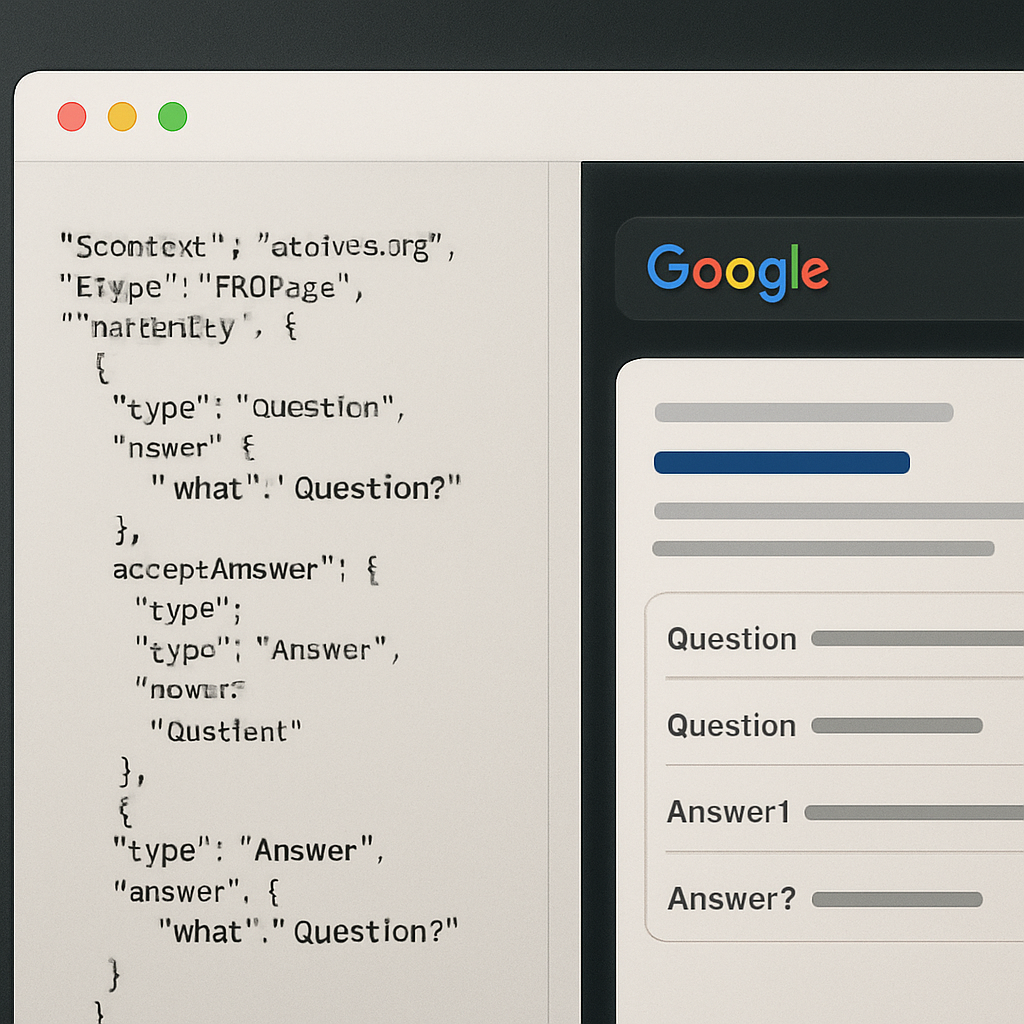
Concrete Example: For a how-to pillar targeting the keyword how to get your website to the top of google, use an H1 that reads How to Get Your Website to the Top of Google — A Practical 90‑Day Plan, a title tag like How to Get Your Website to the Top of Google – 90‑Day SEO Plan | Brand, and include FAQPage schema answering three short, genuine user questions. That increases the chance of a rich result and raises CTR by showing quick answers directly in SERP.
Copy-paste FAQ JSON-LD (use only if the Q&A appears on the page):
<script type="application/ld+json">{"@context":"https://schema.org","@type":"FAQPage","mainEntity":[{"@type":"Question","name":"How long until my page ranks on Google?","acceptedAnswer":{"@type":"Answer","text":"Expect measurable movement in 30–90 days and top positions in 6–12 months depending on authority and links."}},{"@type":"Question","name":"Does FAQ schema improve ranking?","acceptedAnswer":{"@type":"Answer","text":"FAQ schema can increase CTR and visibility but does not itself guarantee higher rankings."}}]}</script>
- Image optimization: use descriptive filenames and
alttext that help accessibility and context, serve WebP withsrcset/sizes, and addloading="lazy"for below-the-fold images. Compress with tools like Squoosh or ImageOptim. - Internal linking pattern: create a hub (pillar) that links to cluster pages with targeted long-tail anchor text and return links from clusters to the hub. Avoid exact-match anchor stuffing; use natural variations and context-rich anchors.
- Canonical and HTTPS integrity: always include a correct
rel=canonicaland ensure canonical points to the HTTPS page. Mismatched canonicals or mixed protocol links create indexing confusion.
Real-world application: A B2B SaaS site published a long-form guide optimized for improving website ranking on Google, added FAQPage schema and tightened title/meta to improve CTR. Over three months impressions rose 40% and clicks rose 22% without changing content length — the gain was visibility and CTR from rich result exposure, not a sudden relevance boost.
Key judgment: prioritize correct, user-facing schema and CTR-optimized metas over blind schema implementation or keyword stuffing. Structured data amplifies what you already have — it rarely rescues thin or irrelevant pages.
5. Build Authority: Tactical Link Acquisition and PR
Direct point: Backlinks still move the needle. Targeted editorial links from relevant, authoritative domains amplify the content and technical work you already did, while low-quality link churn wastes budget and can slow progress.
Key tradeoff: High-quality link acquisition is slow and manual. You can buy volume or chase quick placements, but the durable ranking gains come from editorial context and topical relevance, not raw anchor-counts.
Actionable link-acquisition framework
- Map the target landscape: Use
AhrefsorMajesticto list referring domains for top-ranking competitors and resource pages in your niche. Prioritize domains by Domain Rating / Trust Flow and topical relevance. - Create link-worthy assets: Build at least three asset types: original data or benchmark reports, practical tools or calculators, and definitive guides. Use AI to accelerate drafts but follow the guidance in The Ethics of AI in Content Writing: What You Need to Know – Ranklytics.
- Targeted outreach and PR: Start with broken-link replacements and resource page pitches, then escalate to personalized journalist outreach, contributor pitches, and exclusive data stories for trade publications.
- Diversify placements: Combine industry publications, niche blogs, partner websites, and podcast appearances. Anchor text should be natural and varied – avoid exact-match anchors at scale.
- Monitor and iterate: Track new referring domains with
Ahrefsand Google Search Console, measure ranking deltas for target pages, and re-prioritize targets every 60 days.
Practical insight: Broken-link outreach delivers one of the highest ROI workflows. Run a site: operator plus inurl:resource search to find candidate pages, confirm the broken URL with a quick HTTP check, and offer your asset as the replacement.
Concrete example: A B2B SaaS marketing team published a 2025 benchmarks report and ran a two-week broken-link and resource outreach campaign to 120 industry resource pages. They secured 12 editorial links from niche publications and saw measurable rank improvement for three target keywords within 10 weeks.
Quality over quantity – five contextual links from relevant domains beat 100 low-relevance links for improving rankings on competitive keywords.
Risk and limitation: Aggressive link velocity or purchased link networks can trigger manual review and long delays. Disavow only after careful review and when spammy links are actually harming signals; use Majestic and Ahrefs metrics to justify action.
Where to invest first: Spend your limited resources on one repeatable playbook – for most sites that is data-driven content plus targeted broken-link outreach. It scales, produces measurable links, and complements other SEO work such as internal linking and on-page optimization.
6. Internal Linking, Site Architecture, and Scaling Content
Internal linking and site architecture are among the highest ROI technical levers for moving pages up the SERPs. Done correctly they concentrate crawl equity, signal topical authority, and make it easier for Google to understand which pages should rank for which queries.
Design a practical, scalable architecture
Keep depth shallow and intent-aligned. Build clear pillar pages for core topics and cluster pages that link back to the pillar with descriptive anchor text. Limit click depth to three clicks from the homepage for revenue or conversion pages. Too much nesting buries pages and slows indexing.
- Pillar page – comprehensive, conversion-focused, central hub
- Cluster pages – single intent, link to pillar and sibling clusters
- Hub pages – category indexes that distribute internal links to lower-value but useful content
Run an internal linking audit and fix weak points
Practical audit steps. Export the Inlinks report from Screaming Frog, pivot by inlink count, and flag orphan pages, deep pages, and pages with generic anchor text. For each orphan page decide to: add contextual links, merge into a parent page, or noindex if it has no commercial or topical value.
Tradeoff to watch. Automating internal links at scale speeds coverage but introduces incorrect anchors and circular links that dilute relevance. Automated linking is fine for low-risk informational posts but review high-value pages manually.
Concrete example: A SaaS site with a pricing pillar and 18 feature cluster posts reworked internal links to use descriptive anchors linking to pricing and a comparison page. After restructuring the clusters and adding hub pages the pricing pillar moved from page three to the top 10 for several target terms within 90 days and organic impressions grew noticeably for the topic cluster.
Pagination, faceted navigation, and canonical decisions
Do not let parameters become crawl traps. For faceted pages prefer server-side filtering that produces clean URLs or apply rel=canonical to point parameter variants at the canonical category. Use noindex,follow for vanity parameter pages and avoid blocking them in robots.txt if they still carry internal links.
Practical snippet: Use a canonical tag on list pages like link rel="canonical" href="https://example.com/category/" on parameterized variants so link equity concentrates on the canonical version.
7. Measure, Track, and Iterate with KPIs and Tools
Start with business outcomes, not positions. Ranking movement is noise unless tied to clicks, leads, or revenue. Track position and impressions, but prioritize metrics that map to the business so you can justify work and change priorities when experiments fail.
Core KPI framework
| KPI | Why it matters | How to measure |
|---|---|---|
| Organic clicks | Direct measure of traffic that can convert | Google Search Console clicks; validate with GA4 conversions |
| Impressions + SERP features | Shows visibility and whether SERP features are stealing clicks | GSC impressions and query reports; track presence of features via Ranklytics |
| Average position for target keywords | Useful for trend direction but unstable across locations | Ranklytics keyword tracking segmented by device/location |
| CTR | Tells whether meta and SERP appearance convert impressions into sessions | Clicks divided by impressions in GSC; A/B test titles and descriptions |
| Goal conversions / revenue | The business outcome you actually care about | GA4 events or ecommerce conversions attributed to organic |
Practical tradeoff: tracking many keywords gives coverage but creates noise. Focus on three cohorts: high-priority money keywords, mid-funnel pages on page 2, and new content you are promoting. The biggest ROI usually comes from moving page 2 content into the top 10, not chasing incremental gains on established page 1 winners.
Cadence, controls, and experiments
- Weekly: monitor crawl errors, index coverage, and sudden drops in clicks with Google Search Console; set alerts for manual actions and site health. Use Google Search Central for troubleshooting authority signals.
- Monthly: review cohort performance; identify pages that need content refresh, internal linking, or link outreach. Compare clicks, impressions, and conversions month over month.
- Quarterly: run a technical audit and reassess keyword priorities; align resources to the top 20 percent of pages that drive 80 percent of outcomes.
How to run a controlled experiment. Pick a cohort of pages with similar intent and baseline traffic, apply a single change (for example a metadata rewrite plus three internal links), and hold for 30, 60, and 90 day checkpoints. Use a control group that receives no changes to separate seasonal effects from your work.
Limitation and measurement traps. GSC data is sampled and delayed; average position hides distribution across multiple URLs and locations. GA4 attributes sessions differently from GSC. Expect noise for 2 to 6 weeks after a change; do not declare success on week one.
Concrete example: An SMB SaaS site targeted a commercial intent keyword cluster ranking around positions 14 to 20. The team rewrote meta titles for CTR, added a focused section addressing buyer concerns, and built two editorial links. Using Ranklytics to monitor the keyword cohort and GA4 for conversions, they moved the cluster to positions 6 to 9 and doubled monthly demo requests in 90 days.
Judgment: prioritize pages with measurable conversion potential and realistic win probability. Data will tell you where to spend developer time versus content or links.
Next consideration: build a lightweight dashboard that combines GSC, GA4, and Ranklytics data so you can move from observation to prioritized action each week. If your dashboard is a mess, you will oscillate between tactics and never invest in the highest impact changes.

Written by
ranklytics